
Bare strips of dirt along the house are the easiest spot to fix in any yard. Foundation plantings hide exposed concrete, soften hard corners, and give the front of your home a finished frame. Below are practical ideas for turning that narrow band of soil into a green, welcoming border.
1. Herbs Along the Foundation
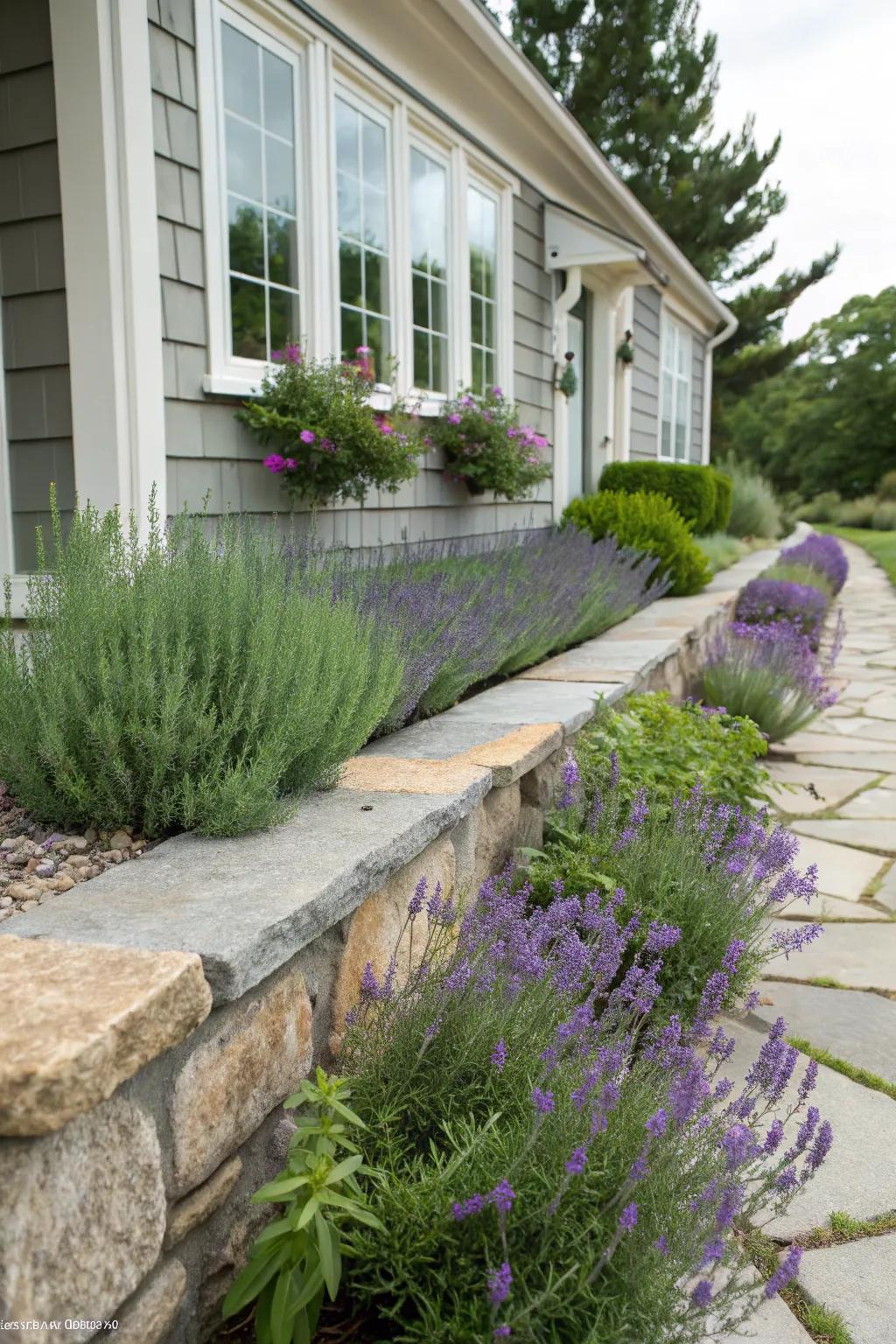
Foundation beds can feed you as well as look good. Lavender and rosemary both handle the sunny, warm strip next to a wall, and their scent carries when you brush past. Snip sprigs of rosemary for roast potatoes and cut lavender stems for drying. Both like well-drained soil, so avoid spots where downspouts dump water.
2. Succulents for Easy Style
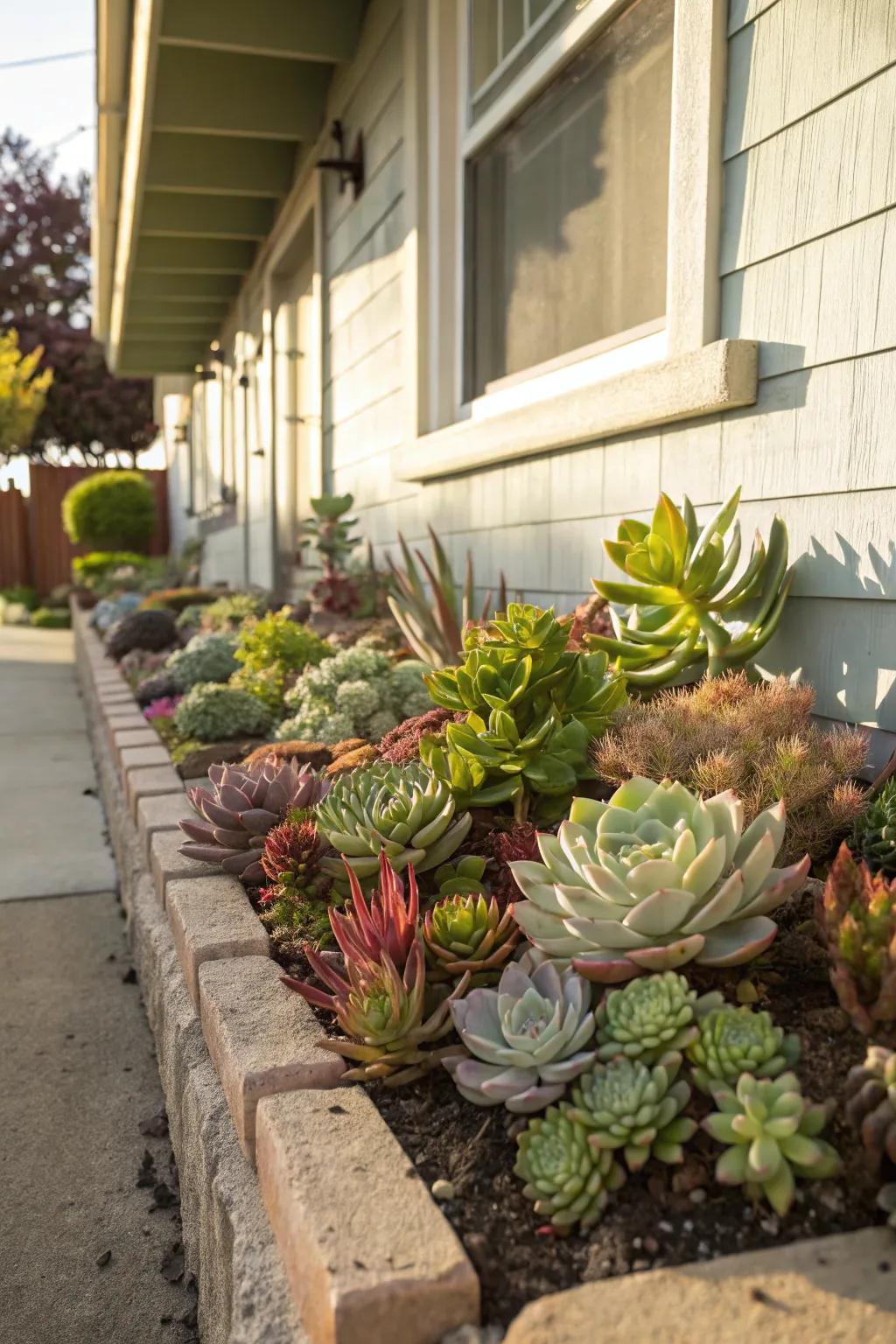
Succulents suit hot, dry ground near the house where other plants sulk. Hens and chicks, sedum, and echeveria bring rosettes, spikes, and blue-green color to the bed. Water sparingly and mix grit into the soil for drainage. They fit right into low-maintenance flower bed ideas for your home.
3. Ground Covers That Fill Gaps
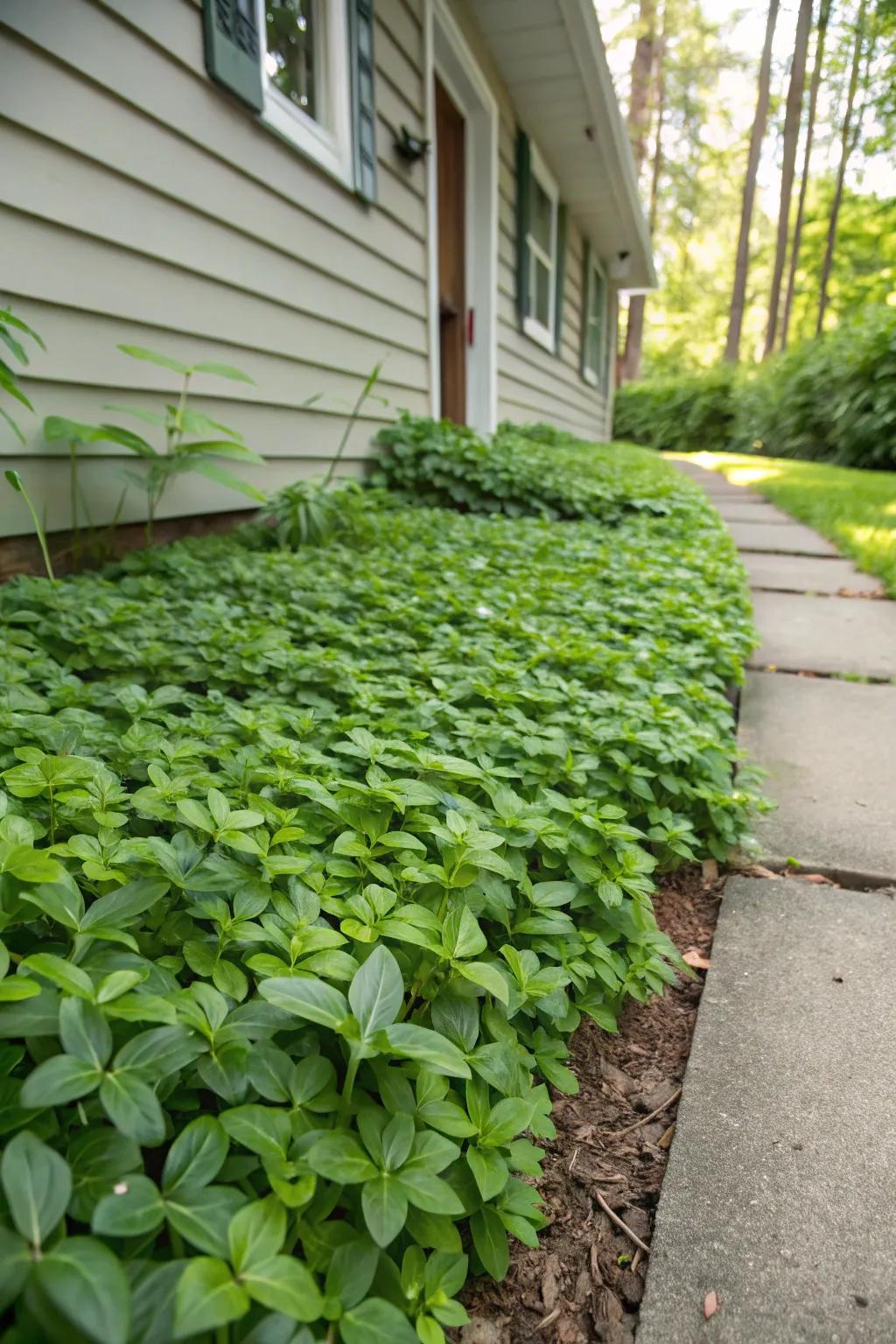
Bare soil invites weeds, so cover it with something that spreads. Vinca and creeping thyme are two of my go-to picks for a low green carpet along the foundation. Thyme even releases scent when you step on it, which makes it handy beside a walkway. Space the plugs a foot apart and they knit together within a season or two.
4. Colorful Foliage for Contrast
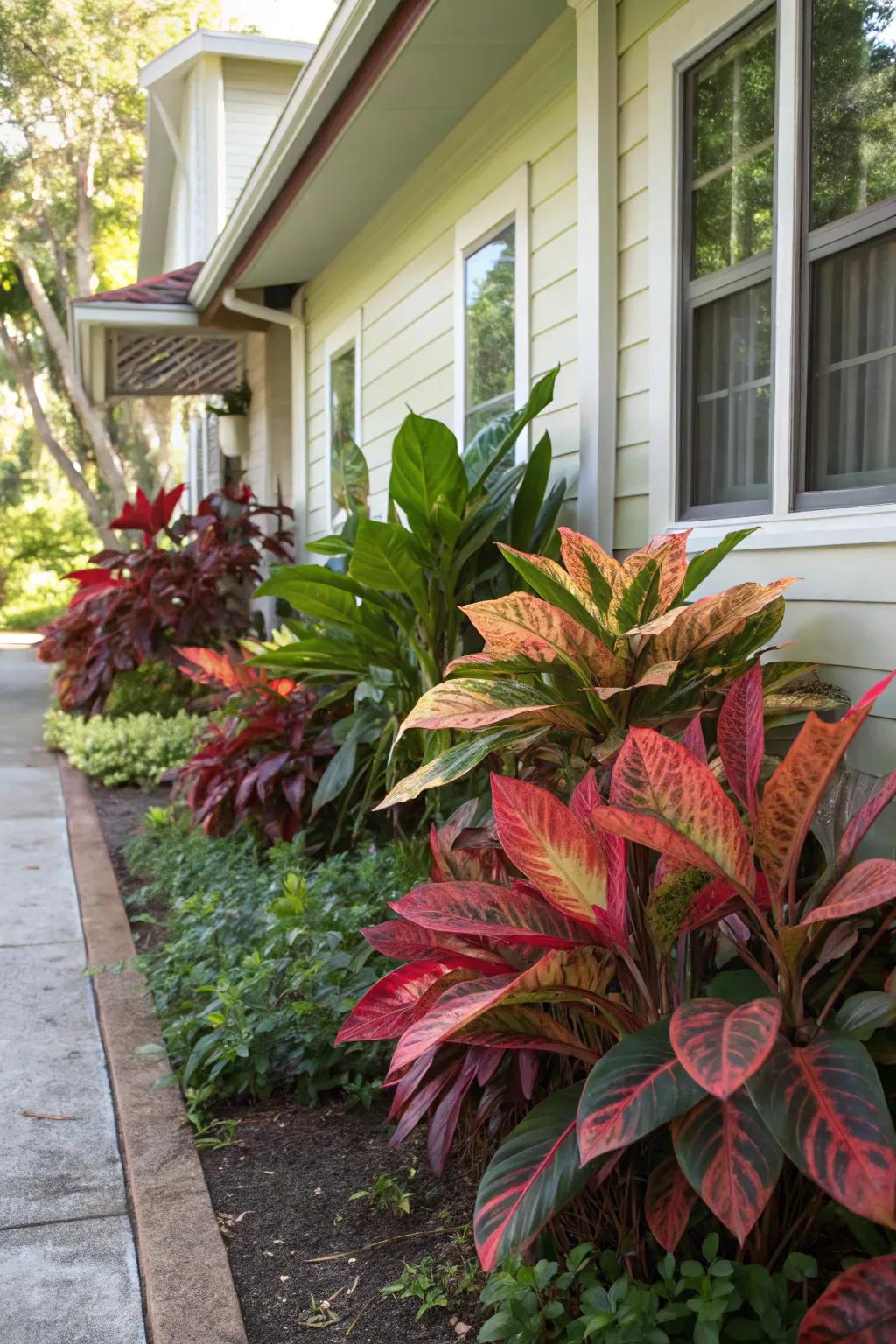
Leaves carry color long after flowers fade. Look for foliage in deep red, purple, or cream variegation to build depth against green shrubs. Heucheras and coleus are simple choices for that job. Set the darkest leaves near pale siding so the contrast reads from the street.
5. Seasonal Blooms Through the Year
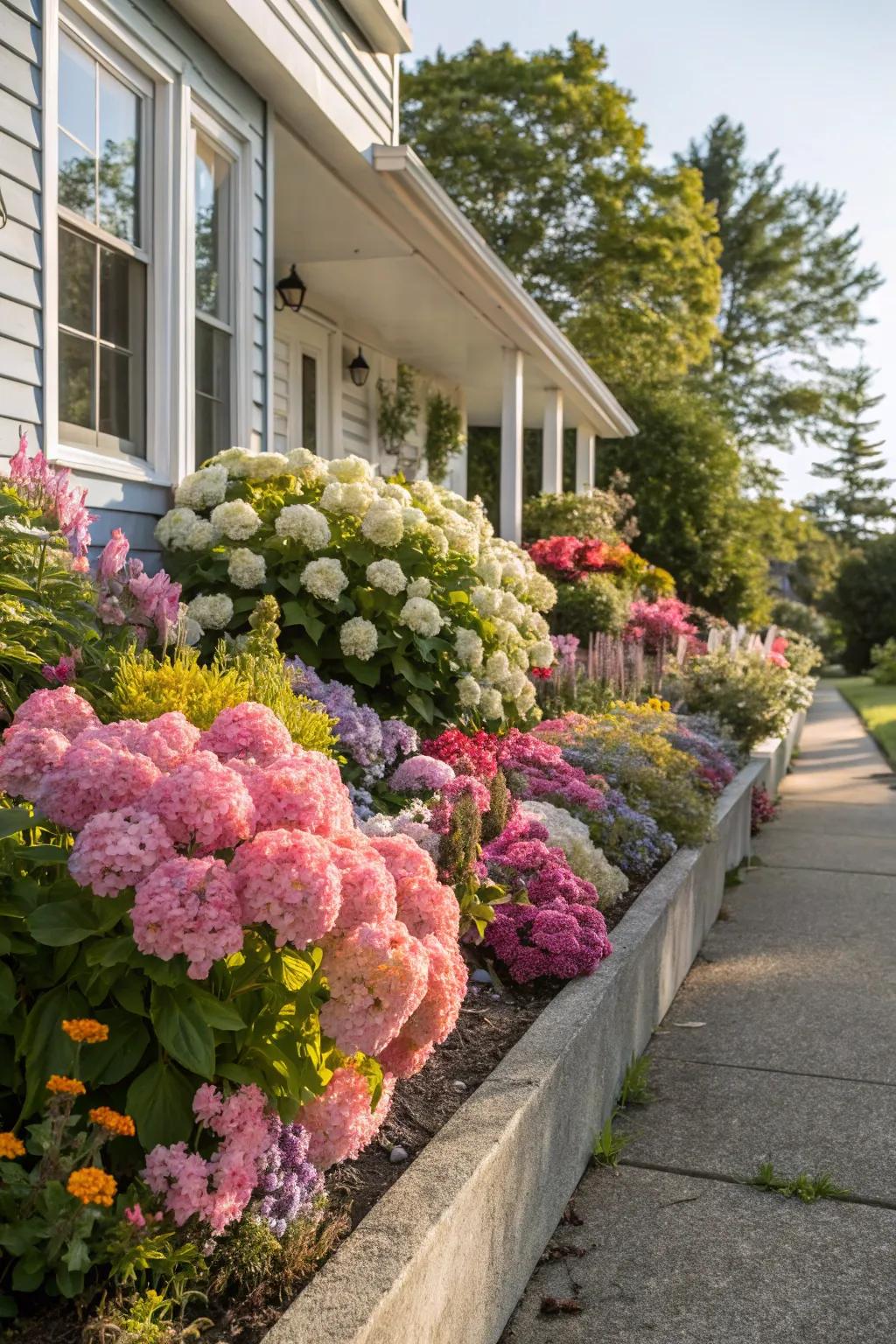
Mix bloom times and the bed keeps changing instead of peaking once. Tulips and daffodils open in spring, coneflowers and daylilies carry summer, and asters finish in fall. Plant the bulbs in autumn so they are ready to come up early. My own foundation plantings hand me a new surprise every few weeks.
6. Hostas for a Woodland Feel
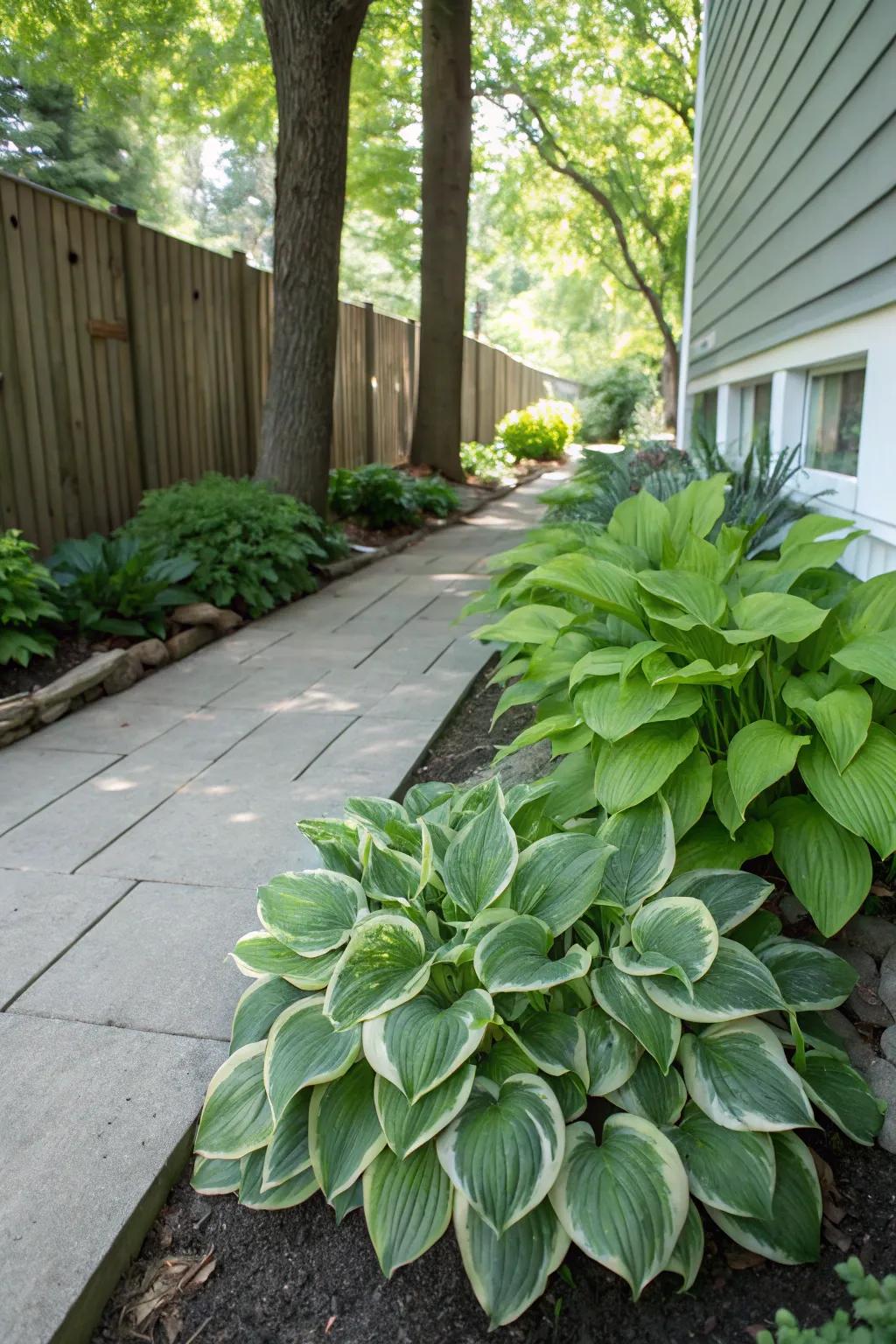
Shady strips on the north side of a house are where hostas shine. Their broad leaves come in blue-green, chartreuse, and white-edged forms, and they build a cool, quiet look under eaves. Pair them with ferns for more texture. They show up in plenty of creative landscaping ideas for shaded areas.
7. Low-Maintenance Shrubs to Anchor Beds
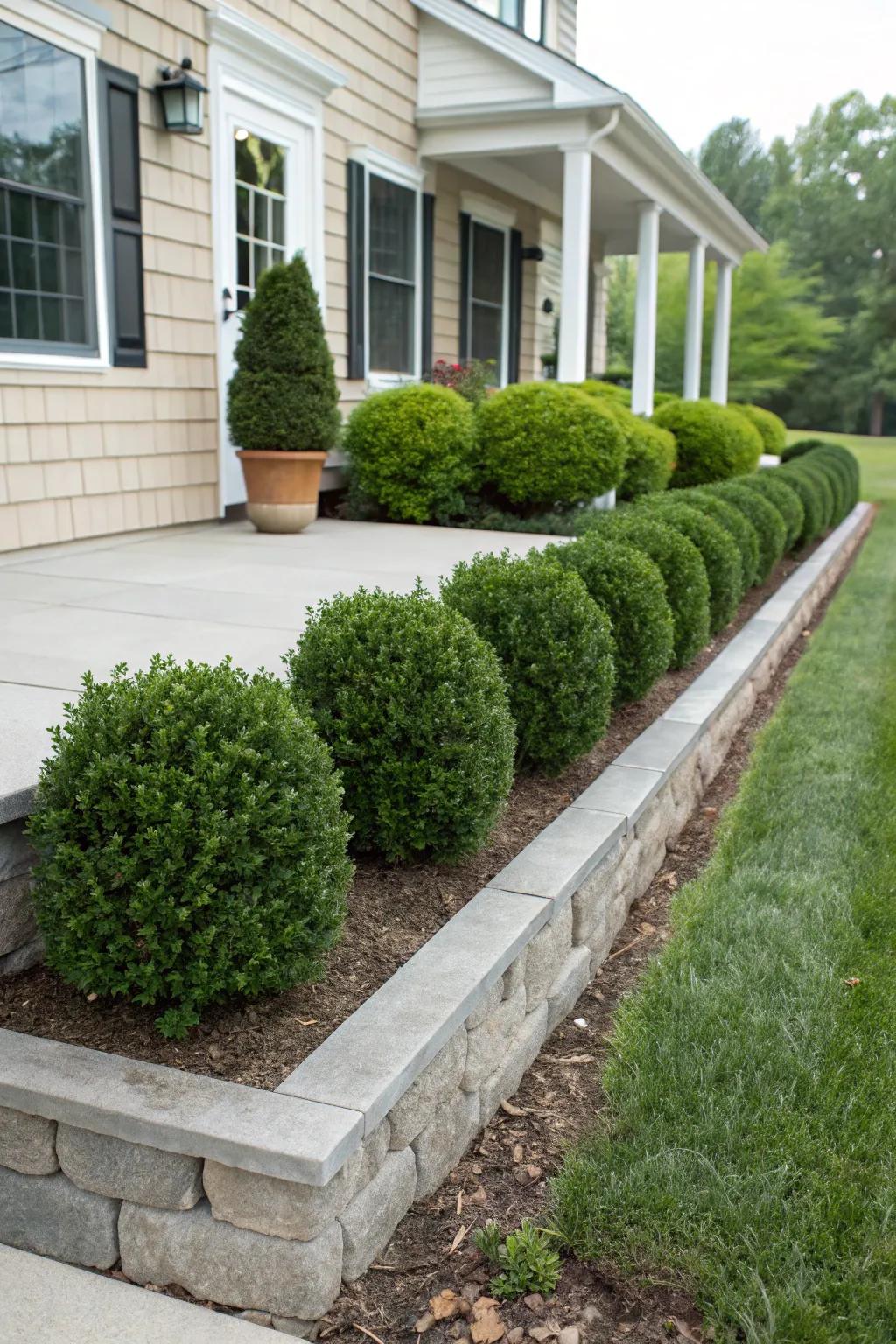
Some of us want structure without a weekly chore list. Boxwood gives that tidy, rounded shape and asks for little more than one shearing a year. Dwarf spirea and inkberry work the same way. Keep them a couple of feet off the wall so air moves behind the branches.
8. Foxtail Lilies for Drama
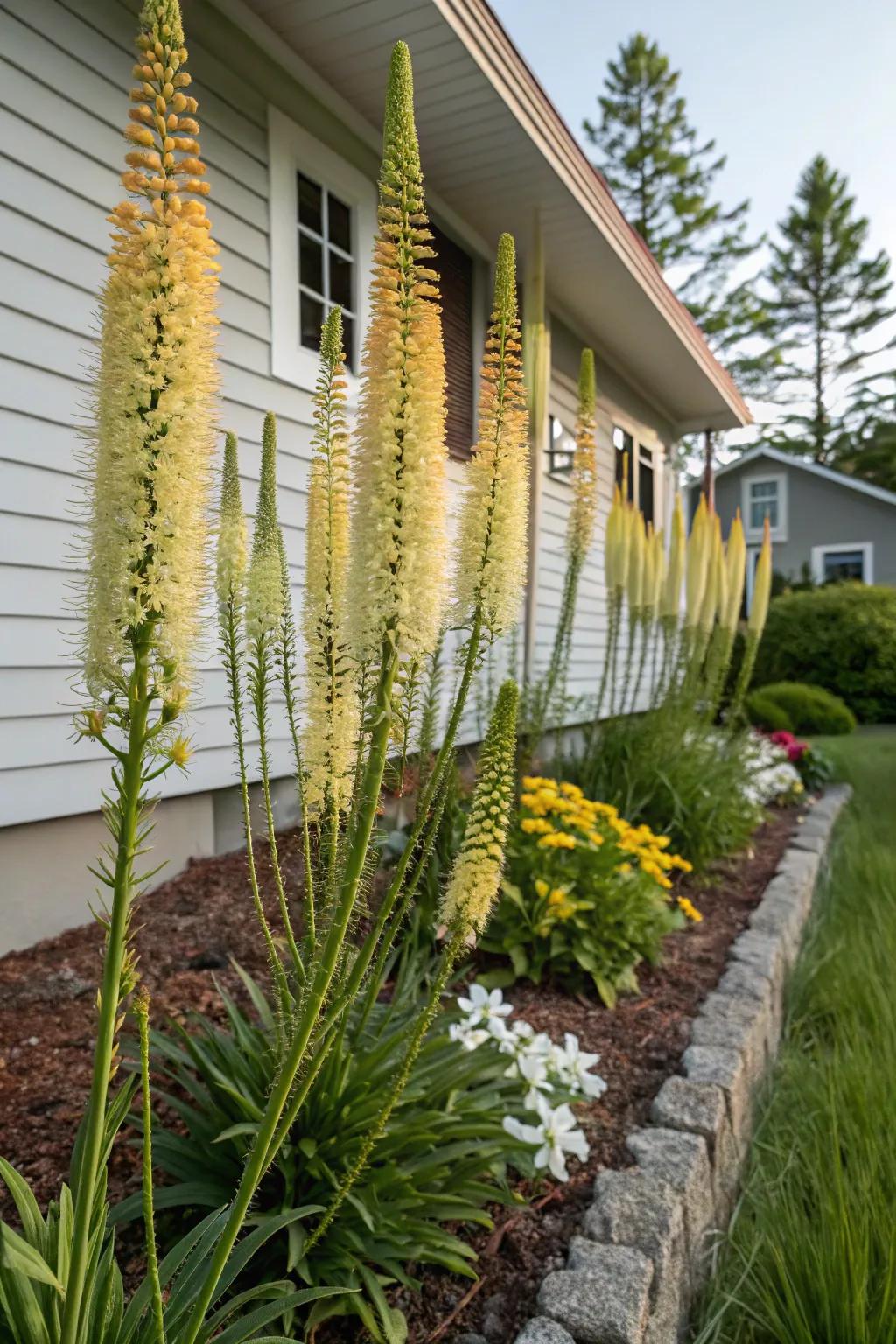
Tall spikes turn a flat bed into something worth stopping for. Foxtail lilies send up spiky blooms in orange, yellow, and cream that tower over shorter plants. Plant them in a group of three toward the back of the bed for the strongest effect. If you like this structural look, explore these foxtail palm landscape ideas to add more vertical interest to your garden.
9. Ornamental Grasses for Movement
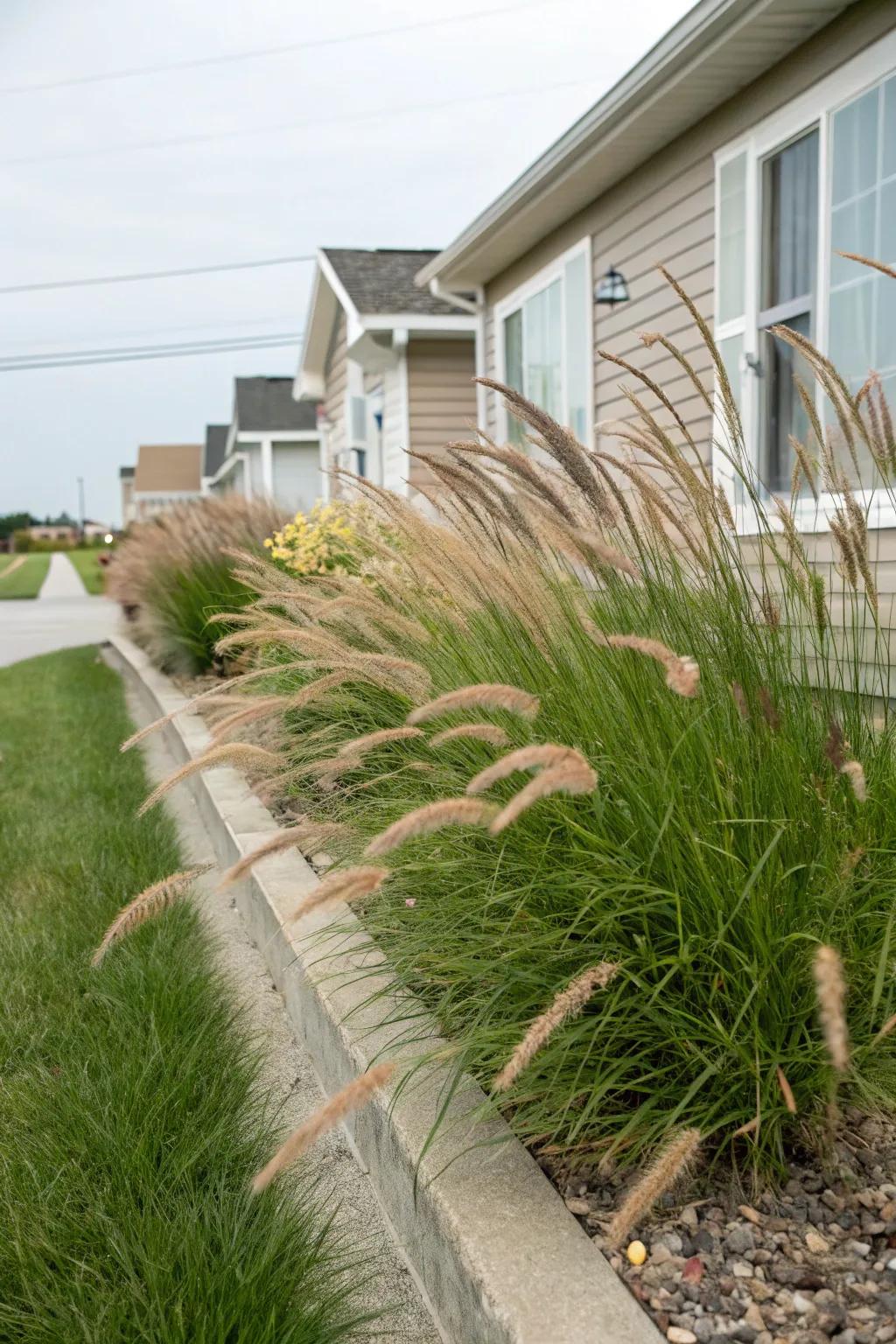
Grasses do something shrubs cannot: they move. Even a light breeze sets the blades swaying, which softens hard corners and blank walls. Fountain grass and switchgrass hold their seed heads into winter, so cut them back in early spring instead of fall. They anchor our low-maintenance PNW landscaping ideas.
10. Ornamental Onion for Texture
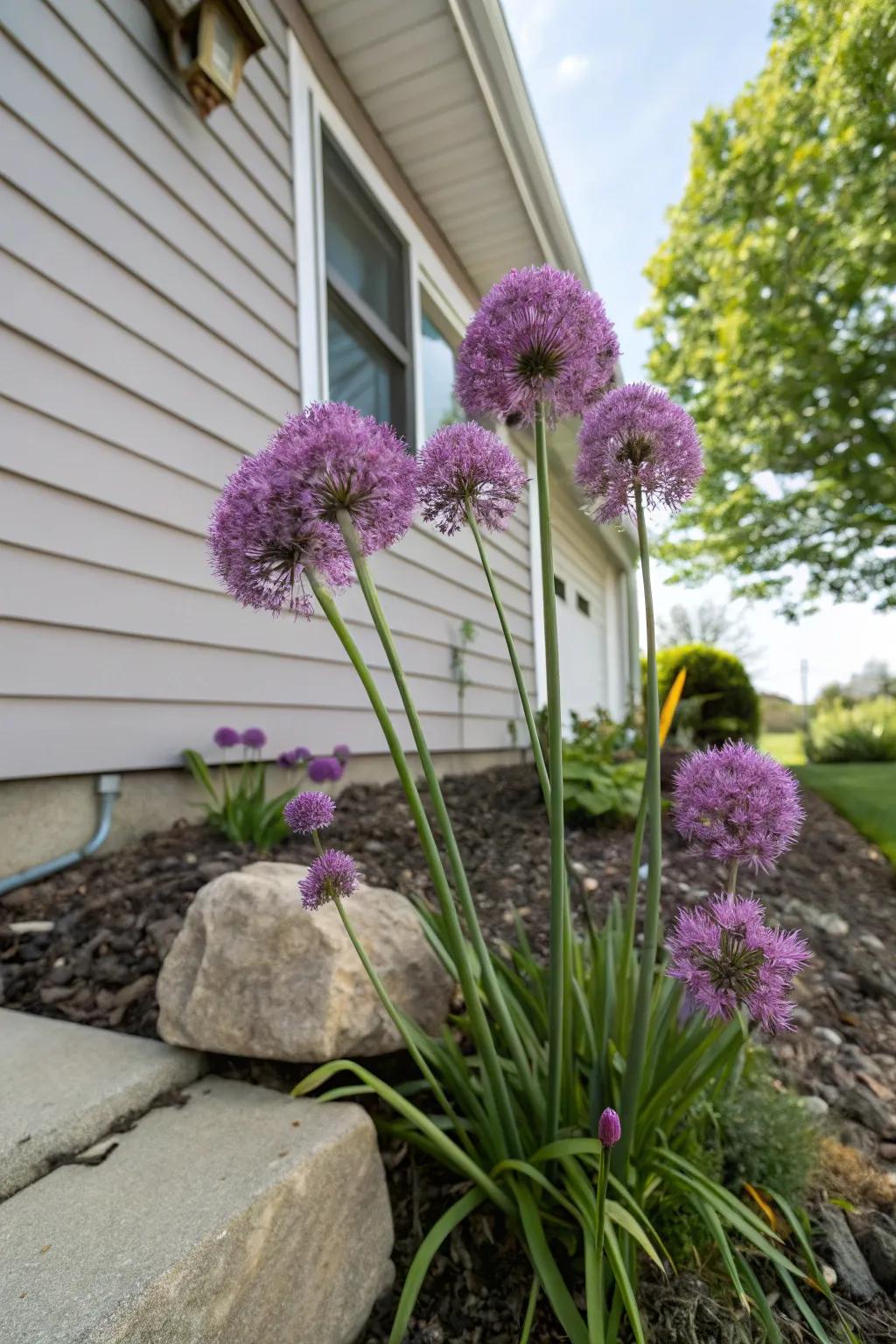
Round purple globes on bare stems give a foundation bed an unexpected jolt. Ornamental onion, or allium, holds that shape for weeks and dries well right on the plant. Deer and rabbits usually leave it alone. It stays a favorite in my foundation planting ideas for garden designs.
11. Bold Hydrangeas by the House
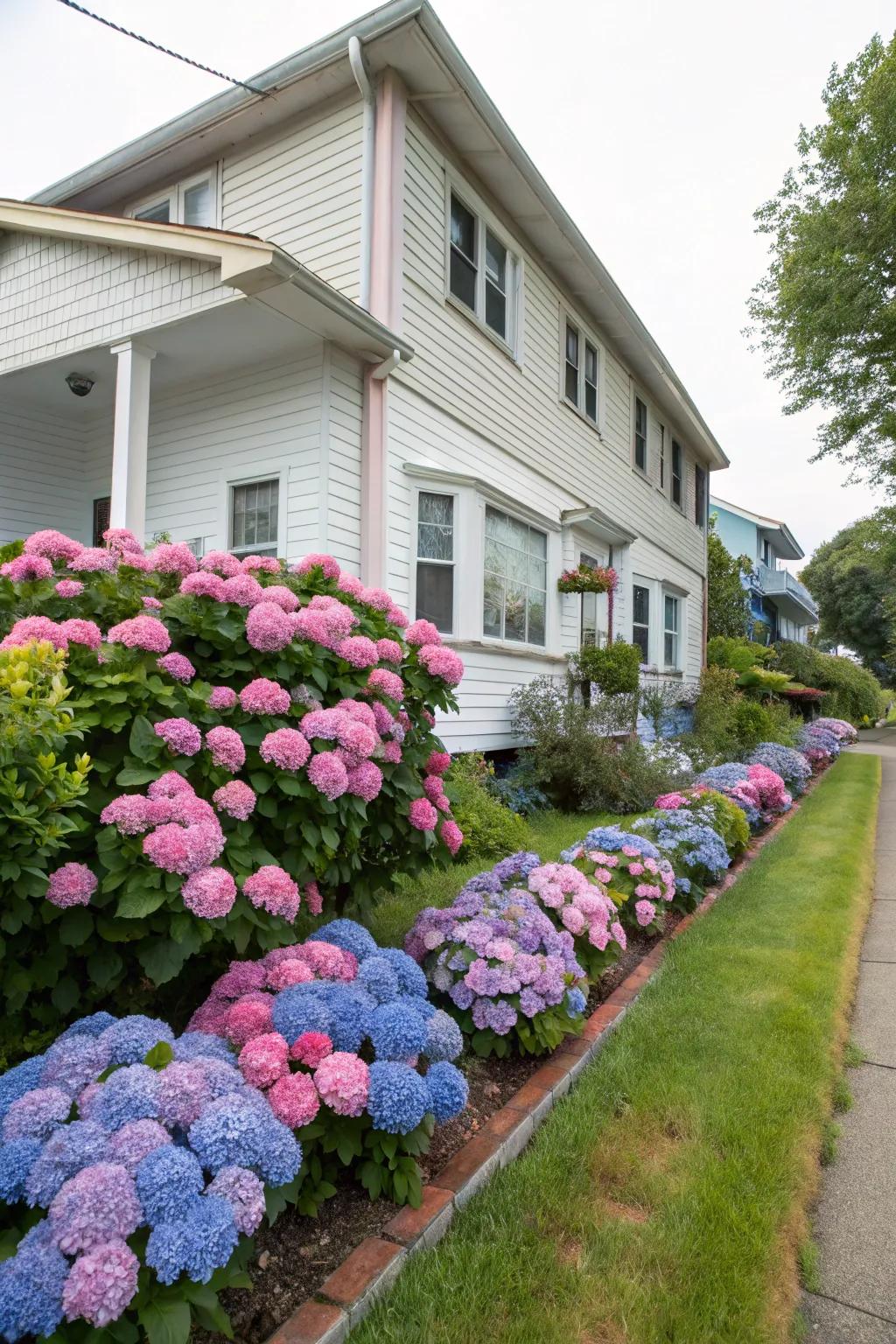
Hydrangeas act like statement jewelry for a house front: big, bold, hard to miss. Those oversized blooms in blue, pink, or white pop against brick and siding alike. I use them to frame windows because they fill the wall without blocking the glass. Morning sun with afternoon shade keeps the flowers from wilting.
12. Why Mulch Your Foundation Beds
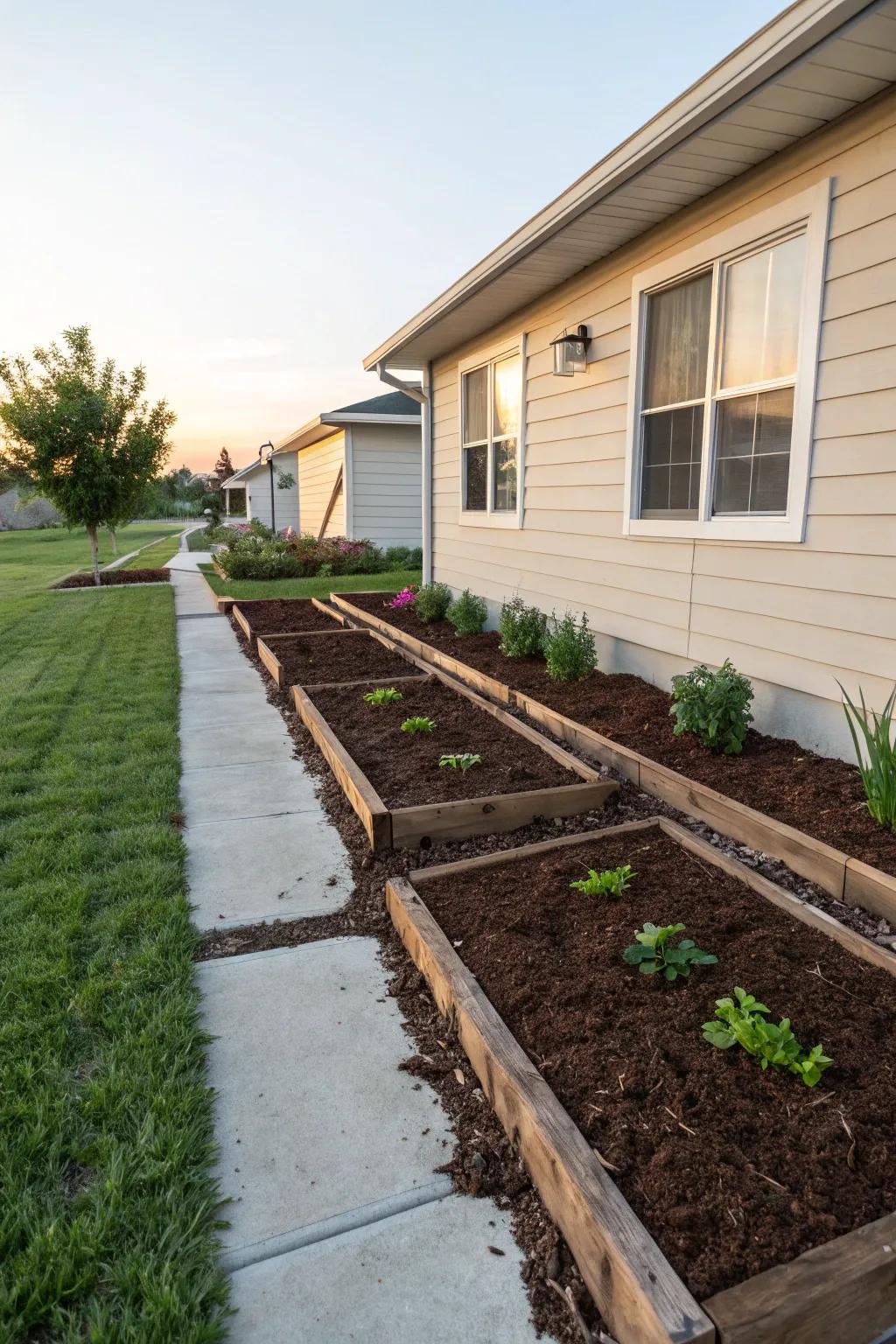
Mulch does two jobs at once. It holds moisture in the soil and blocks most weed seeds from sprouting. Shredded bark or pine straw also gives the bed a clean, finished edge that makes the plants look intentional. Keep it a few inches back from stems and siding. For more inspiration, check out these stunning landscaping ideas around your foundation.
13. Creeping Vines on Bare Walls
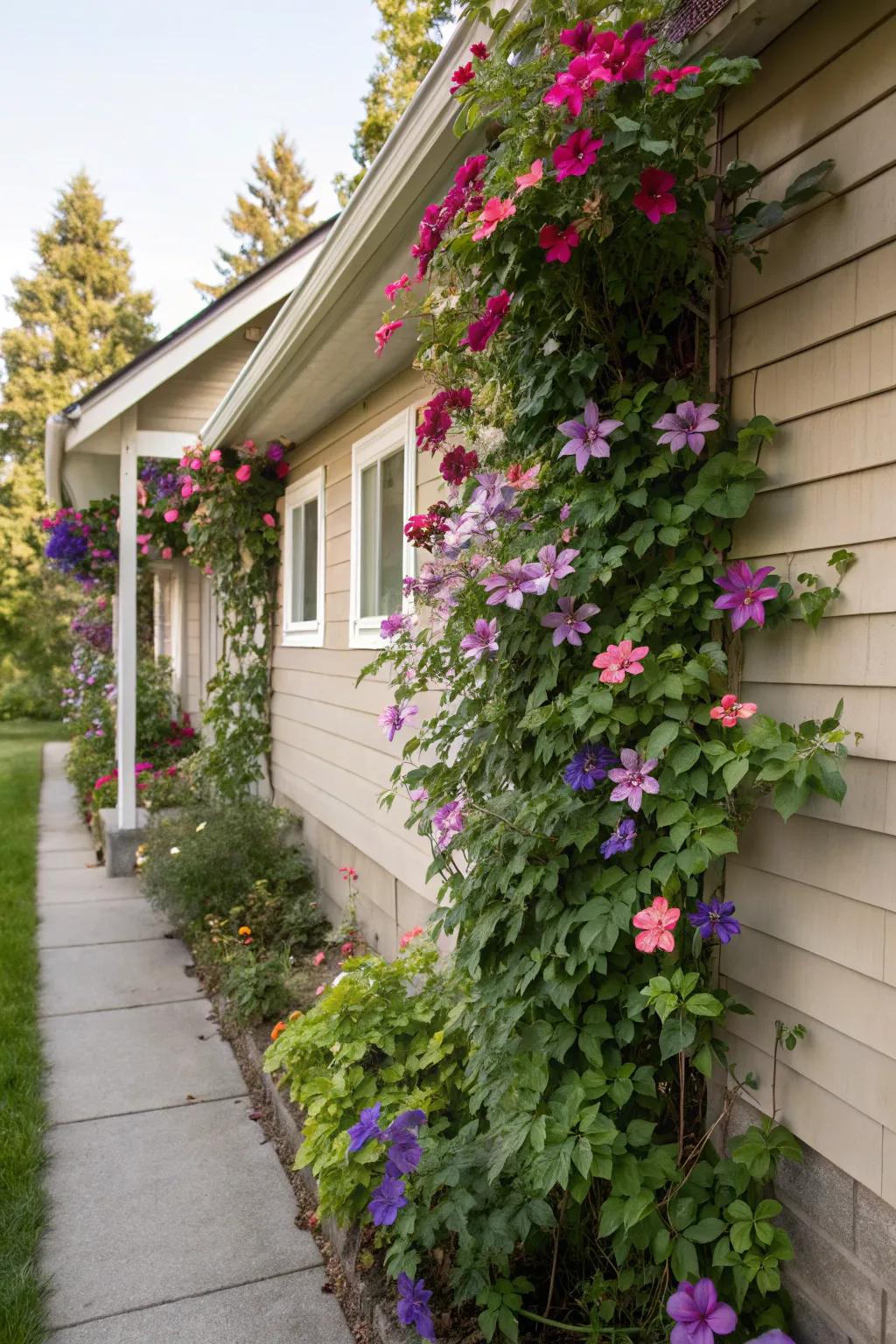
A plain foundation wall becomes a living mural once vines take hold. Clematis climbs and then cascades, adding romance and a little whimsy to the front of the house. Give it a trellis or wire support rather than letting it grip the siding directly. For more ways to hide concrete, explore these stylish exterior foundation covering ideas.
14. Dwarf Trees for Height
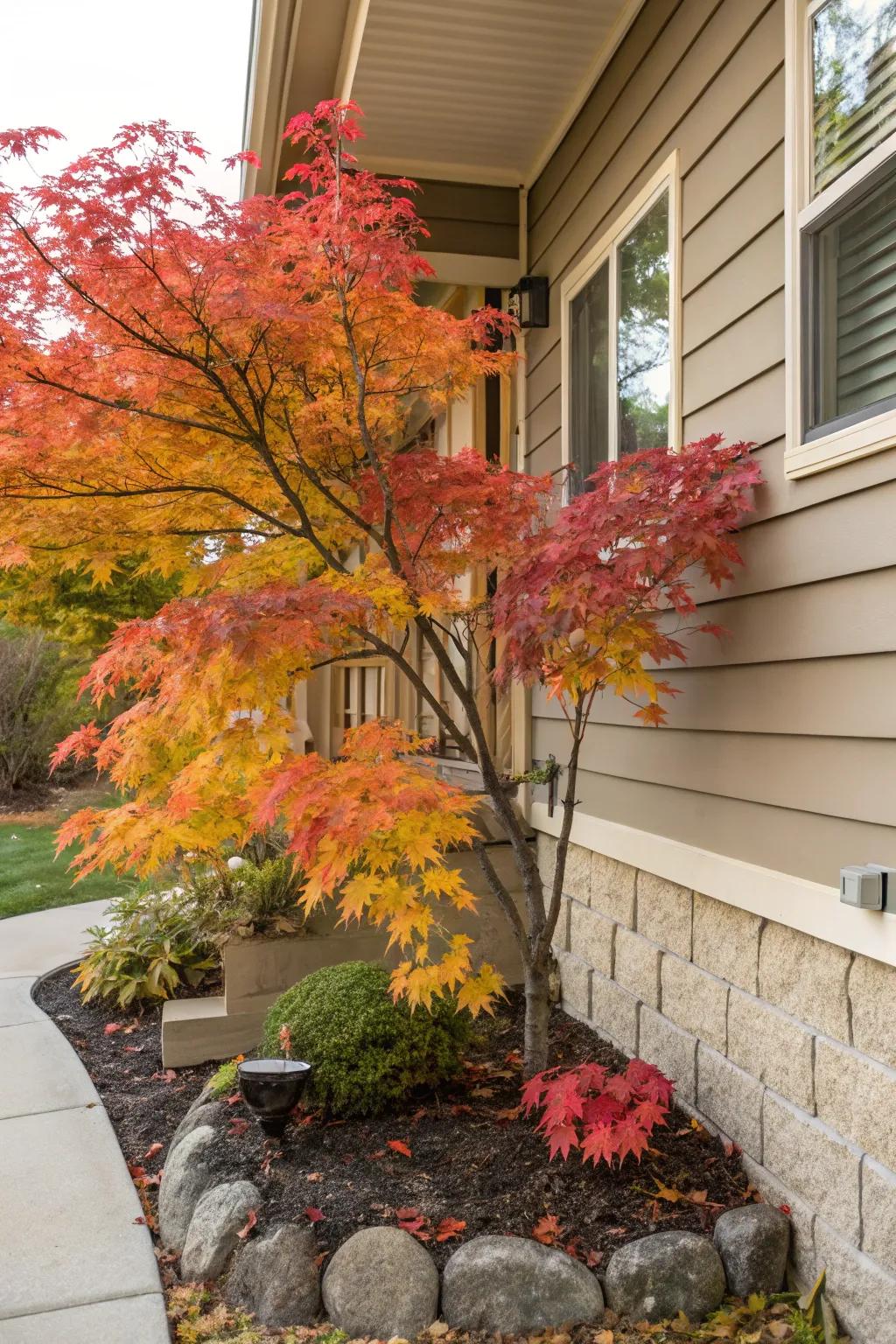
Height without overgrowth is the trick near a house, and dwarf trees deliver it. Japanese Maples bring lace-cut leaves and red or bronze color that reads as delicate and dramatic at once. One planted at a corner softens the whole elevation. These trees anchor many minimalist modern Japanese garden ideas.
15. Evergreen Shrubs for Year-Round Green
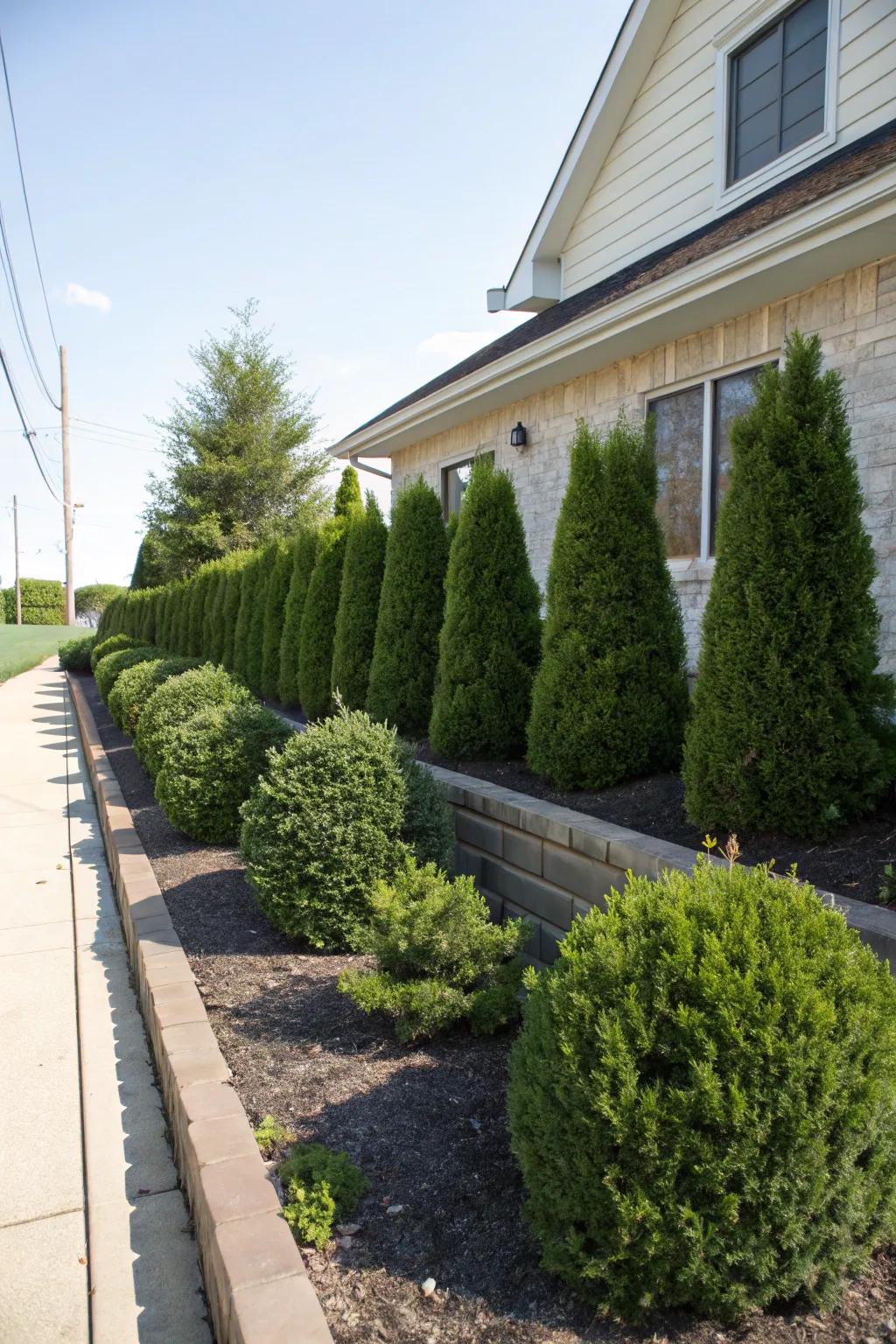
Think of evergreens as the little black dress of foundation plantings. Yews, junipers, and arborvitae hold their color through winter, so the bed never looks empty in January. That steady green backdrop suits brick, stone, and painted siding equally. I rely on them for structure and let flowers fill in around the edges.
16. Rose of Sharon for Summer Color
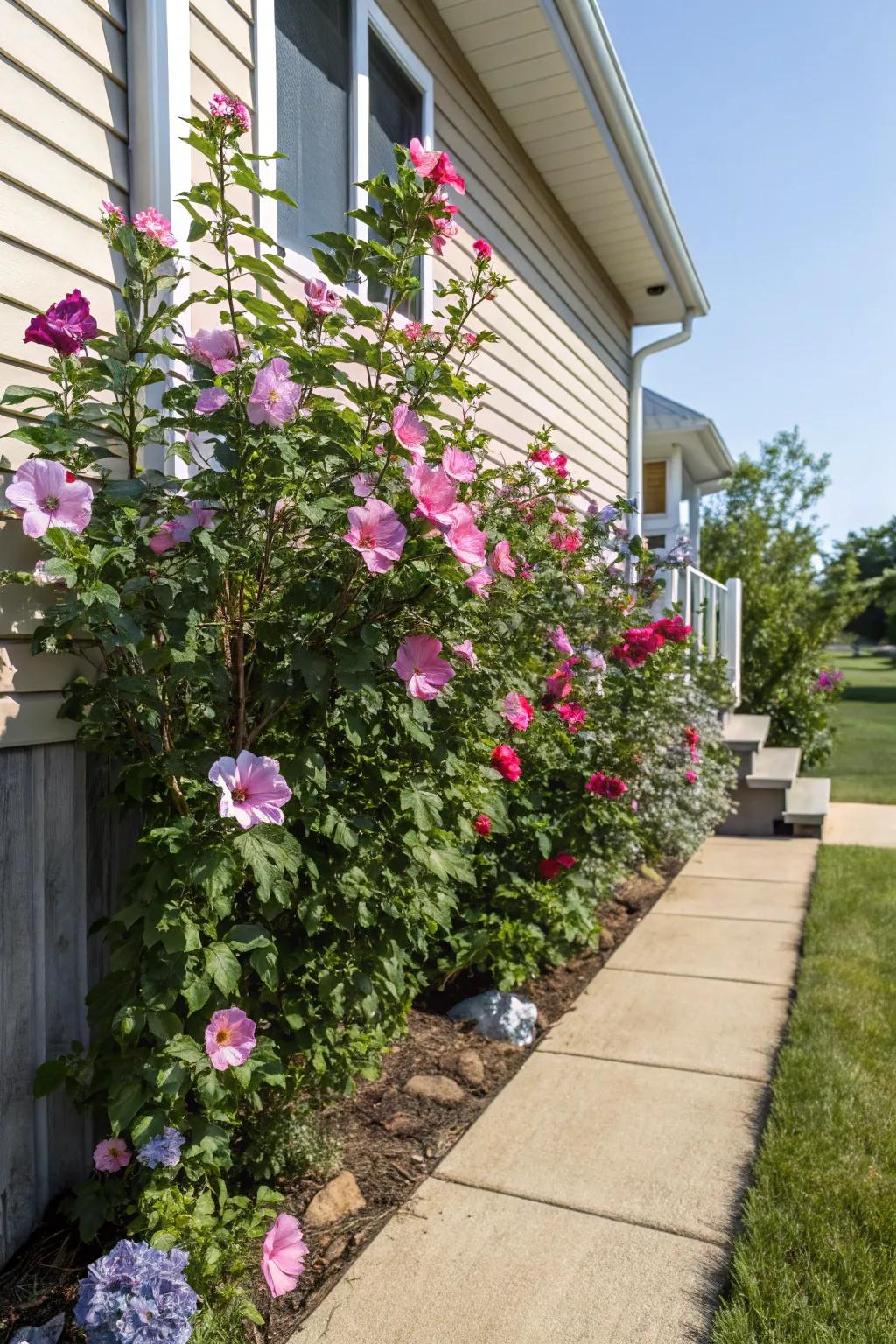
Few shrubs bloom as long as Rose of Sharon. Flowers keep opening from midsummer into early fall in white, pink, lavender, and blue. The upright habit adds vertical interest without crowding a narrow bed, and it takes pruning well in late winter. Explore these Rose of Sharon landscaping ideas to find the perfect placement for your garden.
17. Edible Plants in the Front Bed
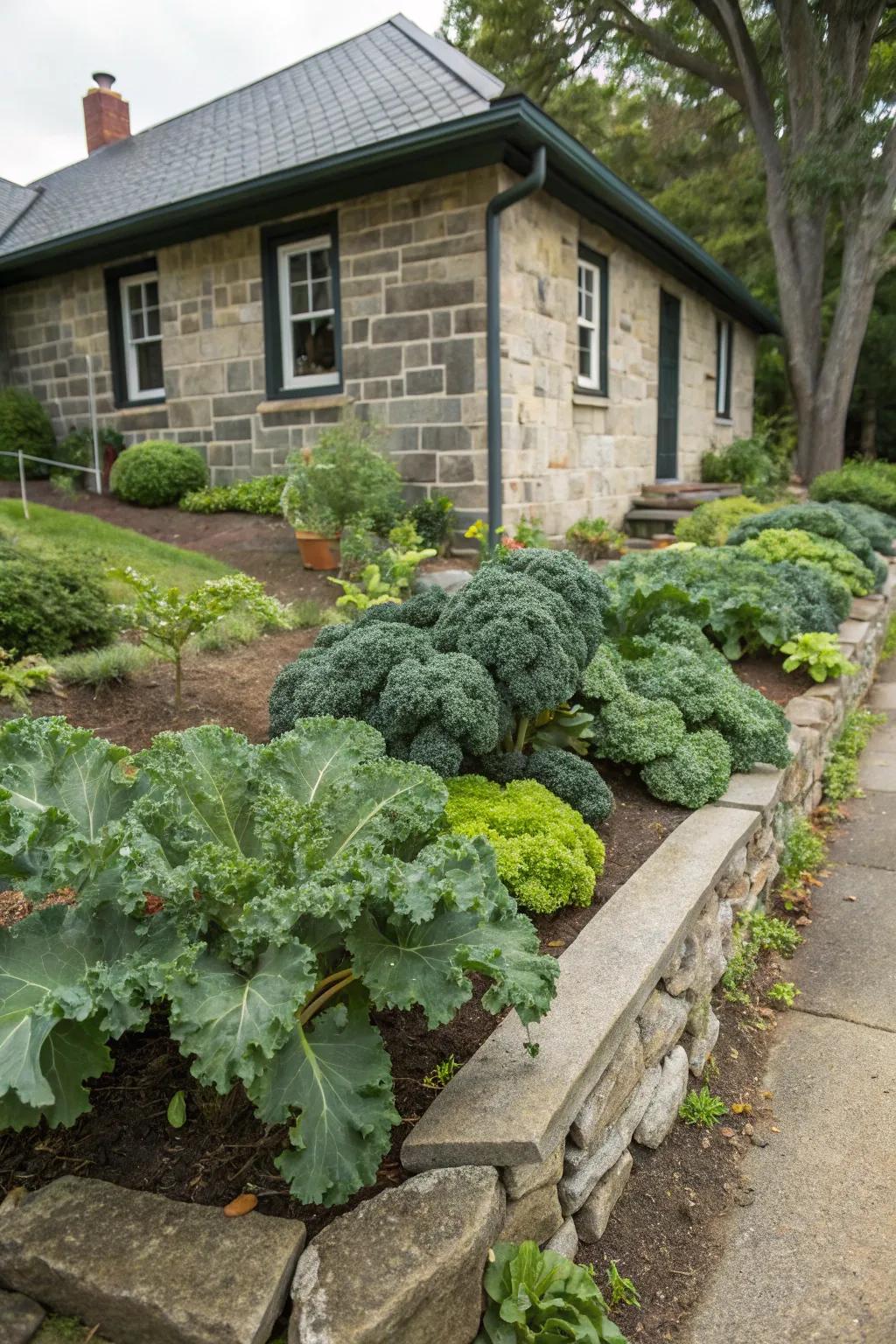
Dinner can come straight out of the foundation garden. Kale and Swiss chard earn their spot on looks alone, with ruffled blue-green leaves and stems in red, yellow, and pink. Both keep producing after light frost, so the bed stays full into fall. Harvest the outer leaves and the plant keeps growing.