Ever wonder why cottage gardens feel so charming? They mix flowers and vegetables together in a way that looks pretty and still earns its keep. This post rounds up 20 ideas to help you build a small outdoor retreat with that classic English countryside feel.
From scattered wildflowers to relaxed seating nooks and rustic trellises, you’ll find plenty of tips here to shape your garden into a calm spot for slow mornings and quiet evenings.
Bring Natural Beauty with Wildflowers
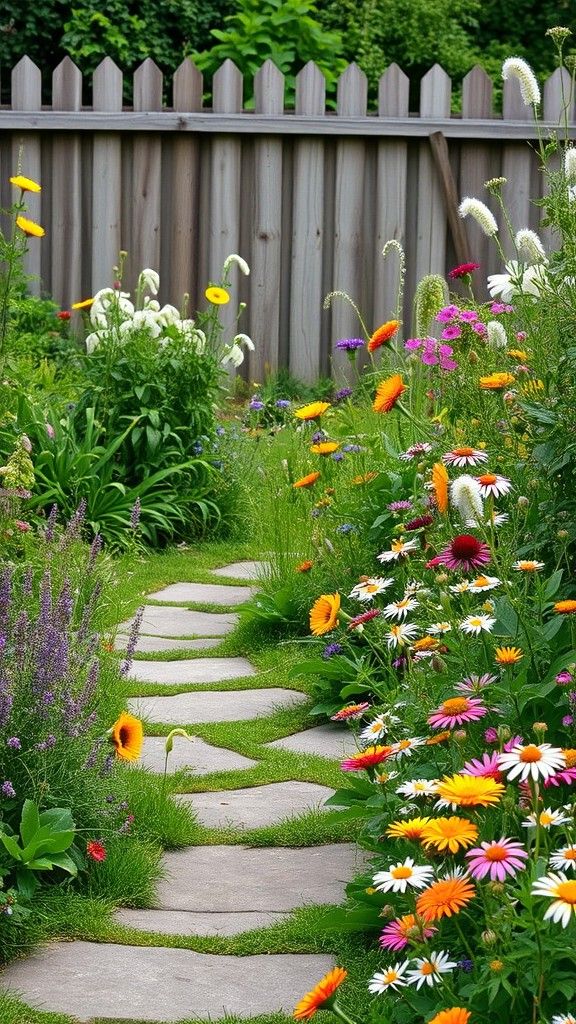
Wildflowers can turn an ordinary garden into a lively, natural-looking space with almost no fuss.
They give off a relaxed, informal charm and offer food and shelter for bees, butterflies, and other pollinators.
Pick native seed varieties like cornflowers, poppies, and daisies for your patch. These grow well without much care and add strong color through the growing season, usually from late spring into early autumn.
Pick a sunny location, then loosen the soil and mix in some compost before scattering your seeds. Press them lightly into the ground so they make good contact with the soil.
A light watering gets them started, and within weeks you’ll see blooms shift and change as the seasons move along. Many wildflower varieties tolerate dry spells well, which makes them a low-maintenance pick for eco-conscious gardeners.
Build a Rustic Stone or Brick Path
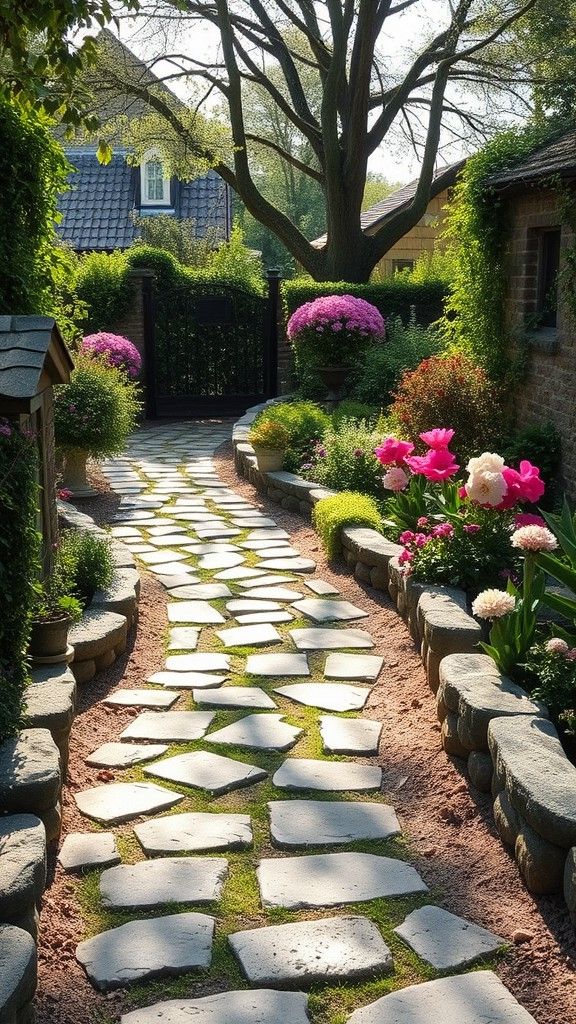
A stone or brick pathway can turn a plain garden into something that feels like a countryside escape.
Rough-cut stone gives a rustic, weathered look, while classic red brick leans more traditional. Pick whichever matches the rest of your garden’s style.
Mark out your path first using stakes and string so you know exactly where it will run. Dig a shallow, level trench along that line, then add a layer of sand or gravel underneath for drainage.
Lay your stones or bricks tightly together, then fill any gaps with extra gravel or a bit of moss for a softer, lived-in look.
The finished path does double duty: it adds structure to the garden’s design and gives you an easy route to walk through your beds without stepping on the plants.
Build a Relaxing Seating Nook
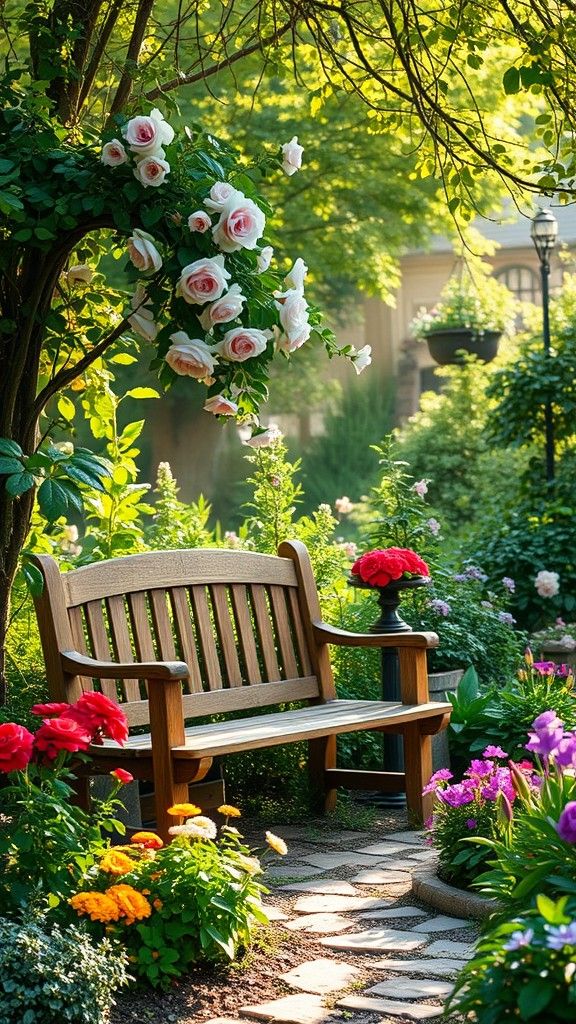
A seating area gives your cottage garden a spot to actually sit and enjoy it. Rattan chairs and wooden benches hold up well outdoors and fit naturally into a garden setting.
Add thick cushions in floral or checkered fabric for extra comfort and a pop of pattern.
Tuck your seating under a shady tree or beneath an arbour. The shade keeps things comfortable on warm afternoons and shelters you from a light drizzle.
String lights or lanterns add a soft glow for evening get-togethers. Keep a small side table nearby for a mug of tea or a paperback, so the space works for both quiet mornings and relaxed evenings.
Build a Charming Arbour or Pergola
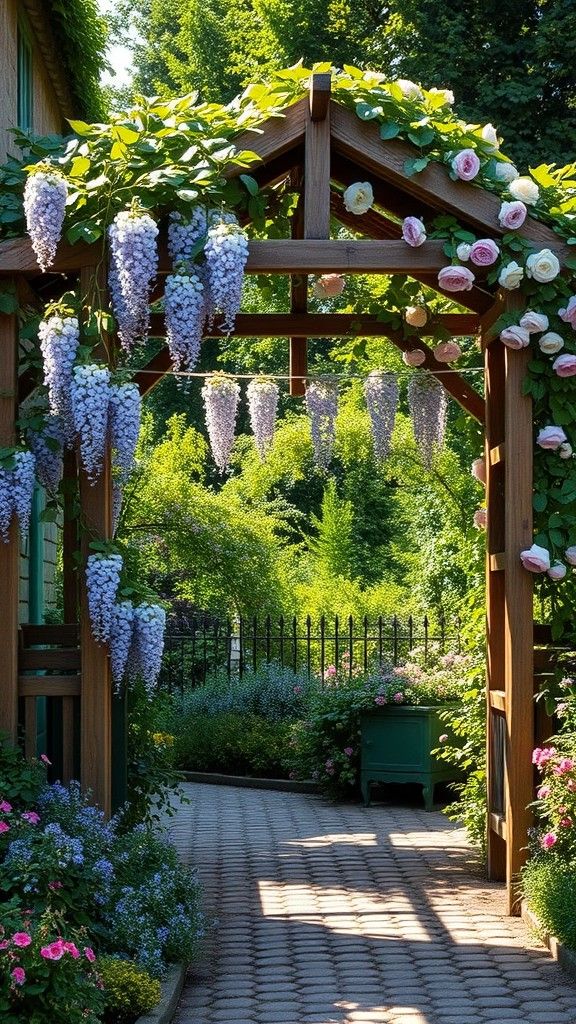
An arbour or pergola gives your garden a strong focal point and a shaded spot to sit. Both structures work well as an entry point into a garden or a quiet corner within it.
Wood suits a garden that leans rustic and blends into greenery, while metal frames suit a more modern, streamlined look.
Train climbing plants such as wisteria or clematis up the frame to soften the structure and add color through spring and summer.
These climbers fill in the frame with shade and fragrance over a season or two. Add a bench underneath, and you’ve got a quiet reading spot tucked away from the rest of the garden.
Bring in Vintage Garden Furniture
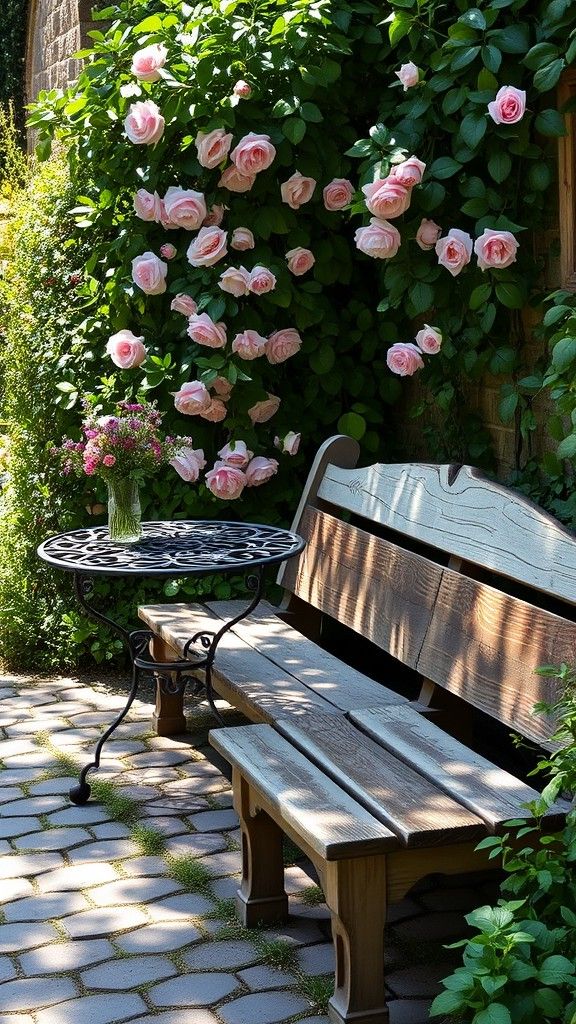
Old, weathered furniture pieces can give your cottage garden a sense of history that new items rarely match.
Cast iron benches, wrought iron chairs, and worn wooden tables all bring texture and character to an outdoor setting.
Flea markets and estate sales are worth a visit for this kind of find. A rustic picnic table or an old garden swing often comes with a story, and pieces like these are usually one of a kind.
A fresh coat of paint or varnish brings tired pieces back to life without erasing their worn charm, letting old and new furniture sit side by side.
Group your vintage pieces into small nooks tucked among greenery and flowering plants. Cushions and a folded throw make the spot more comfortable and more likely to actually get used.
Weathered furniture like this is a fast way to bring genuine English countryside character into a small backyard.
Add Vertical Interest with Climbing Plants
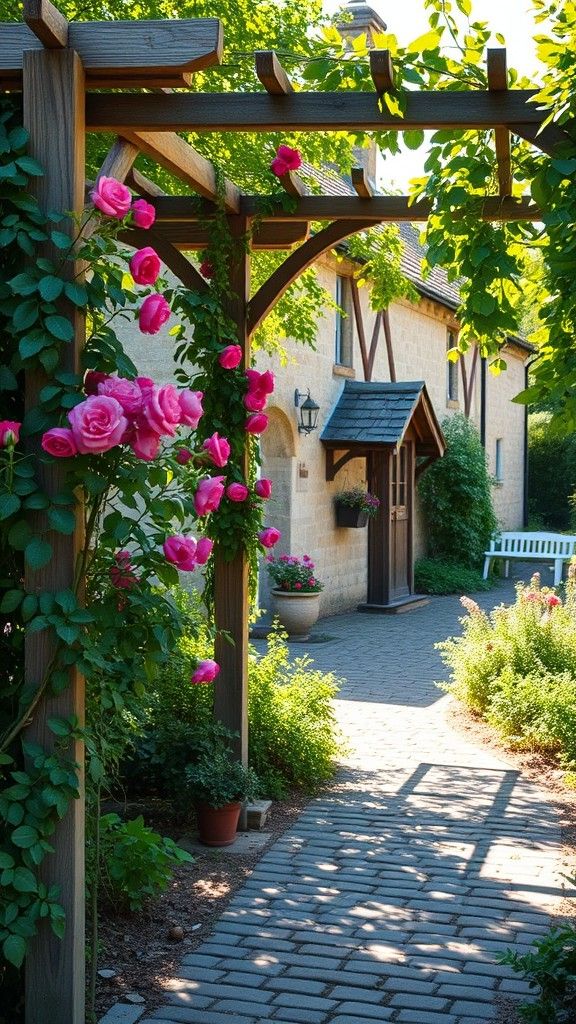
Climbing plants let you use vertical space in a small garden instead of only working with ground-level beds. This is an easy way to add height and texture without giving up square footage.
Wisteria and clematis wind naturally around trellises, fences, and arbours, filling in gaps with dense, layered greenery and seasonal blooms.
Honeysuckle and morning glory add scent along with color. Grow them against a sunny wall or a sturdy support, and they’ll draw in bees and butterflies once they flower.
Prune these climbers on a regular schedule, ideally after their main flowering period, so they stay full and healthy instead of tangling into a mess that swallows nearby plants.
Grow a Cottage-Style Vegetable Patch
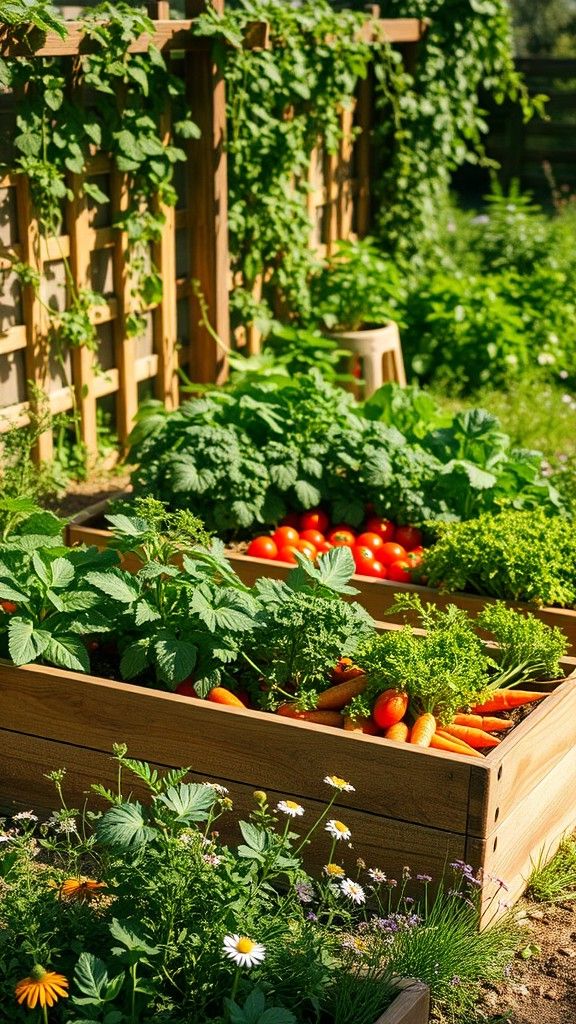
Create your cottage-style vegetable patch by combining aesthetics with functionality. Start by selecting a sunny spot in your garden, ideally with good drainage.
Consider building raised beds surrounded by pathways made of gravel or uneven stones for that rustic look.
This not only enhances appearances but also keeps soil healthy and maintained.
Why not go for some classic veggies like tomatoes, carrots, and herbs and plant them all together in clusters? It’ll give your garden a charming, relaxed vibe.
And don’t forget to add some colorful flowers like nasturtiums or marigolds to bring in beneficial bugs and make your garden more diverse.
Plus, you can put up a simple, rustic fence made of willow or picket style to keep out any unwanted critters and give your garden that cozy cottage look.
Add Character with Handcrafted Planters
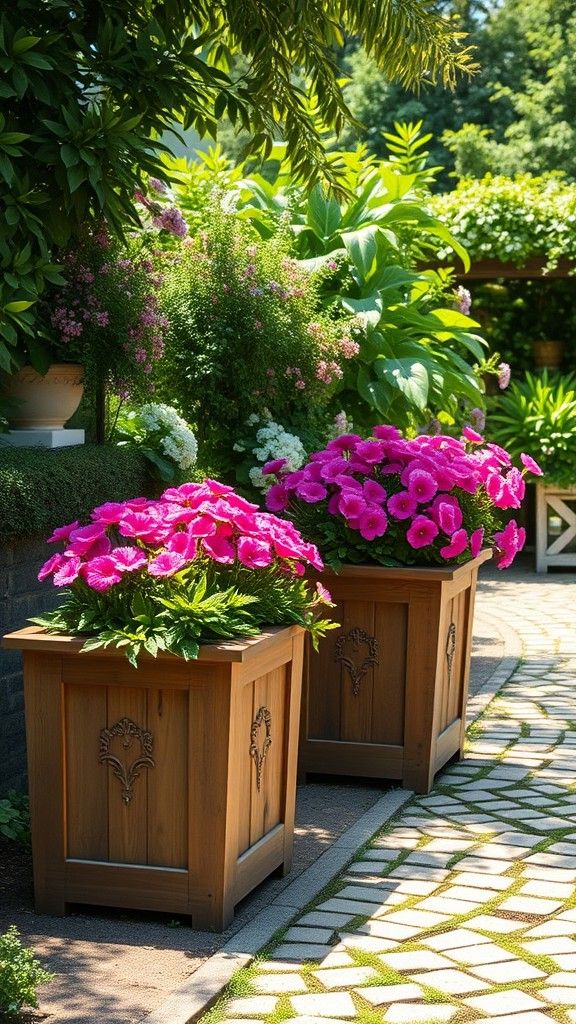
You can elevate your cottage garden by choosing handcrafted garden planters that reflect rustic charm. Opt for materials like wood, ceramic, or metal, which not only enhance aesthetics but also provide durability.
Look for unique designs, such as weathered wooden crates or terracotta pots adorned with intricate patterns.
To personalize your space, consider creating your own planters. For instance, repurpose old barrels or wooden pallets into stunning vertical gardens.
These handcrafted features add both character and a touch of creativity to your outdoor sanctuary, making your cottage garden truly unique.
Bring Calm with a Garden Water Feature
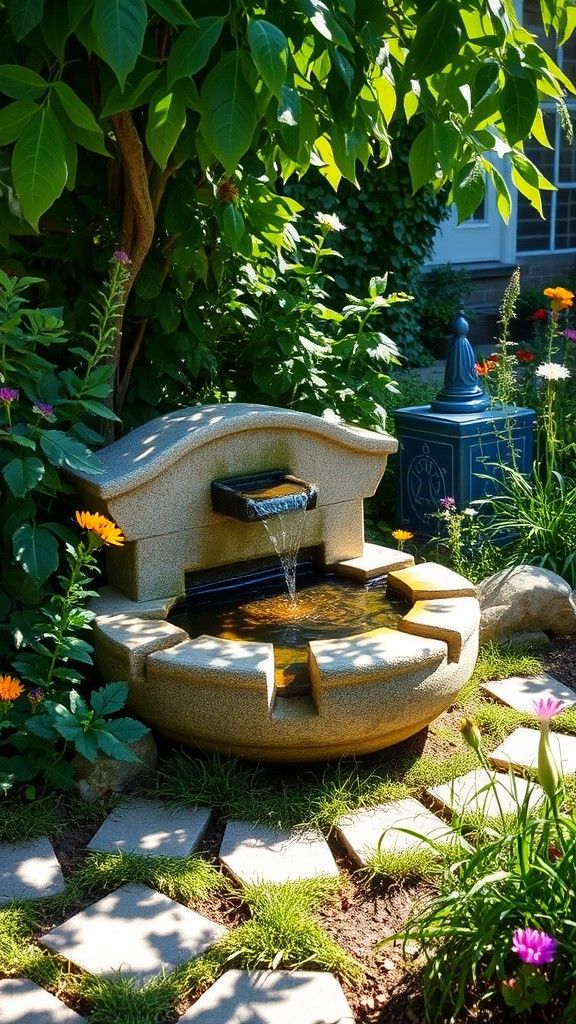
You can transform your garden’s ambiance by installing a water feature. A small pond or a trickling fountain can create a soothing backdrop, enhancing the overall serenity of your cottage garden.
Consider a birdbath as a simple yet charming option that invites wildlife, providing both beauty and the calming sound of water.
If you have space, a mini pond framed with local stones or surrounded by soft greenery can become the garden’s focal point.
Adding water lilies or floating plants not only enriches the visual appeal but also provides a habitat for frogs and beneficial insects.
For ease of maintenance, opt for a solar-powered fountain; it operates effortlessly while ensuring a gentle flow of water, perfect for relaxation.
Combine Bold and Colorful Flowers
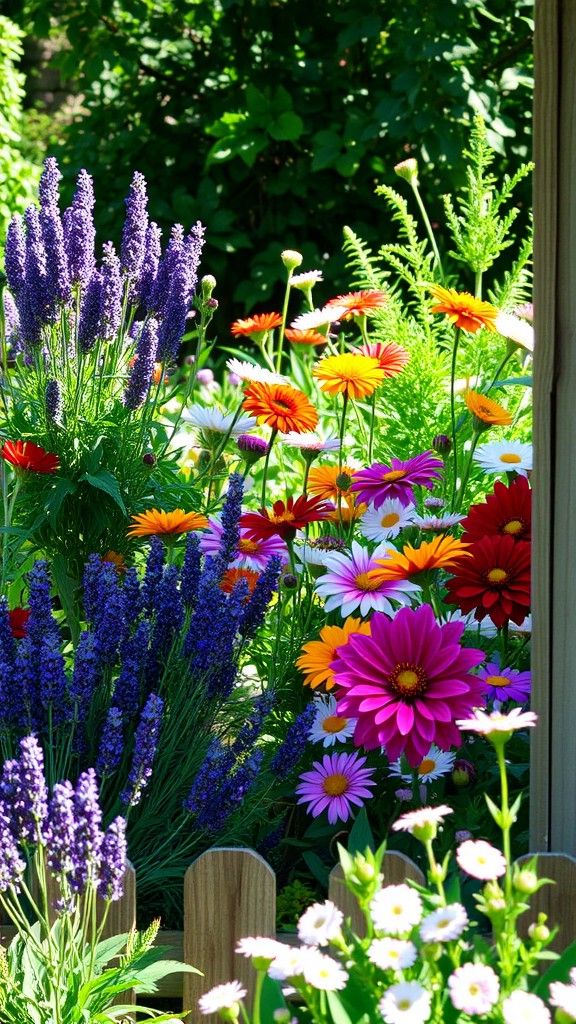
You can create a vibrant and enchanting cottage garden by mixing and matching colorful flowers. Start by selecting a variety of bloom sizes, shapes, and colors to create depth and interest.
For example, pair tall delphiniums with low-growing pansies; this will give your garden a layered effect.
How about mixing some warm and cool colors to create a beautiful garden? Bright colors like red, orange, and yellow will really pop, while softer shades like blue, lavender, and white will bring everything together.
And don’t overlook seasonal flowers like sunflowers in the summer and chrysanthemums in the fall to keep your garden bursting with color throughout the year!
Add Fragrance with a Herb Garden
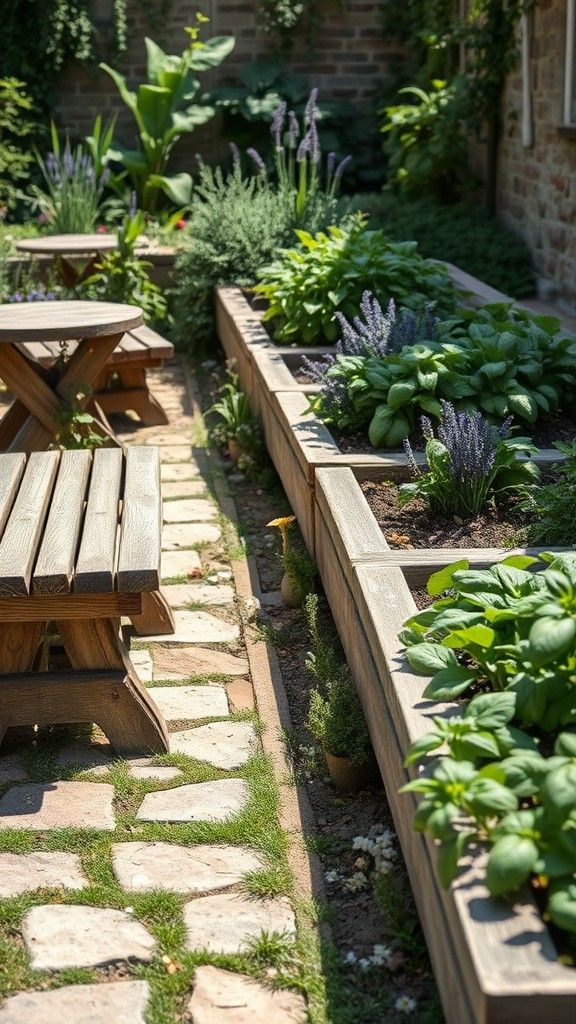
Have you ever thought about planting a beautiful herb garden outside your cozy cottage? It’s a great way to not only add some charm to your surroundings but also enjoy the lovely scents wafting through the air.
You can start by picking out some fragrant herbs like thyme, lavender, rosemary, and basil.
Then, plant them in cute pots or a special area in your garden where they’ll get plenty of sunshine. It’s a fun and rewarding project that will make your outdoor space even more inviting!
Mixing herbs with annual flowers like marigolds or nasturtiums adds an extra touch of color and attracts beneficial insects. For added dimension, try creating a raised bed or a vertical garden, making your herb garden a delightful focal point.
Regularly trimming your herbs not only keeps them lush but also promotes better growth. Embrace the aromatic experience of tending to your own herbal oasis!
Dress Up Windows with Flower Boxes
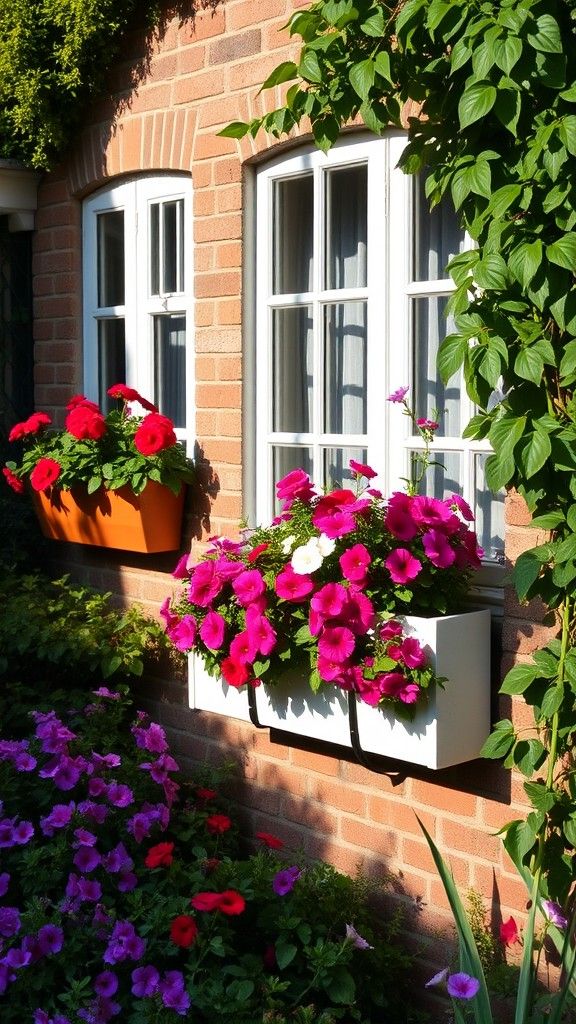
You can instantly elevate your cottage vibe by framing your windows with flower boxes. Start by choosing wooden boxes in classic styles that complement your home’s architecture.
Stain or paint the boxes in shades like weathered gray or pastel colors for an authentic touch.
Why not try filling up those boxes with some beautiful seasonal blooms like geraniums, petunias, or trailing ivy? They’ll not only bring some lovely colors but also give your place a lush and inviting vibe.
Don’t forget to mix up the heights and textures to make it even more charming and eye-catching for your cottage!
Why Choose Soft-Edged Garden Borders
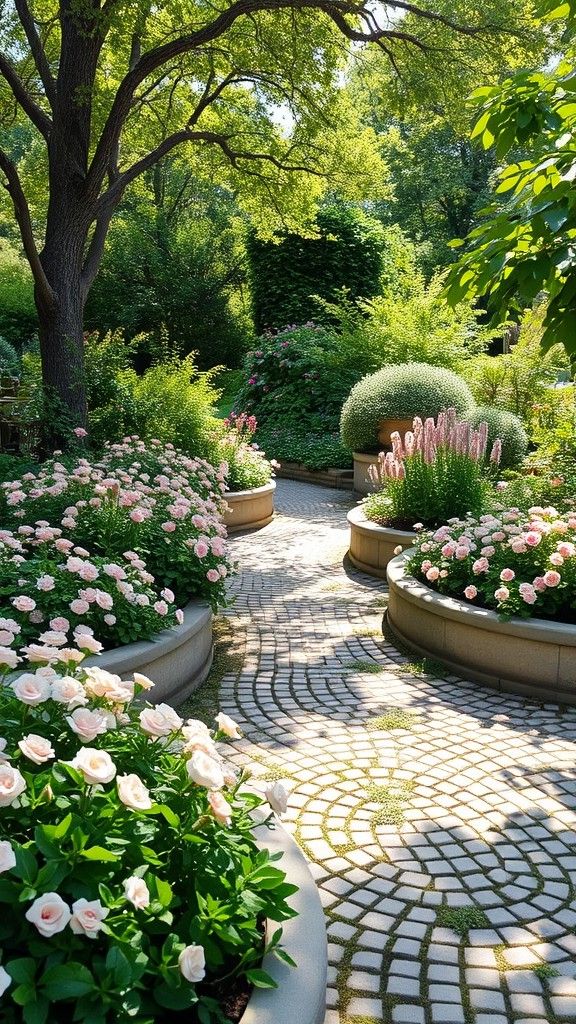
You can elevate the charm of your cottage garden by opting for soft-edged borders. This design choice creates a relaxed and inviting atmosphere, contrasting sharply with harsh, straight lines.
Use curved paths, gentle curves in your plant beds, and flowing shapes to mimic the natural forms found in nature.
Consider using materials like natural stone or weathered wood for your borders. These will not only blend seamlessly with the garden but also enhance the overall aesthetic.
Add lush plants with rounded shapes, such as hydrangeas or peonies, to soften the edge further and create a harmonious feel throughout your outdoor space.
Add Character with Statues and Ornaments
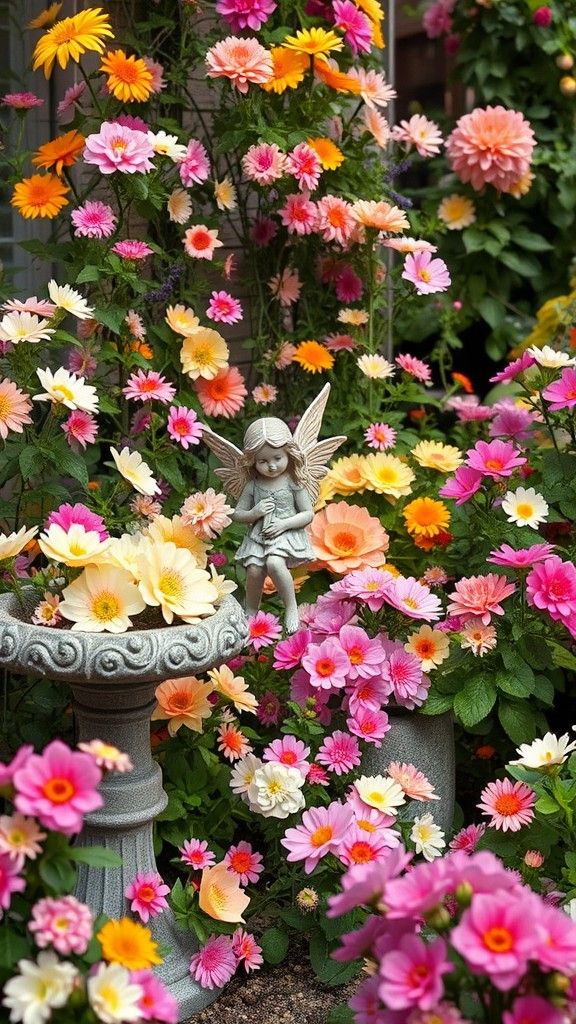
Want to create a charming little oasis in your garden? Why not spruce it up with some lovely statues and decorations?
Think about adding cute fairies, friendly gnomes, or graceful stone birds that match that cozy cottage vibe.
These accents will really make your garden pop and create a magical atmosphere that will catch everyone’s eye as they wander through.
Look for ornaments that complement your plants. Rustic finishes or weathered colors blend beautifully with greenery. A vintage birdbath not only attracts feathered friends but also reflects light and adds a touch of tranquility.
Consider grouping smaller statues in clusters to create miniature vignettes that spark curiosity and invite exploration.
Support Wildlife with Native Plants
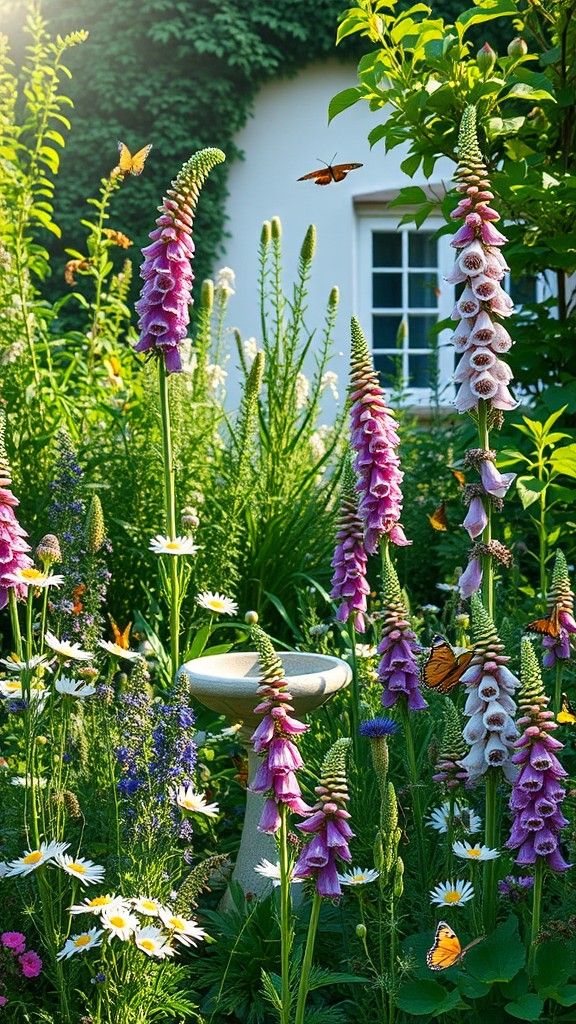
Did you know that adding native plants to your cottage garden can really help out the local wildlife?
Things like coneflower, black-eyed Susan, and milkweed are perfect for attracting bees and butterflies that play a key role in pollinating.
Plus, these plants not only look beautiful in your garden, but they also help maintain a healthy ecosystem in your area. Pretty cool, right?
Consider creating layered plantings with shrubs like elderberry and serviceberry; these provide food and shelter for birds. Additionally, incorporate native grasses like switchgrass to add texture and attract even more wildlife.
By choosing native flora, you’ll contribute to a vibrant and sustainable garden that reflects the beauty of the English countryside!
Use Large Rocks as Focal Points
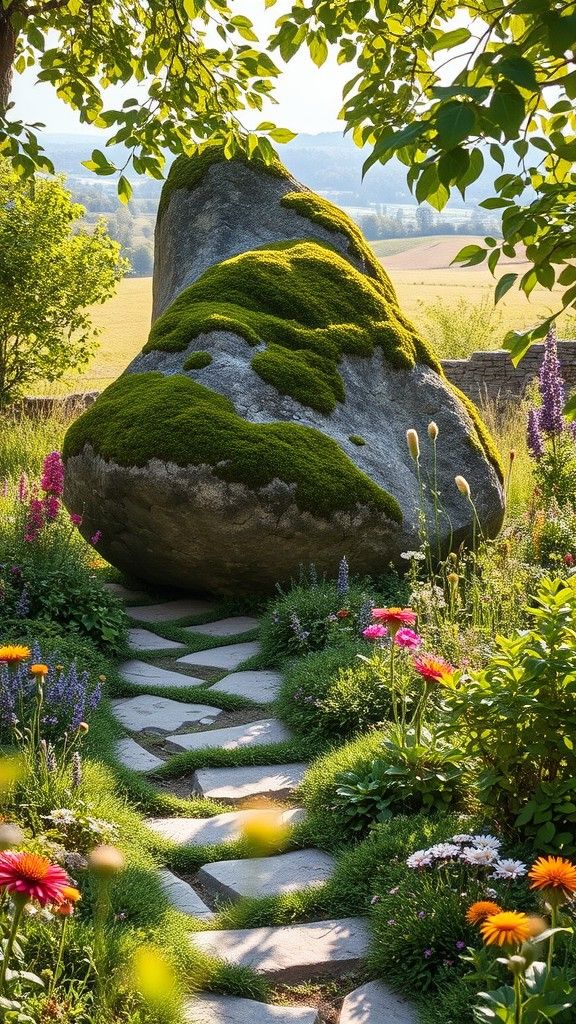
You can transform your cottage garden by creating focal points with large rocks. These natural elements add texture and depth while anchoring your garden design.
Opt for stones that are weathered or moss-covered for a rustic feel, fitting seamlessly into the countryside vibe.
Position the rocks strategically amongst your flowers and greenery. Try placing a large boulder at the center of a circular flower bed or using smaller stones to border a pathway.
Group them in odd numbers to create a more organic look, enhancing visual interest and harmony in the space.
Add Texture with a Hens and Chicks Bed
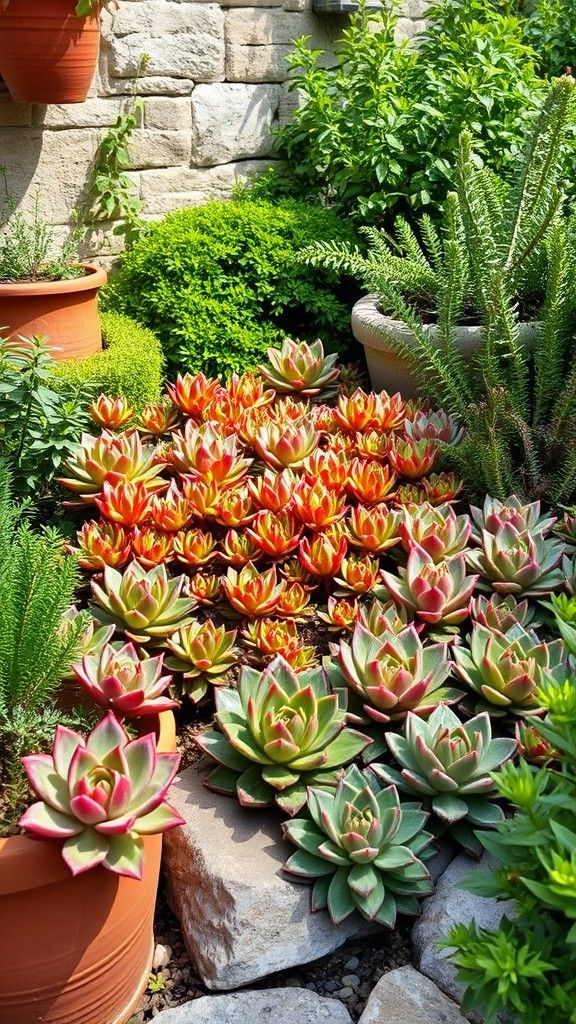
You can create a stunning Hens and Chicks area in your garden for an inviting texture.
These hardy, low-maintenance succulents thrive in sunny spots with well-drained soil, making them perfect for various landscapes.
Select a few varieties of Hens and Chicks, such as Sempervivum tectorum or Echeveria, to introduce color and diversity.
Plant them in clusters, allowing their rosettes to spread and create a lush appearance over time.
Consider combining them with gravel or stones to enhance their natural beauty and add a rustic touch.
If you want your garden to look extra pretty, try using raised beds or a rock garden layout. It’s such a lovely way to add some charm and personality to your cottage garden. And the best part is, these plants are easy to take care of!
Set the Mood with String Lights
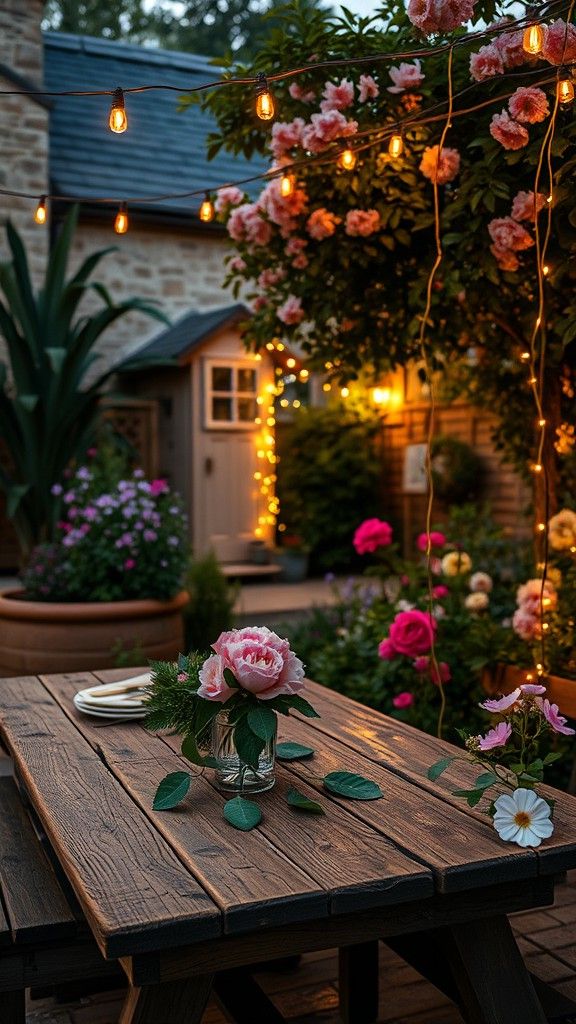
You can instantly elevate the ambiance of your cottage garden by using twinkling string lights. These lights create a magical atmosphere, especially during the evening hours.
Drape them along fences, wrap around trees, or hang from bloom-laden arches to create beautiful focal points that draw the eye.
Choose warm white LEDs for a classic cottage feel, or go for colorful options to add a playful touch. Consider using solar-powered string lights for an eco-friendly choice that requires no extra wiring, allowing you to easily position them wherever you like.
Make sure to test the length needed before purchasing to avoid mismatched setups.
Add a Rustic Trellis for Climbing Plants
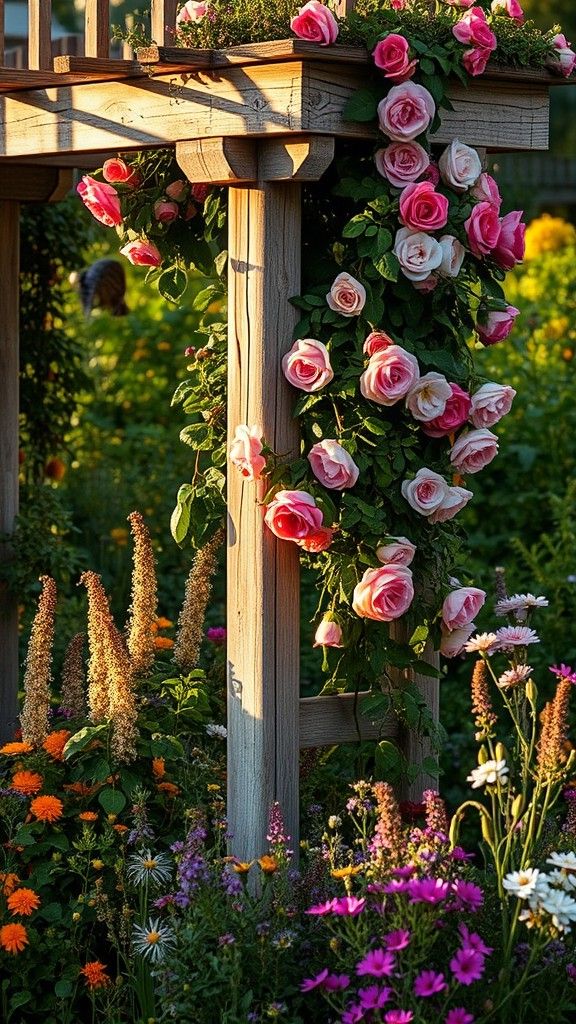
A rustic trellis not only provides support for climbing plants but also enhances the charm of your cottage garden.
Consider using natural materials like wood or bamboo to create a trellis that blends seamlessly with your garden aesthetic.
Position it against a wall or fence and train flowering vines such as sweet peas, clematis, or climbing roses to grow on it.
These plants will flourish, adding vibrant colors and delightful scents while giving your garden vertical interest.
For a touch of personality, think about incorporating elements like hanging pots or birdhouses on the trellis.
This adds an extra layer of beauty and creates a haven for wildlife, enhancing the overall appeal of your English countryside vibe.
Add a Compost Bin for Greener Gardening
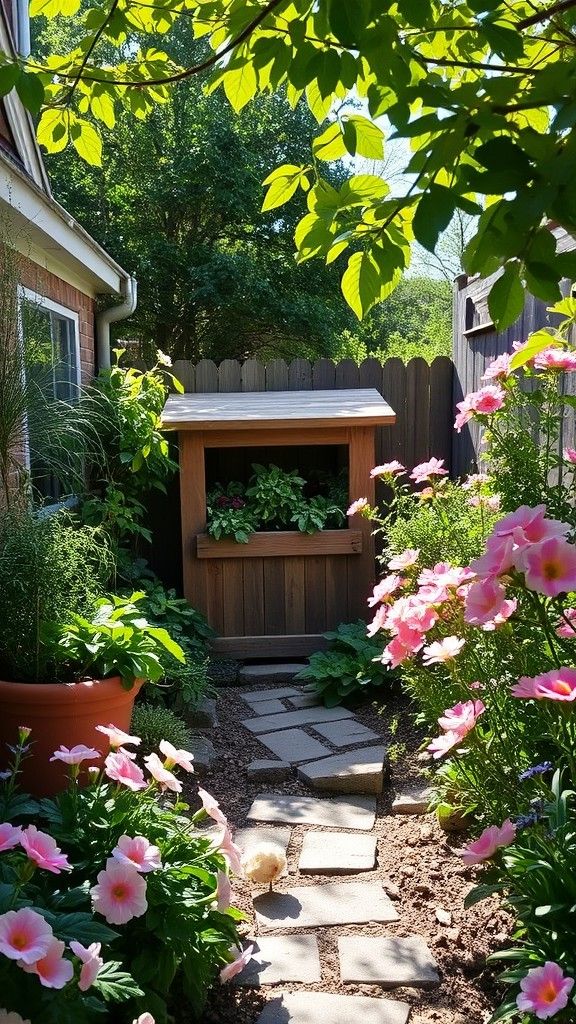
You can enhance your cottage garden’s sustainability by setting up a compost bin. This eco-friendly addition not only reduces waste but also enriches your soil, promoting a healthy garden environment.
Choose a location that’s easily accessible, creating a balance between convenience and aesthetics. Consider using materials like wooden pallets, which are both sturdy and rustic, fitting perfectly with the cottage vibe.
Aim for a 3:1 ratio of green materials (like kitchen scraps and grass clippings) to brown materials (such as dried leaves and cardboard) for optimal composting efficiency.
Regularly turn your compost to aerate it, speeding up the breakdown process. Within months, you’ll produce rich, organic compost that not only nourishes your plants but also contributes to the biodiversity of your garden, attracting pollinators and beneficial insects.