
Want a garden that feels whimsical and personal at the same time? A cottage garden mixes tumbling flowers with easy charm, turning even a small backyard into a lush retreat you actually want to sit in.
1. Have Fun with Color Schemes
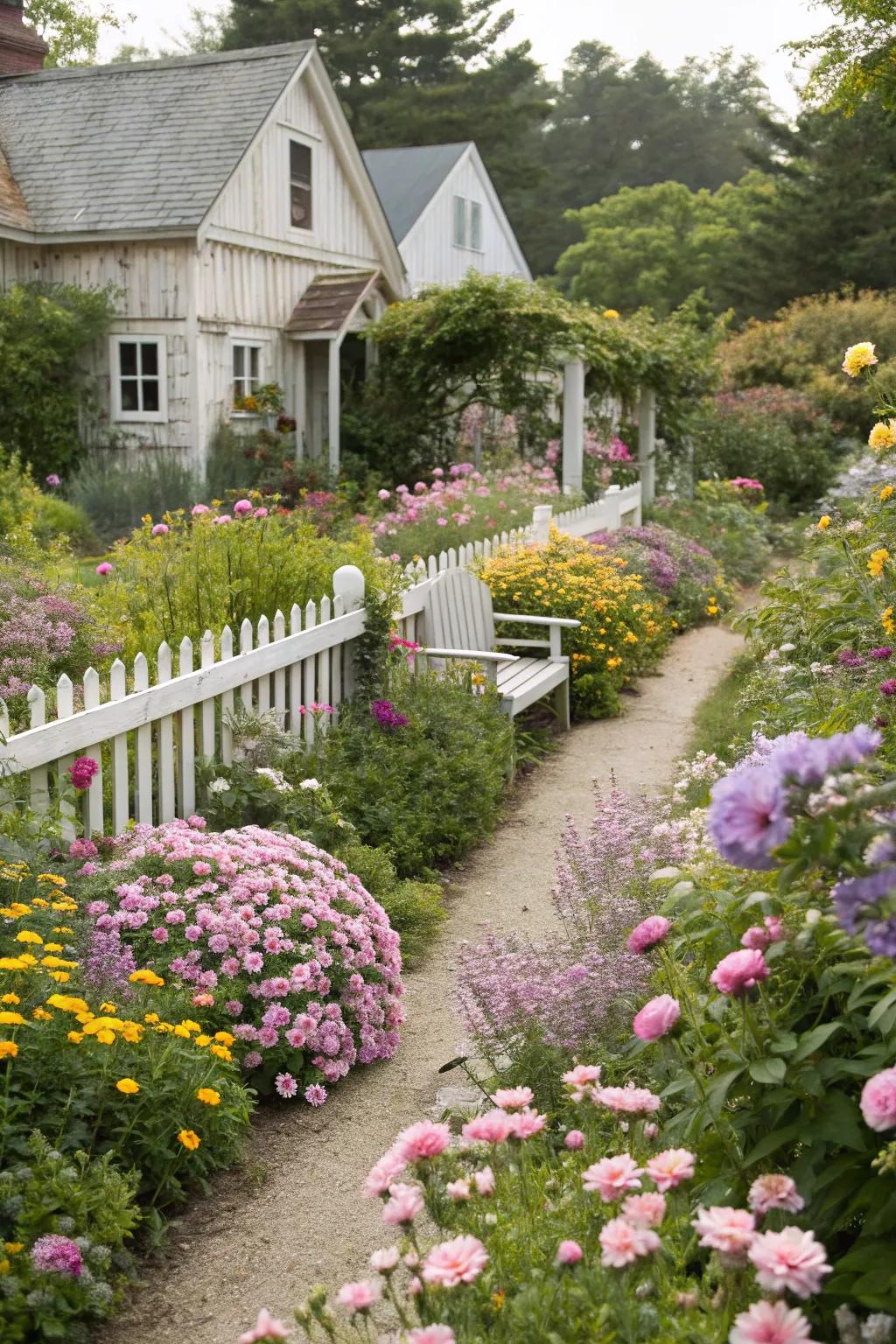
Your color palette sets the whole mood, so pick one that matches your personality. Soft pastels like blush pink and lavender read calm and old-fashioned. Bold reds, oranges, and deep purples feel lively and warm. Repeating two or three shades through the beds keeps the mix from looking scattered.
2. Aim for an Effortless, Natural Look
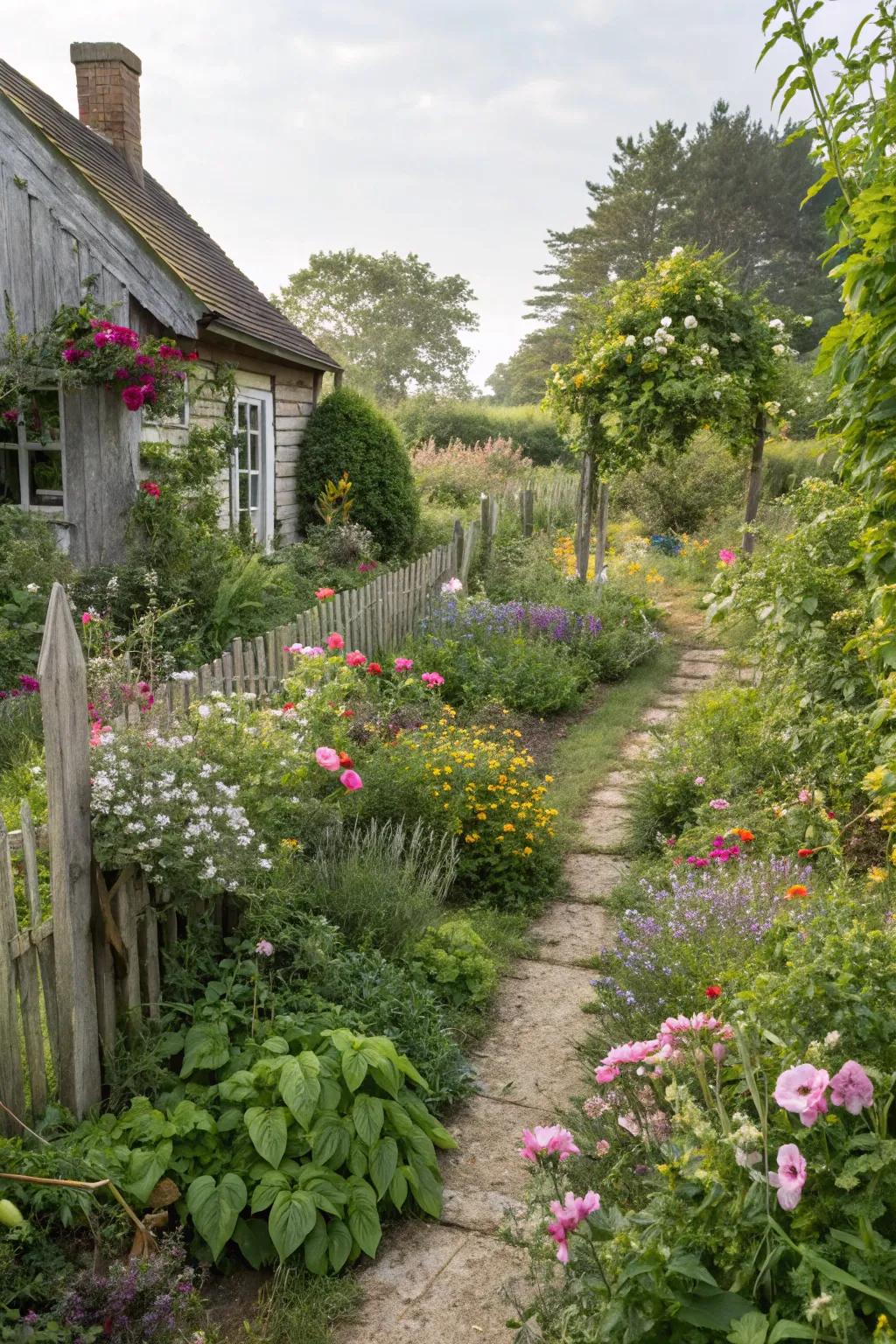
Let plants spill over edges and self-seed instead of trimming everything into place. That loose, informal look is half the beauty of a cottage garden. It also gives bees, butterflies, and birds a place to feed and shelter. Leaving a few seed heads standing through fall feeds the birds into winter.
3. Bring In Rustic Features
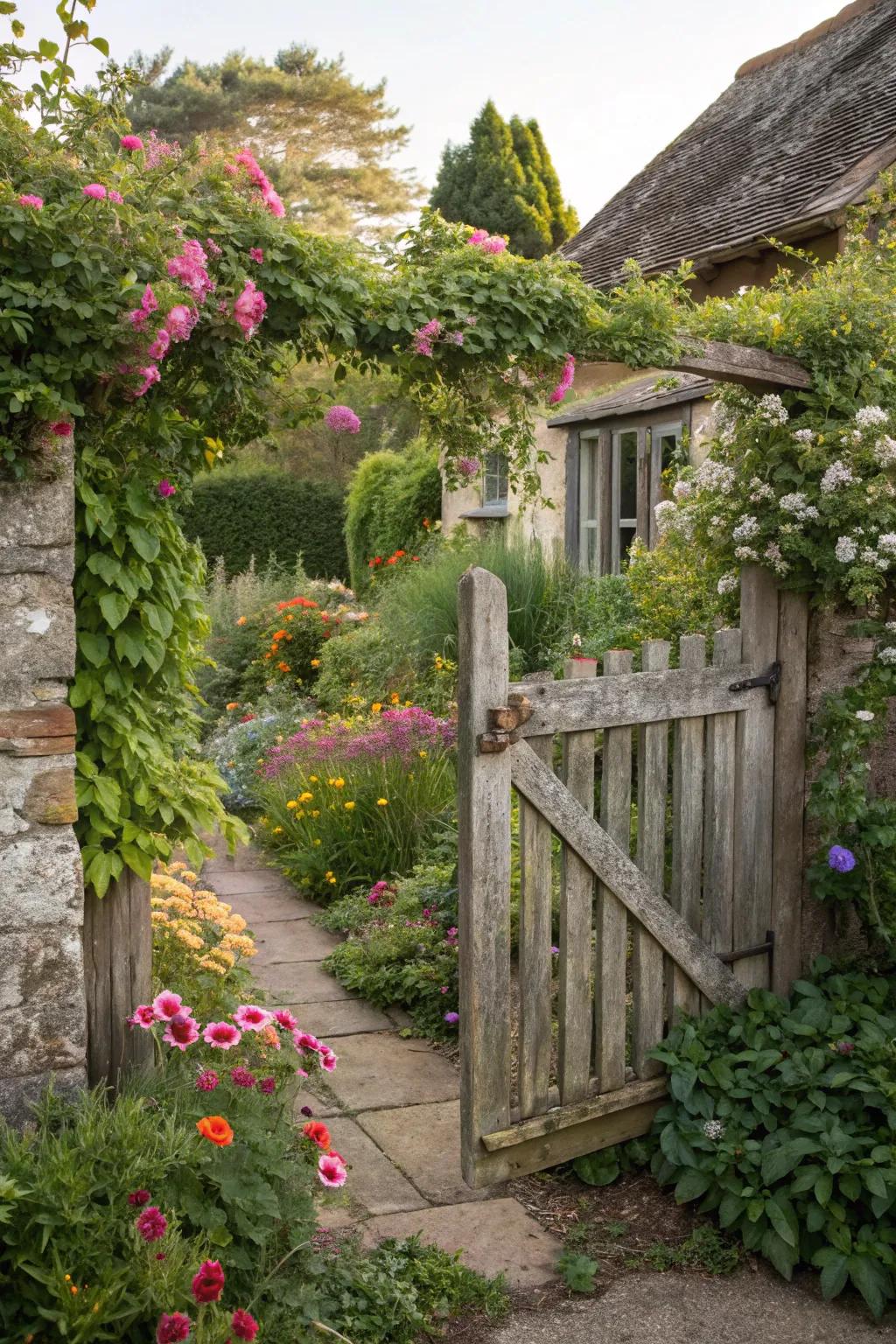
A weathered wooden gate or a wrought-iron arch adds instant nostalgia. Old materials like these make the garden feel like a hidden spot you stumbled onto. Pair an arch with a climbing rose and the effect doubles. For more ways to work metal into the design, look through wrought iron fence landscaping ideas.
4. Plan for Blooms in Every Season
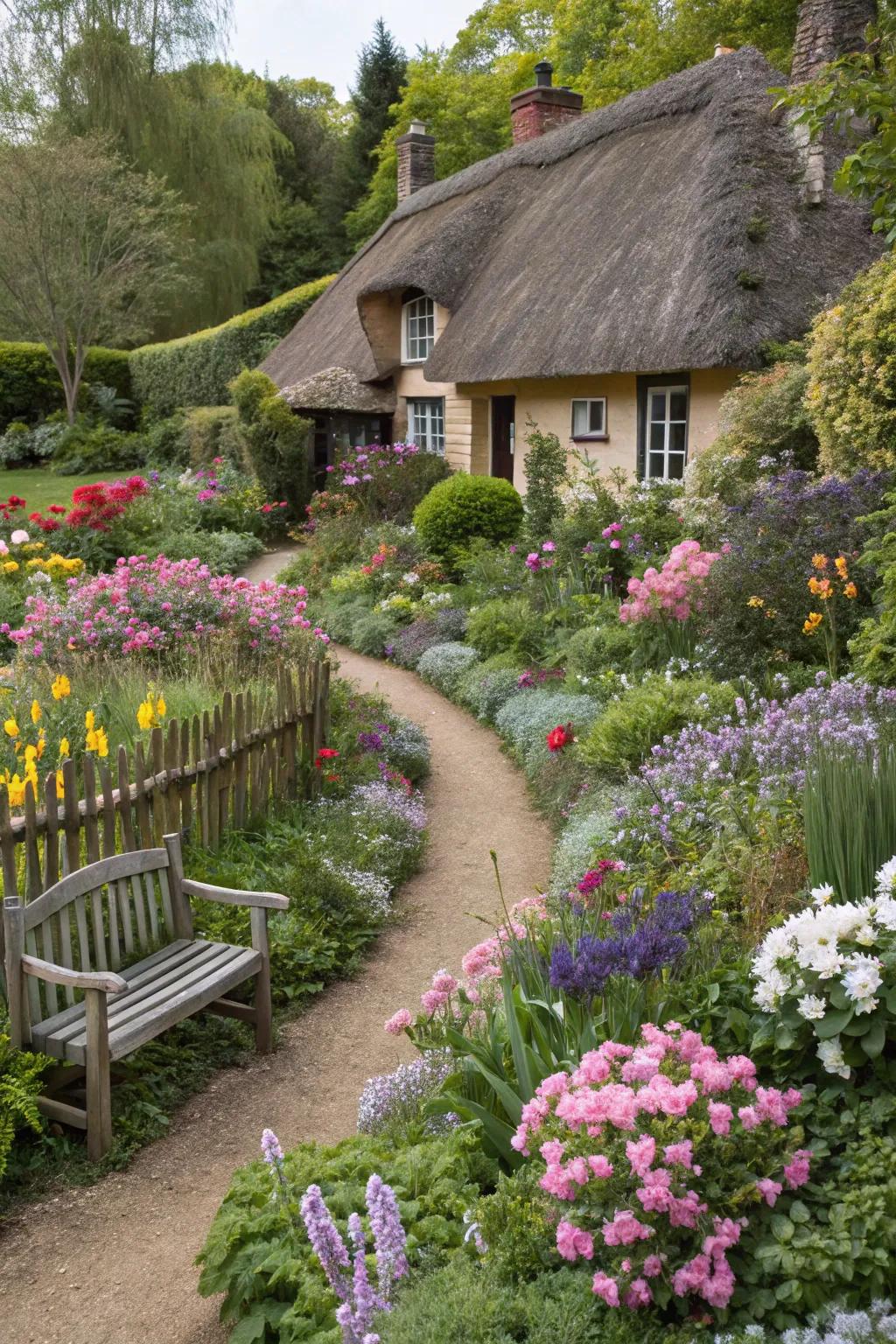
Stagger your planting so something is always flowering. Bulbs like daffodils cover early spring, roses and daisies carry summer, and asters or sedum finish out fall. That rhythm gives you something new to admire every few weeks. These charming cottage landscaping ideas can help you match flowers to your space.
5. Blend Perennials with Annuals
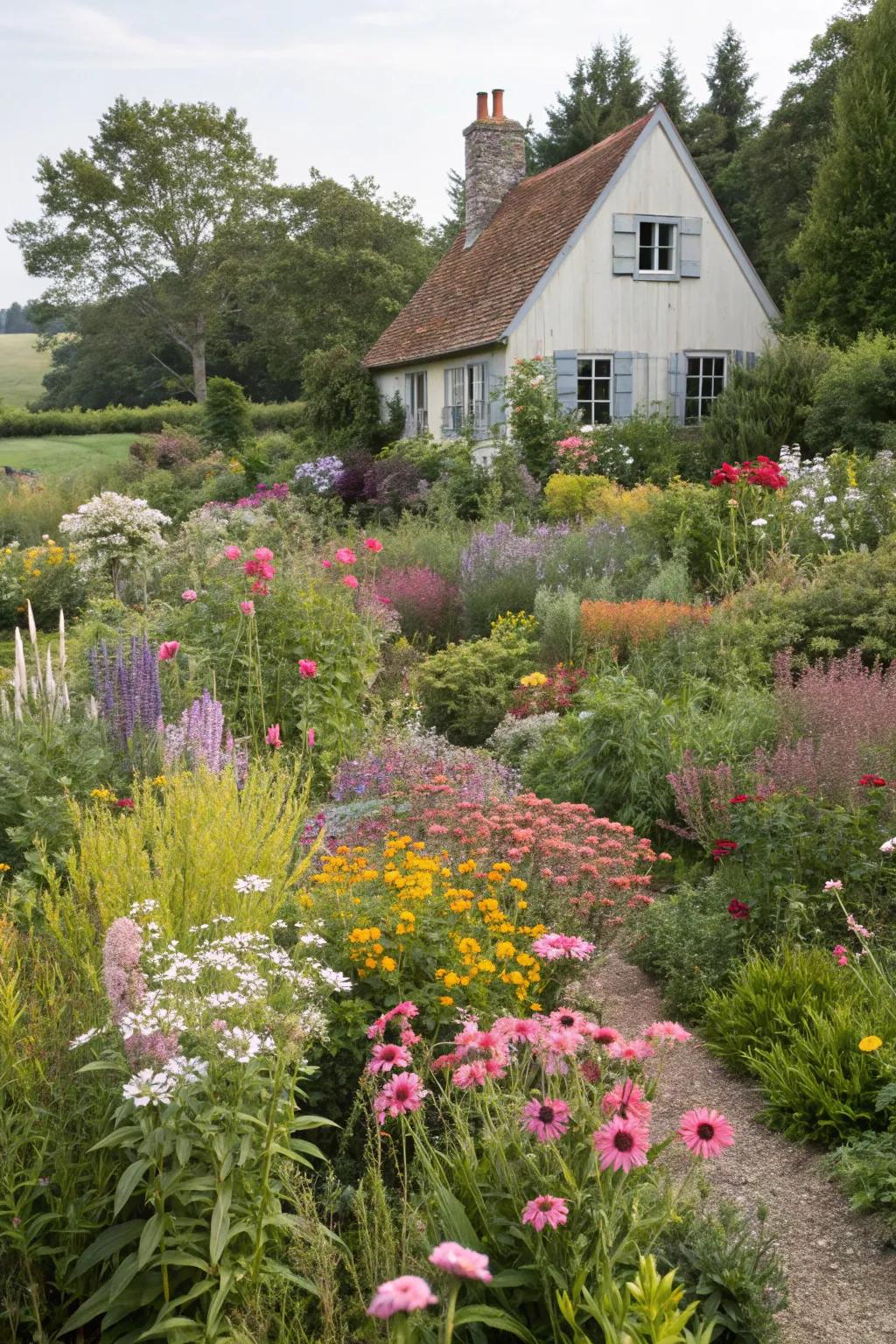
Perennials give your beds a reliable backbone that returns each year. Annuals like cosmos or zinnias fill the gaps and bloom hard all summer. Together they keep the garden shifting through the seasons instead of peaking once. These perennial flower bed ideas are a good starting point for your layout.
6. Go Big with Abundant Planting
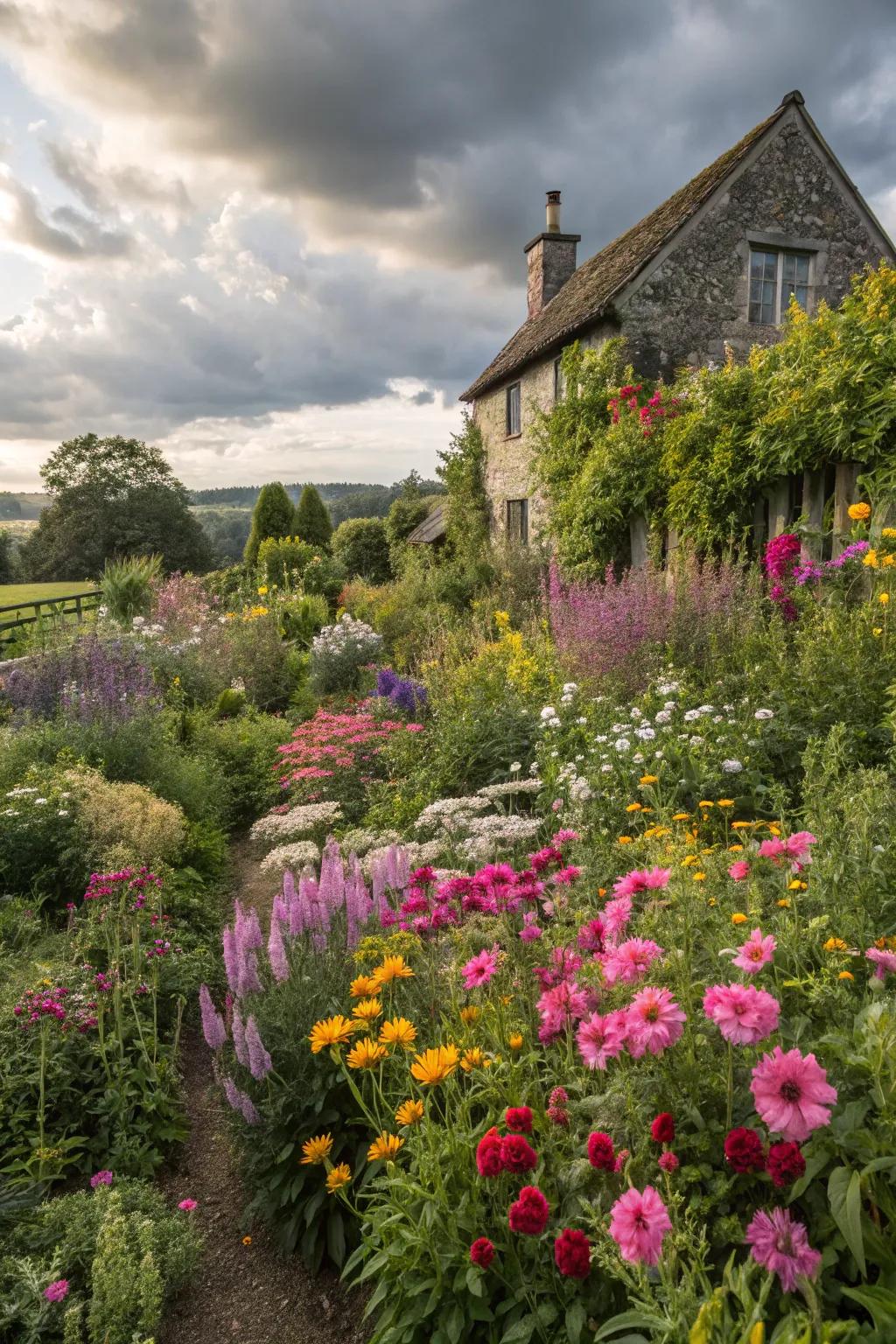
Abundant planting is my favorite part of a cottage garden. Pack plants close so leaves touch and bare soil disappears. Crowded beds also shade out weeds and hold moisture better. Toss in a few tall spires like foxglove or hollyhock and let the whole thing grow a little untamed.
7. Tuck In Cozy Seating Spots
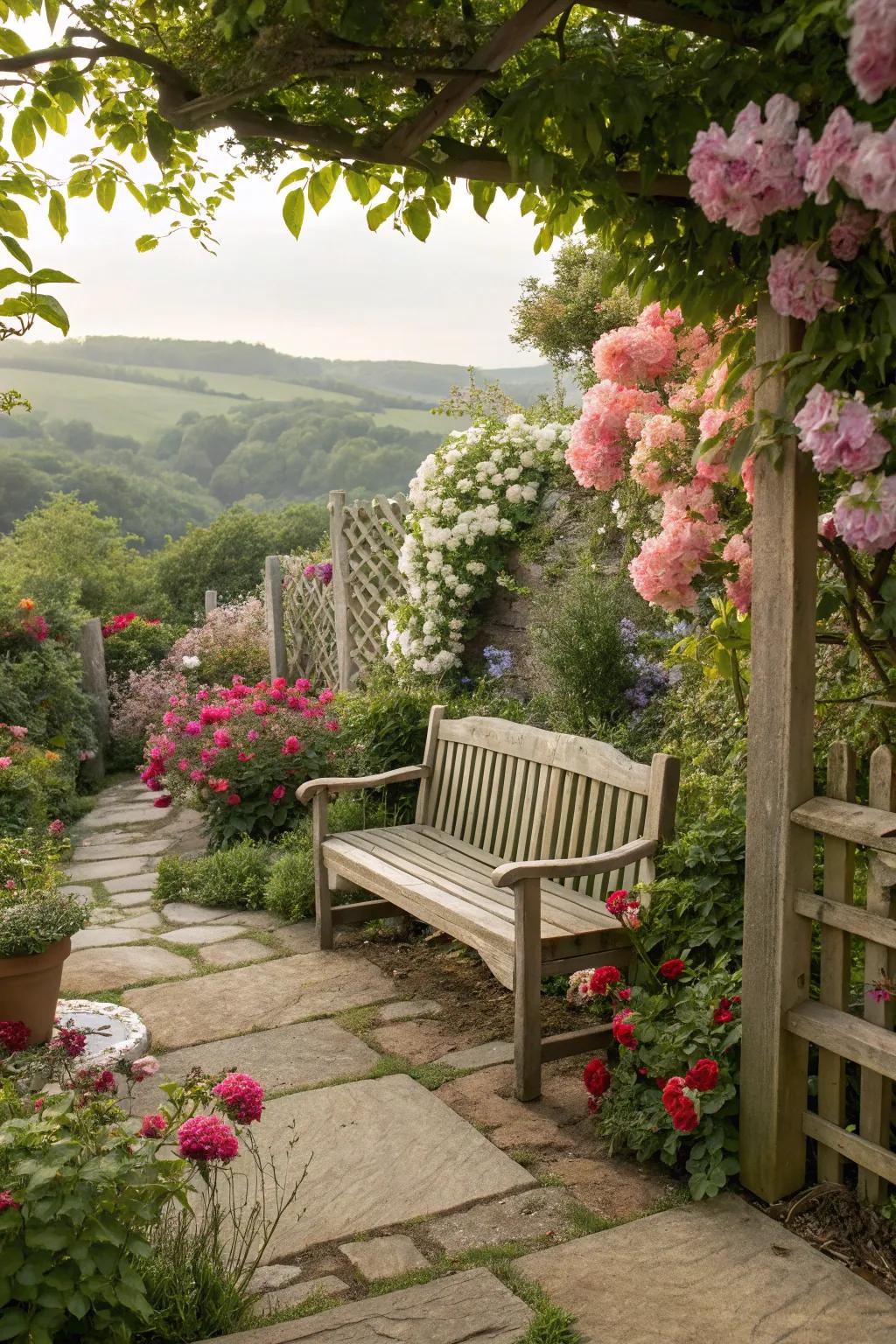
Set a bench or two small chairs where the flowers grow tallest. Half-hidden seating turns into the spot you drink your morning coffee. A little gravel or flat stone underfoot keeps chair legs steady and dry. These nooks work beautifully alongside charming cottage landscaping to boost your home’s curb appeal.
8. Layer Plants at Mixed Heights
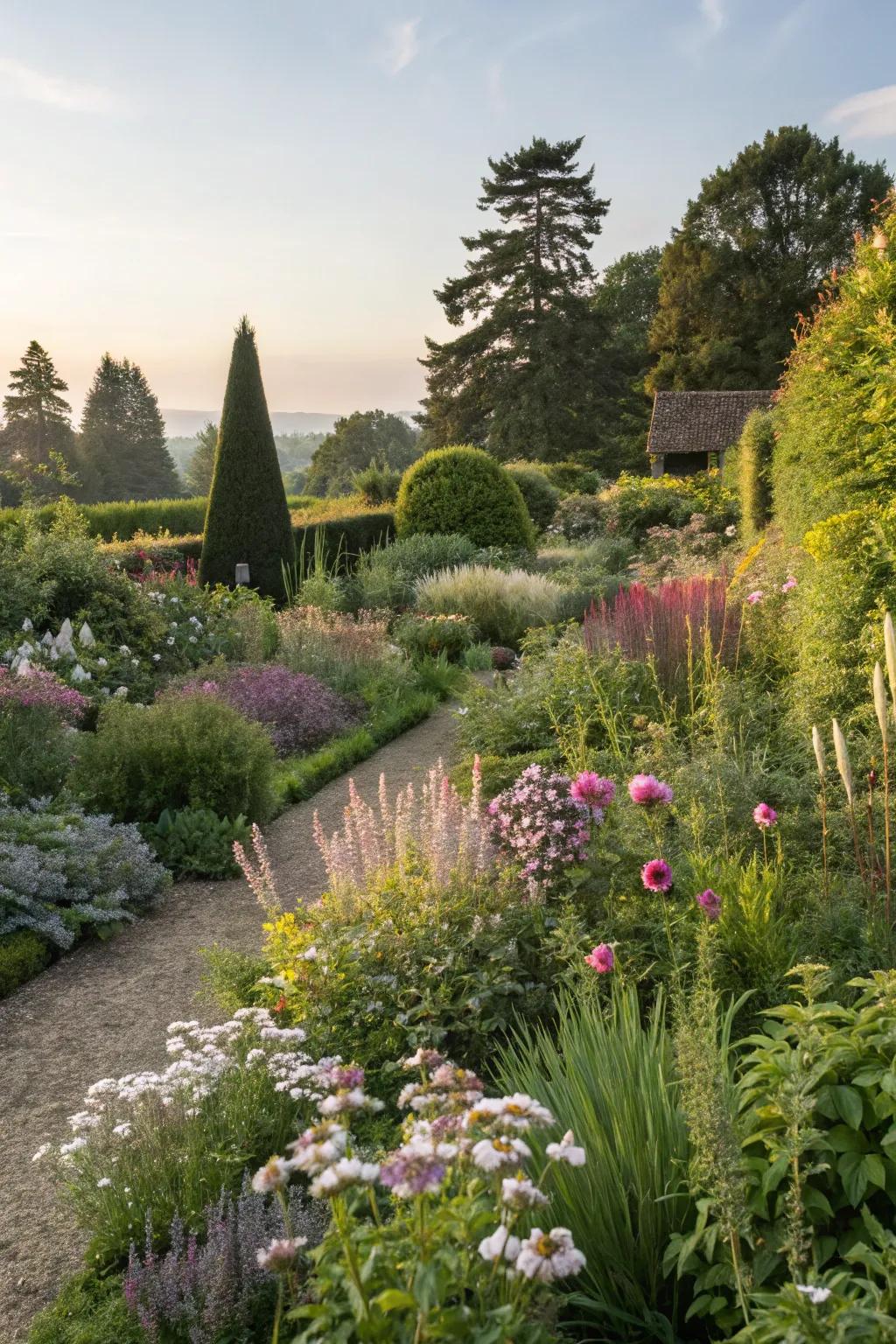
Stack short, medium, and tall plants to give your beds real depth. Low edgers like catmint sit up front, mid-height daisies fill the middle, and hollyhocks or delphinium anchor the back. The stepped effect pulls the eye up and across the whole bed. Frame those layers with charming cottage fence ideas to finish the look.
9. Wind Pathways Through the Beds
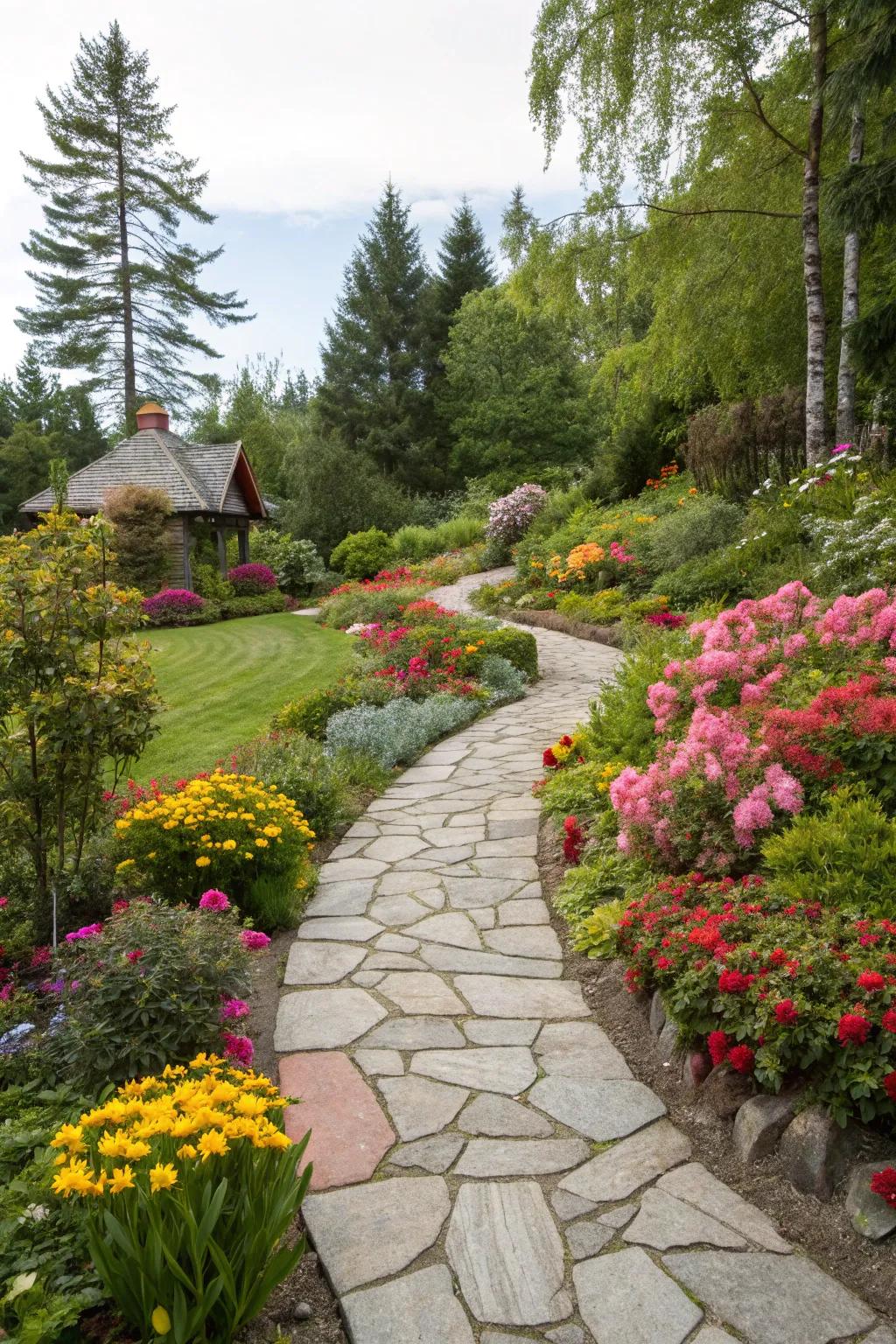
Gravel or flagstone paths that curve instead of running straight make a garden feel bigger. Every bend hides what comes next, which keeps you walking. Wide enough for two people is the sweet spot. A path is also the natural way to link your main house to charming backyard cottages.
10. Water Features That Add Calm
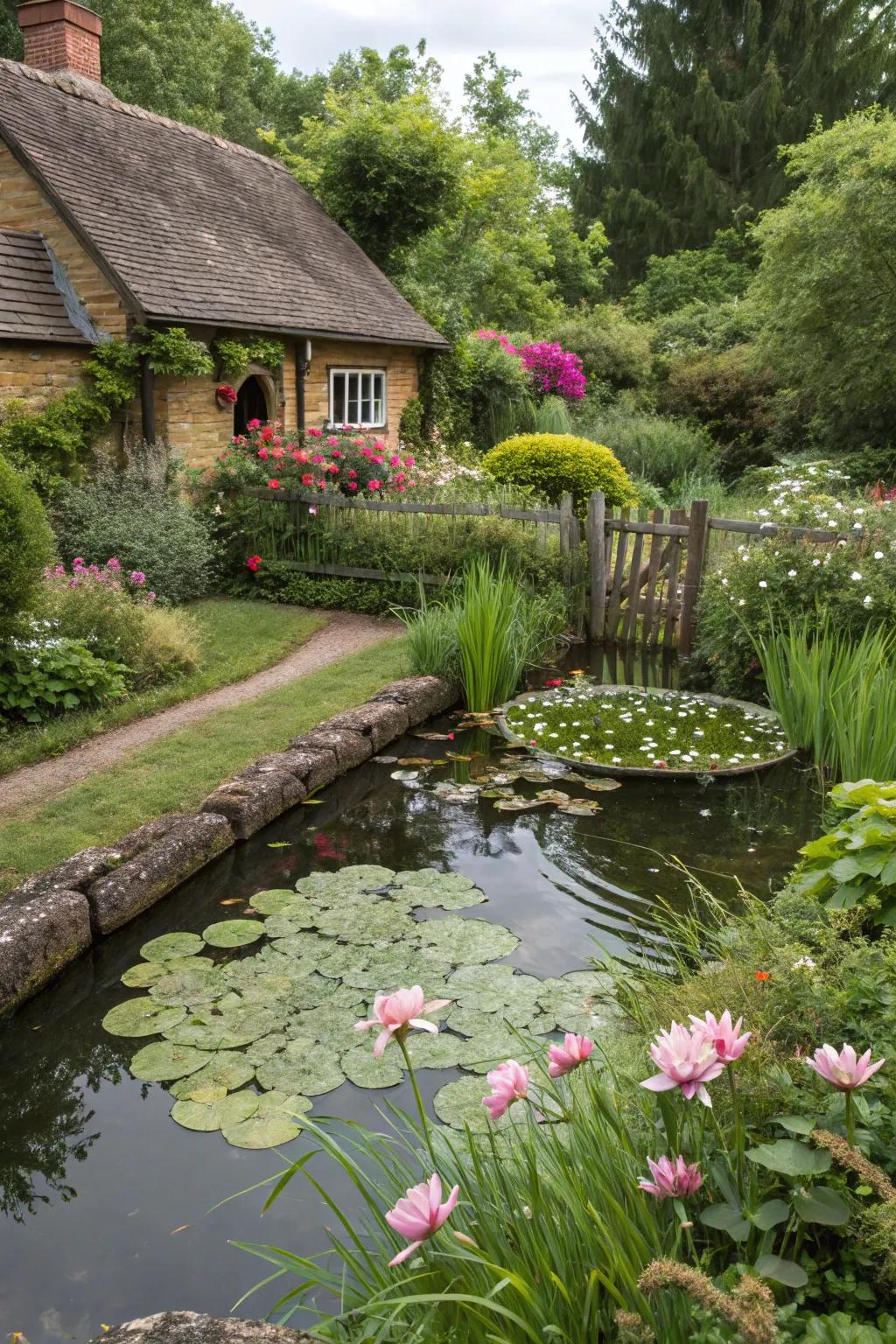
A small pond or a simple fountain gives the garden a soft soundtrack. Moving water masks street noise and cools the air on hot days. Birds will use the edge for drinking and bathing, so keep one side shallow.
11. Anchor the View with Bold Focal Points
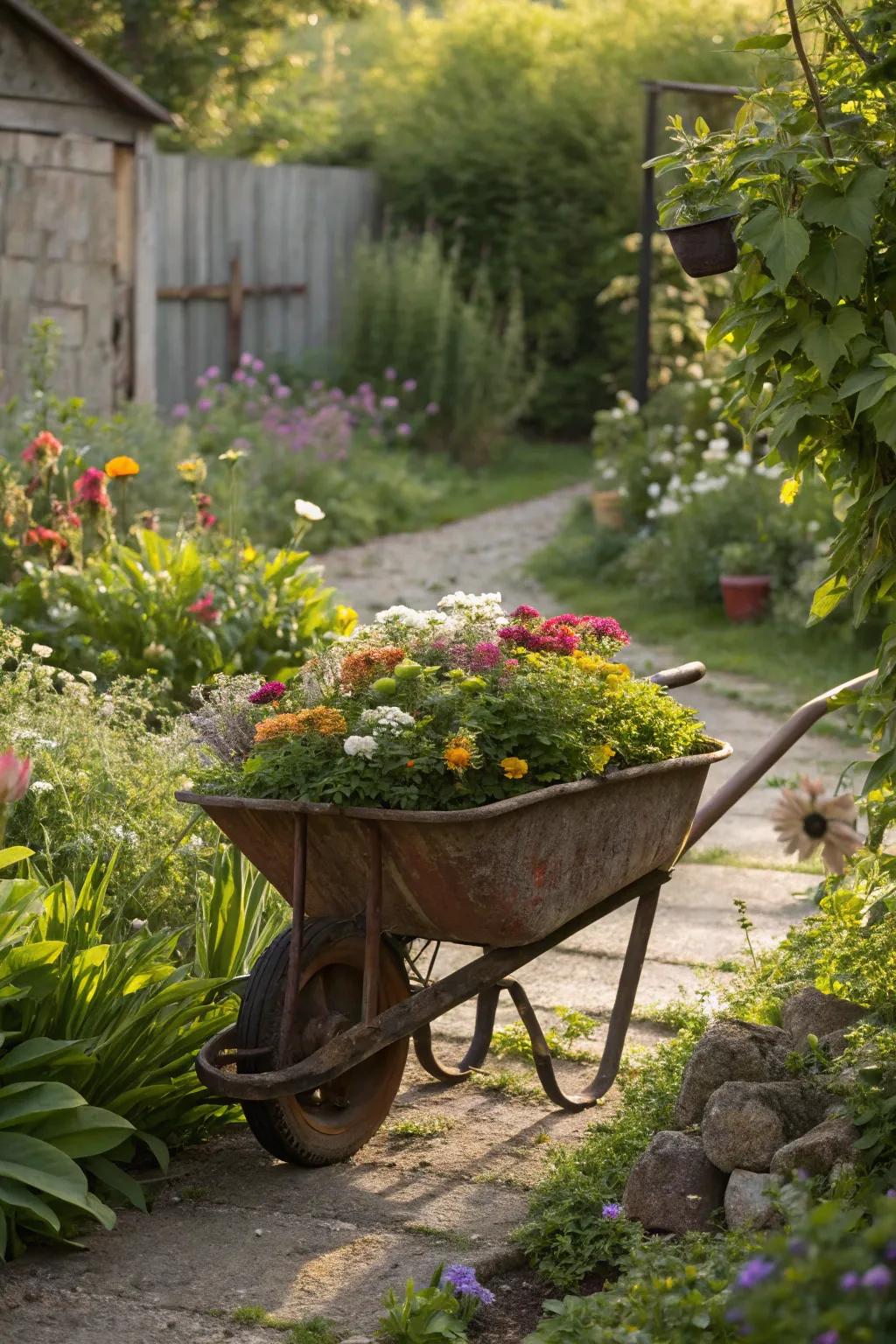
One strong object stops the eye from wandering. A stone birdbath, a vintage wheelbarrow, or a tall urn all work. Place it where a path bends or two beds meet, then let low flowers soften the base.
12. Add Architectural Structures
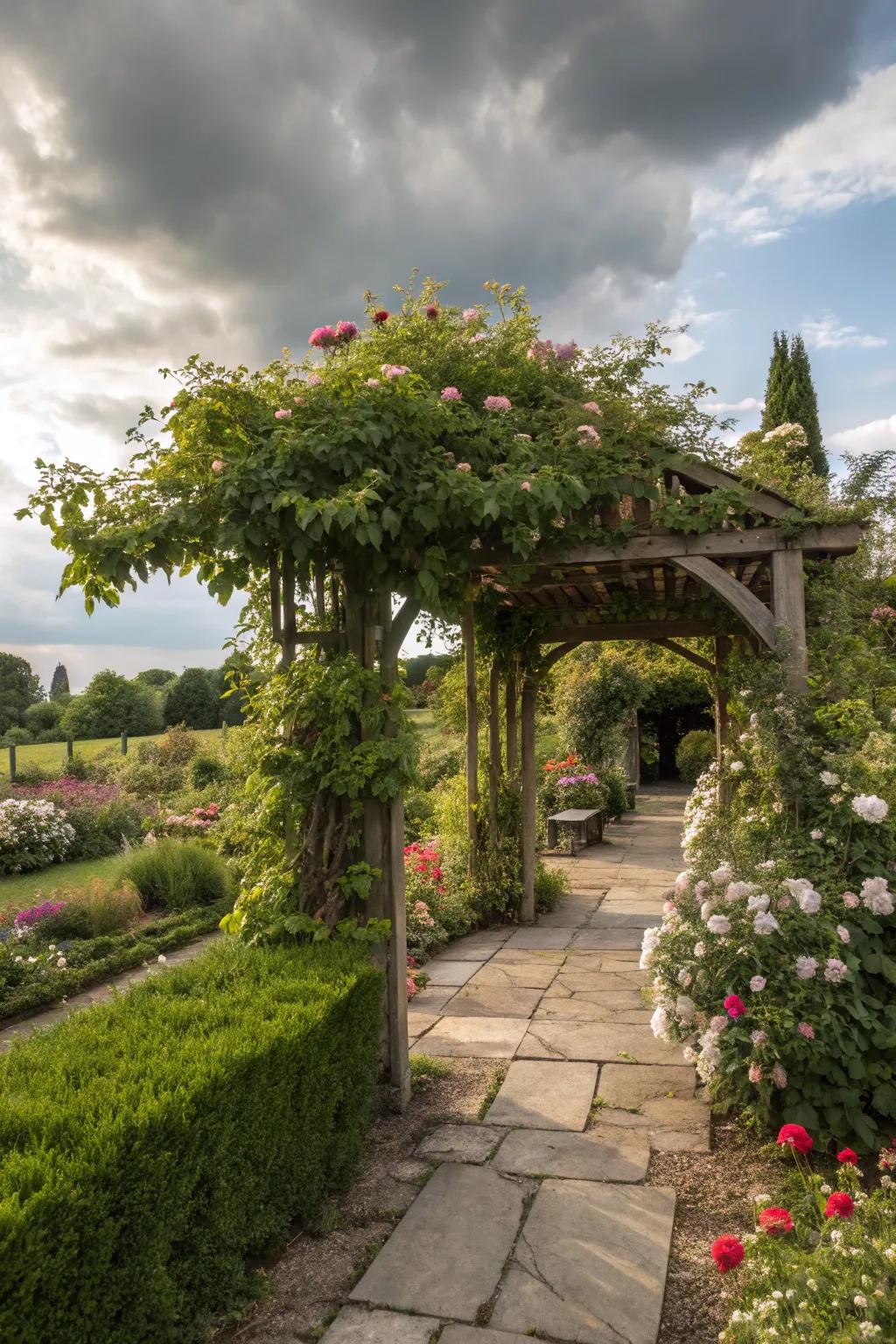
Arbors and pergolas give a flat garden vertical structure. They add height, throw a little shade, and act as focal points on their own. A pergola over a seating spot doubles as a frame for vines. Charming outdoor gates work well too, marking where the garden begins.
13. Climbing Plants for Vertical Space
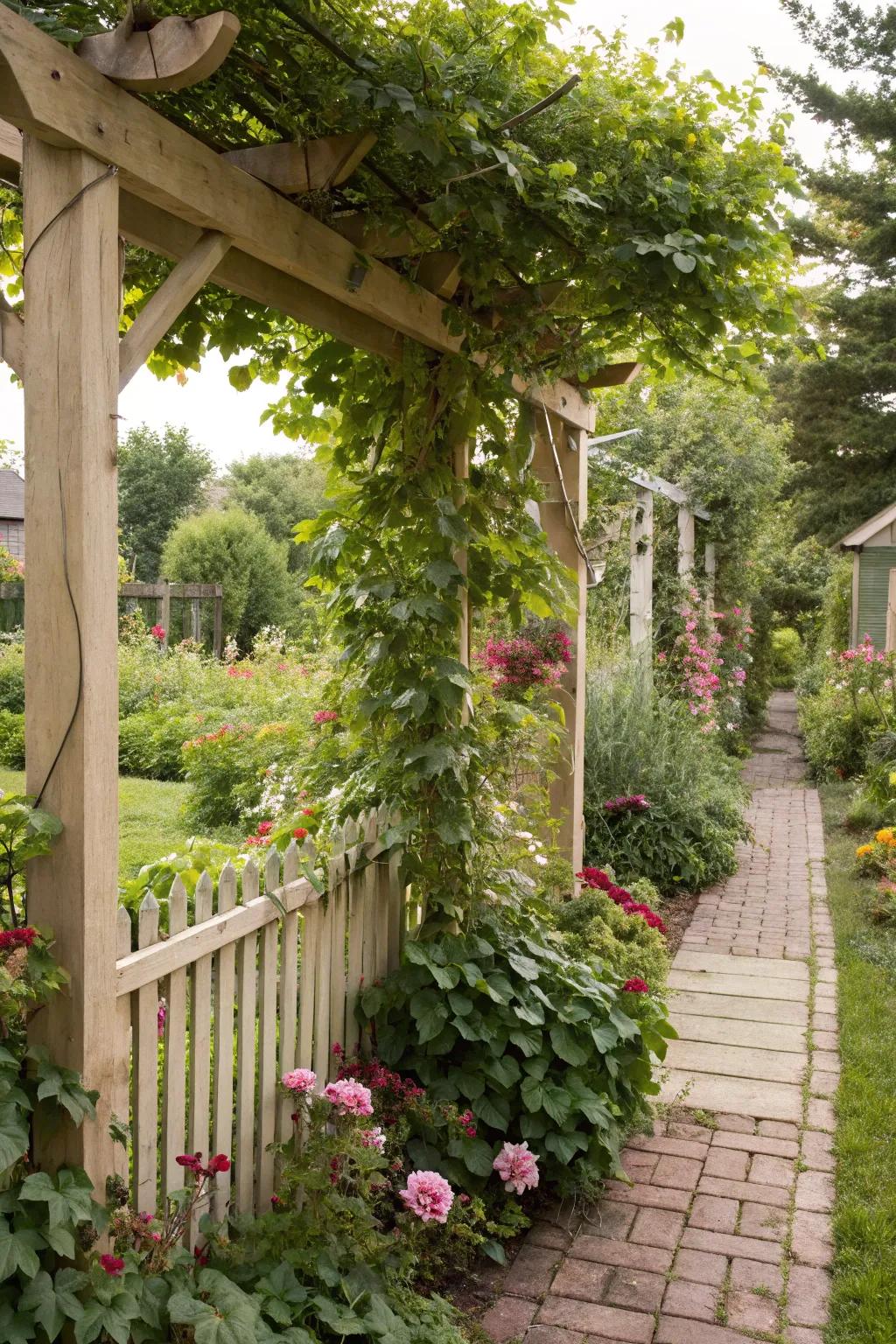
Grow up when you run out of ground. Clematis, climbing roses, and honeysuckle will cover a trellis or fence in a season or two. The result is a leafy canopy overhead and lush walls of green. Tie new shoots loosely as they grow so they spread evenly.
14. Slip In Unexpected Edibles
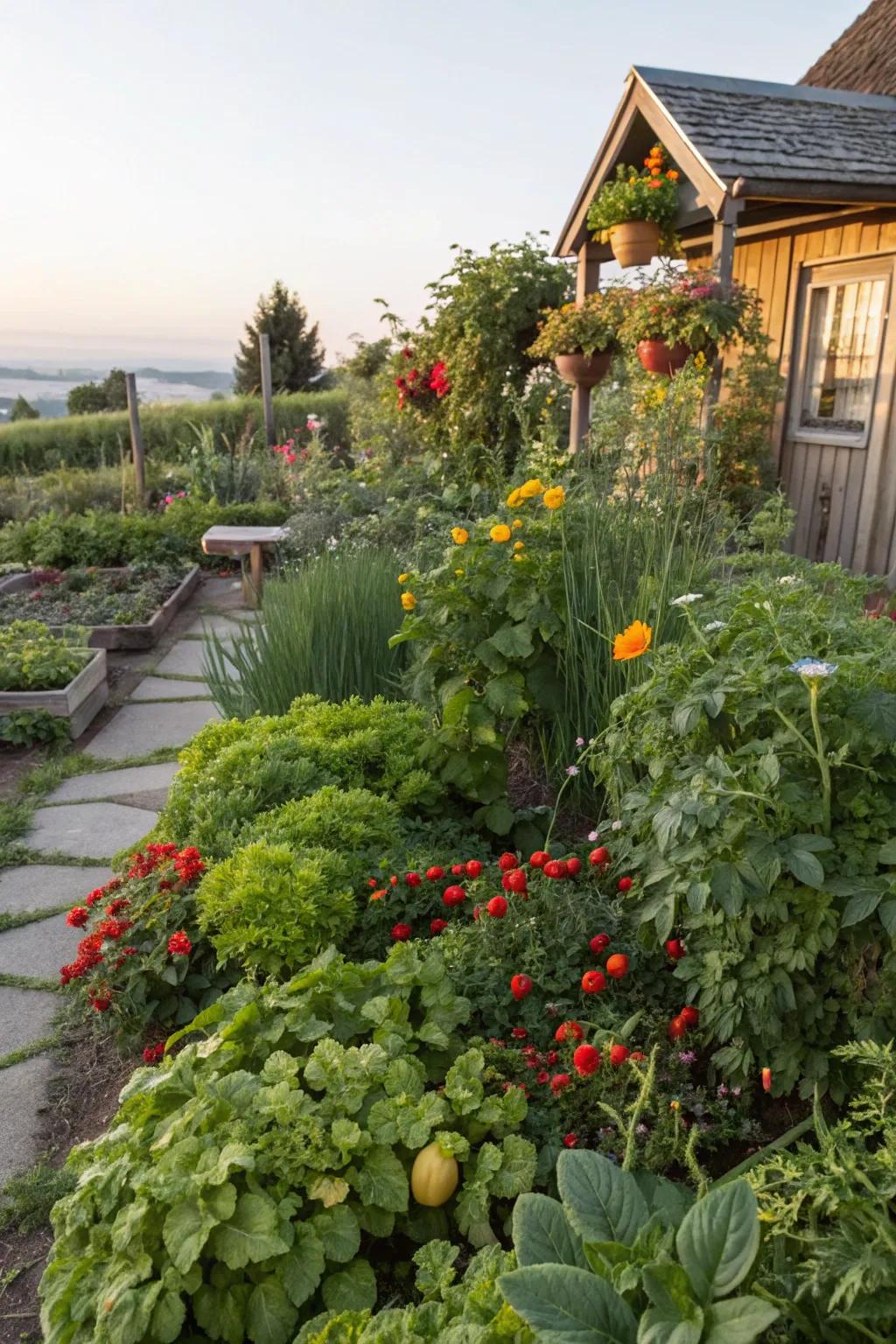
Edible plants belong in the flower beds too. Tuck basil, thyme, and chives between the blooms, or let lettuce edge a bed. Many herbs flower and pull in pollinators while they grow. Snacking on fresh produce mid-stroll is the payoff.
15. Make It Yours with Unique Decor
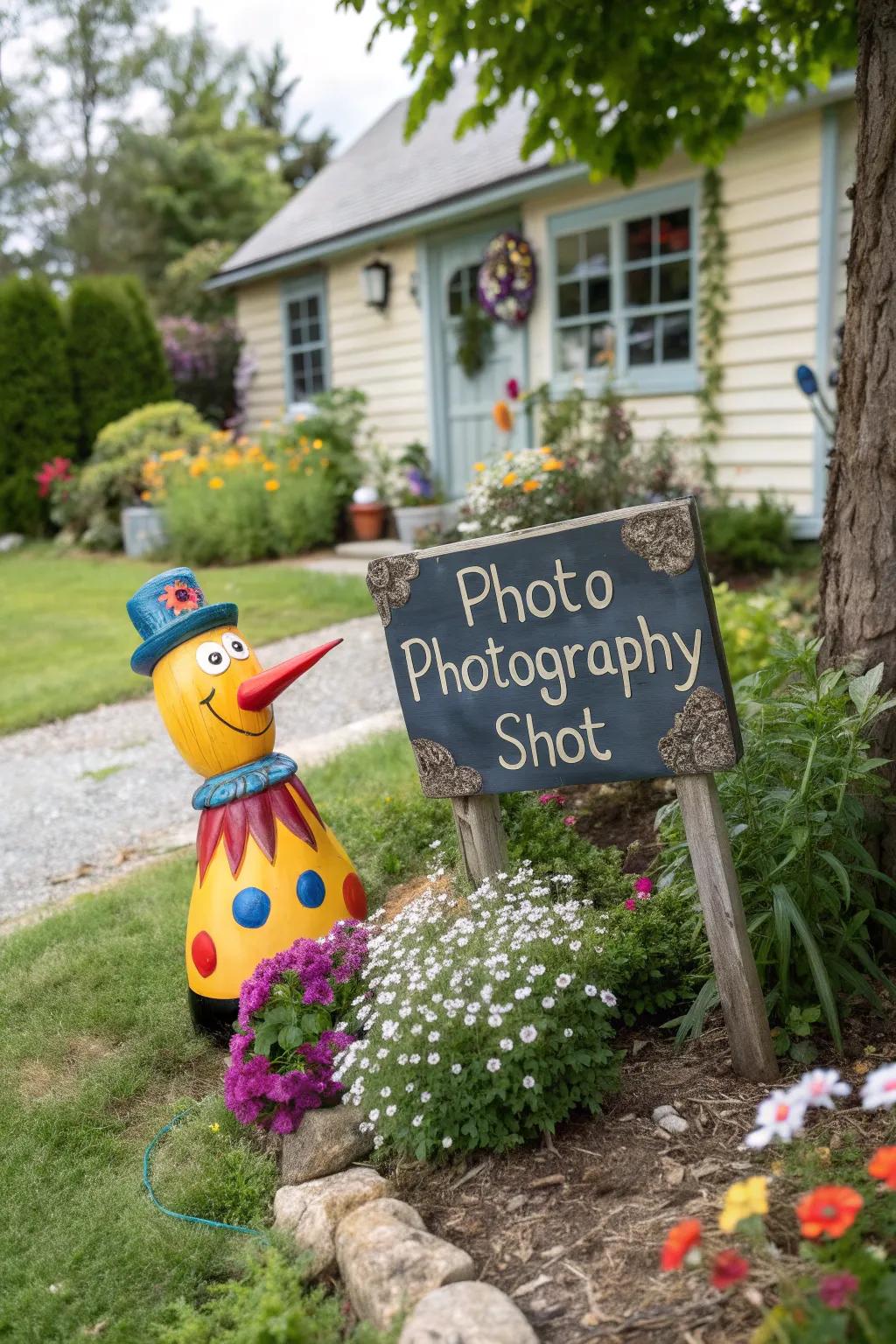
Unique decor is what makes a garden read as yours. Hand-painted signs, whimsical sculptures, or a chipped watering can all work. Group two or three small pieces instead of scattering them, so they register as a display. Creative hand-painted bench ideas give you a focal point you can sit on.