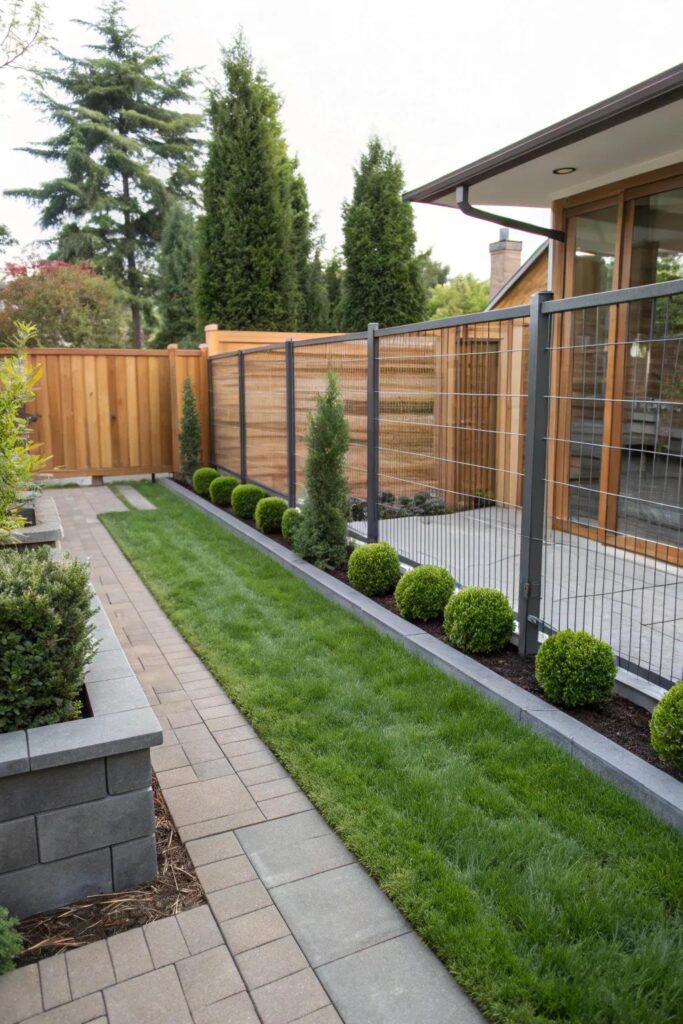

Does your yard sit on a slope that feels more like a hassle than a feature? These 20 hillside landscaping ideas show you how to work with that grade instead of against it.
Tiered gardens, retaining walls, water features, and native plants all offer practical ways to handle sloped ground. Each idea below tackles a different challenge, from erosion to drainage to everyday usability.
Tiered Garden Layouts for Sloped Yards
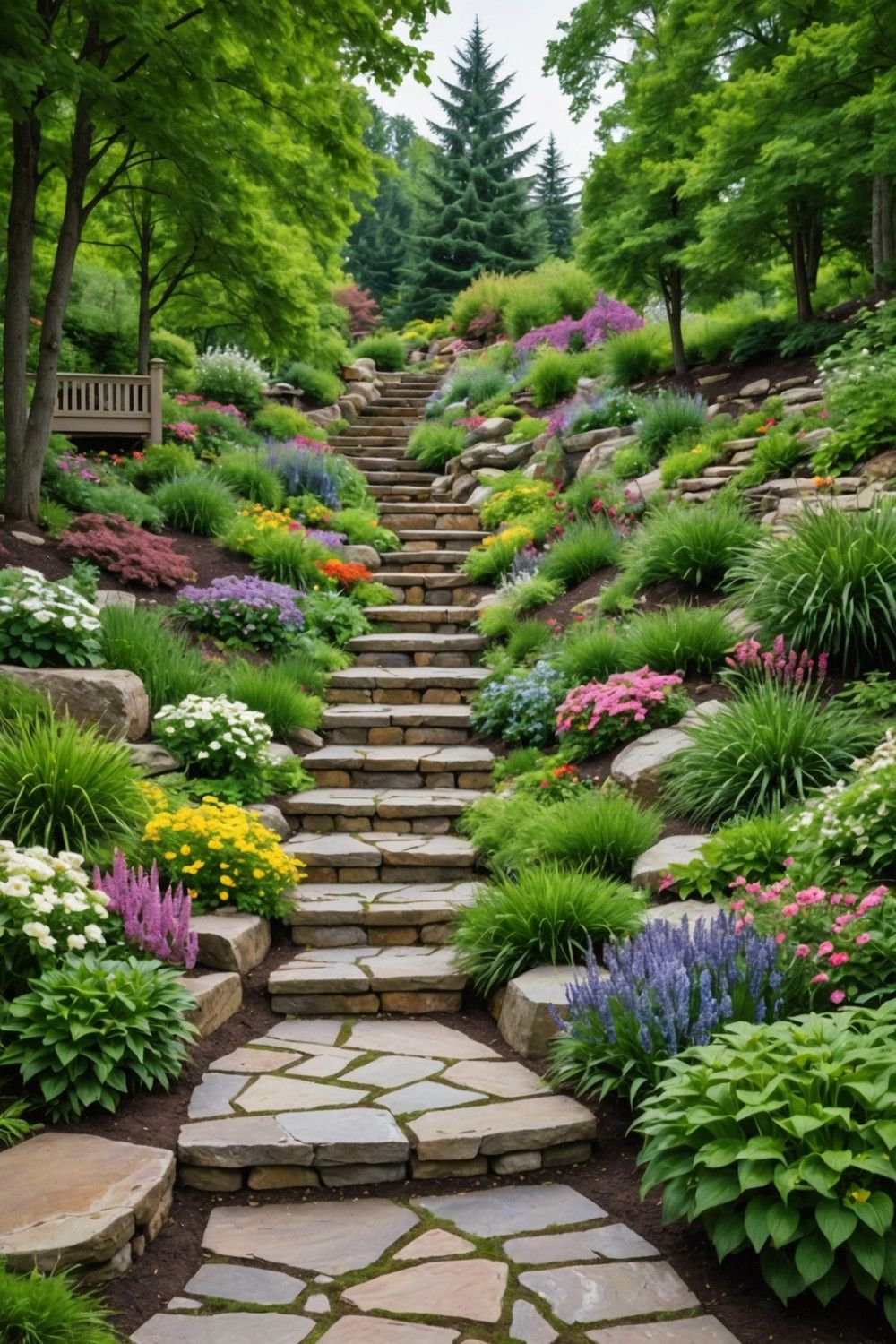
Slopes drain poorly and erode fast, and tiered gardens fix both problems at once. Splitting a hill into flat, stacked levels gives you distinct planting zones that hold soil in place.
Each tier acts like its own small garden bed, so you can give one section shade-loving ferns and another full-sun blooms. Breaking the slope into chunks also makes mowing and weeding far easier than working a continuous incline.
Mix flowering perennials, low shrubs, or even a small fountain across different tiers to add layers of color and texture. Spring and summer perennials work especially well here since they fill in fast and hide bare soil.
Erosion Control With Retaining Walls
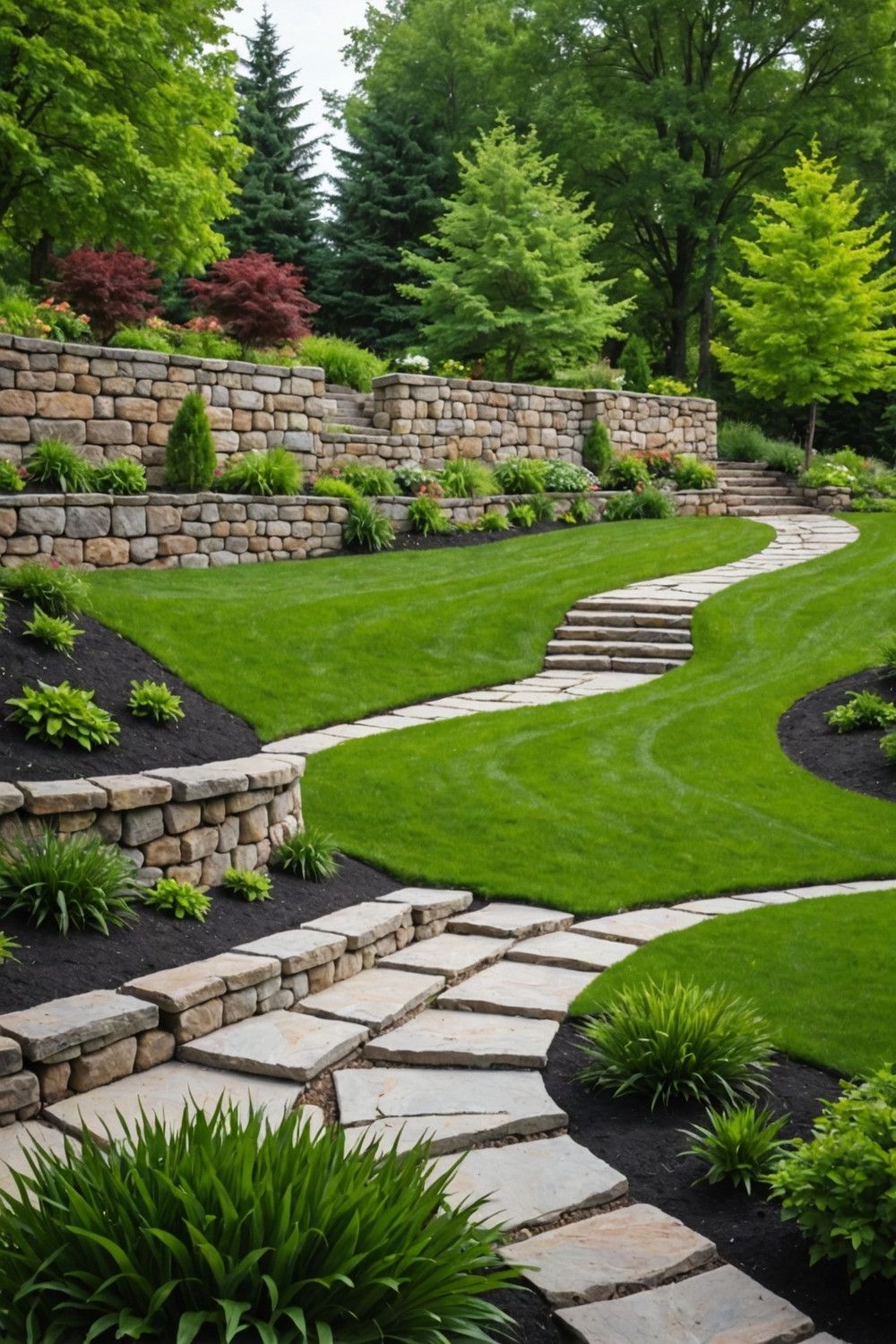
Sloped yards lose topsoil fast during heavy rain, and a retaining wall is one of the most reliable fixes. It holds the hillside in place instead of letting gravity pull it downhill.
A well-built wall keeps soil anchored and lets water absorb into the ground slowly rather than rushing downhill. That slower drainage lowers the risk of mudslides and washouts after storms.
Builders typically use concrete block, natural stone, or timber for these walls, and each material can be finished to match the rest of your yard. Stone tends to blend into naturalistic landscapes, while timber suits a more rustic look.
A properly installed retaining wall turns unstable ground into usable garden space. Once the slope is secured, you can plant, build, or add hardscaping right up to the wall’s edge.
Stairways and Paths for Hillside Access

Steep yards are tough to walk safely without some kind of built path. Stairs and pathways turn a rough hillside into ground you can actually cross without slipping.
A clear route also cuts down on erosion caused by repeated foot traffic wearing bare patches into the soil. Materials like stone pavers, gravel, or poured concrete each hold up differently to weather and foot traffic.
A well-placed stairway with even risers turns a steep, awkward climb into a simple walk. Adding a handrail on steeper sections makes the path safer in wet or icy weather.
Curved, winding paths slow visitors down and give them more time to notice plantings, rock features, or a view from partway up the hill. A path that bends around a large tree or boulder feels more natural than a straight concrete run.
Hillside Vegetable Gardens for Growing Food
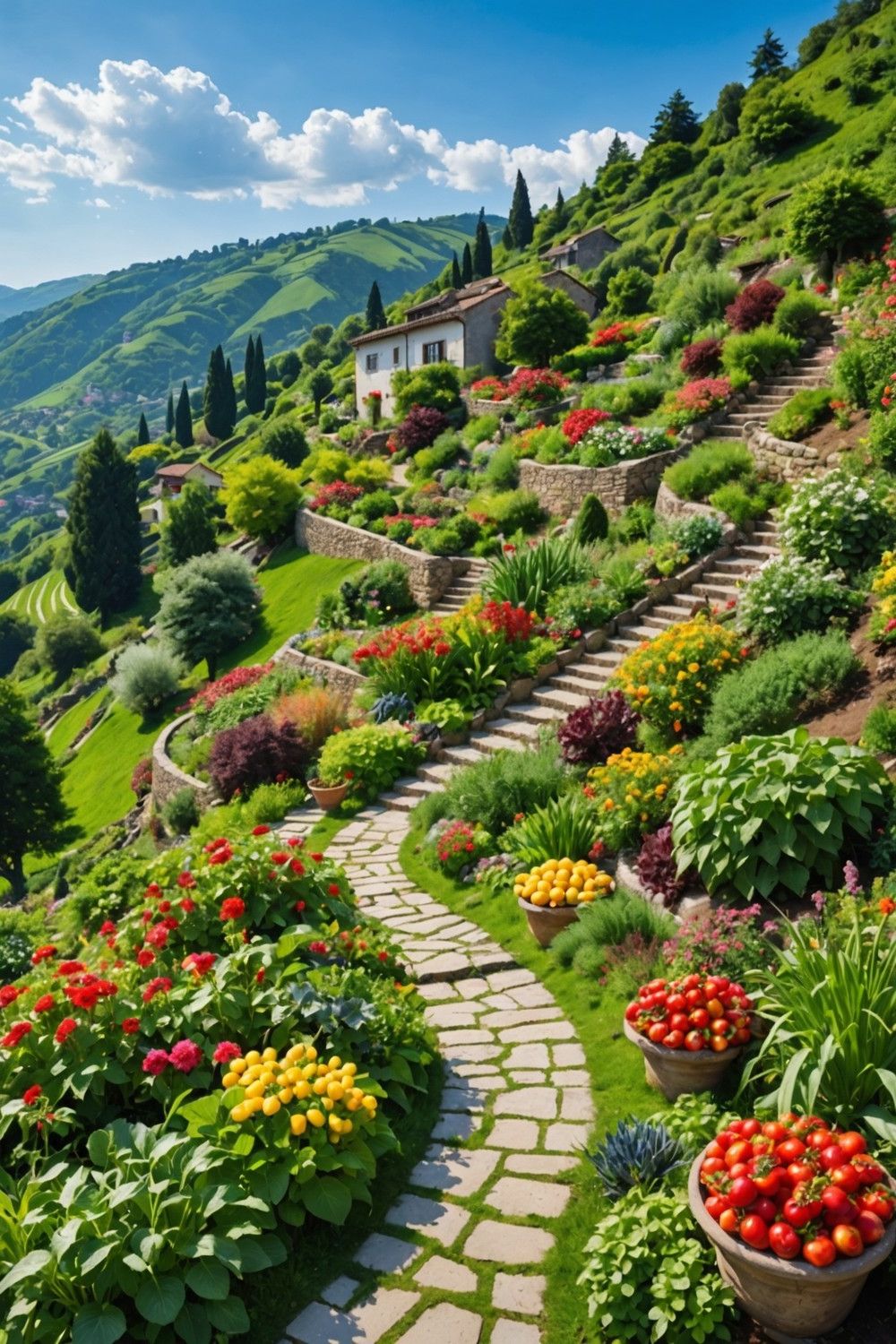
A sloped backyard can double as a working vegetable garden instead of just ornamental ground. Terracing the hill turns wasted slope into rows you can actually plant and harvest.
Raised planters or terraced beds let you level out small sections of the hillside so water doesn’t just run straight off the soil. Tomatoes, peppers, and leafy greens all do well in these raised, well-drained beds.
This setup gives your yard a practical purpose beyond looks, turning unused slope into space that produces actual food. It also makes harvesting easier since each terrace sits at a manageable height.
Ground Covers That Stop Slope Erosion
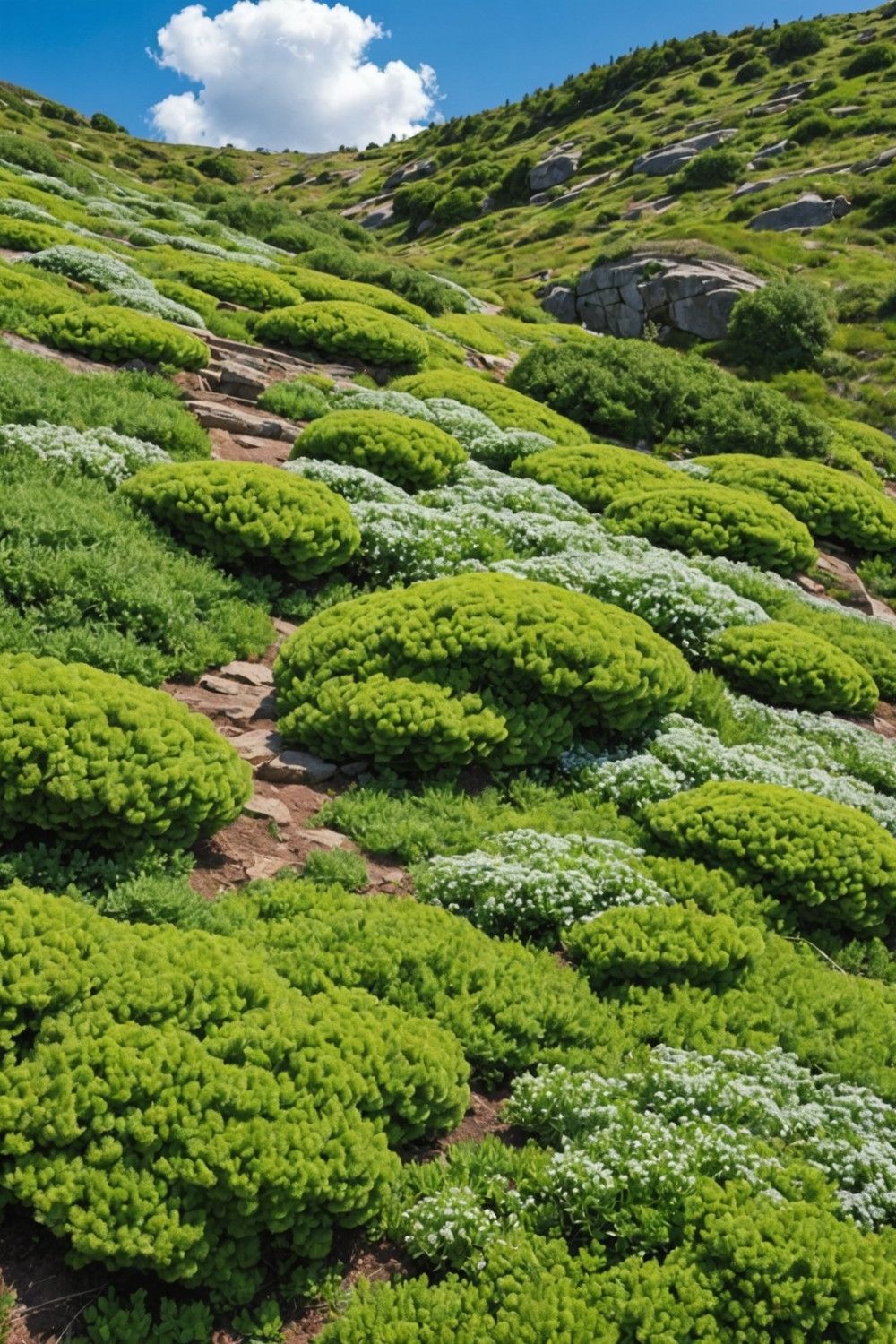
Ground covers are one of the simplest fixes for a hillside that keeps losing soil. Instead of building walls or terraces, you let low-growing plants do the erosion-control work for you.
Their root systems dig deep into the slope and hold the dirt in place, while their thick leaf cover softens heavy rain before it hits the ground. Less bare soil exposed to rainfall means less runoff overall.
Creeping juniper, sedum, and vinca minor are three solid choices because they tolerate poor soil and go long stretches without water. All three also spread on their own, filling in bare patches within a season or two.
Rock and Gravel for Hillside Erosion Control
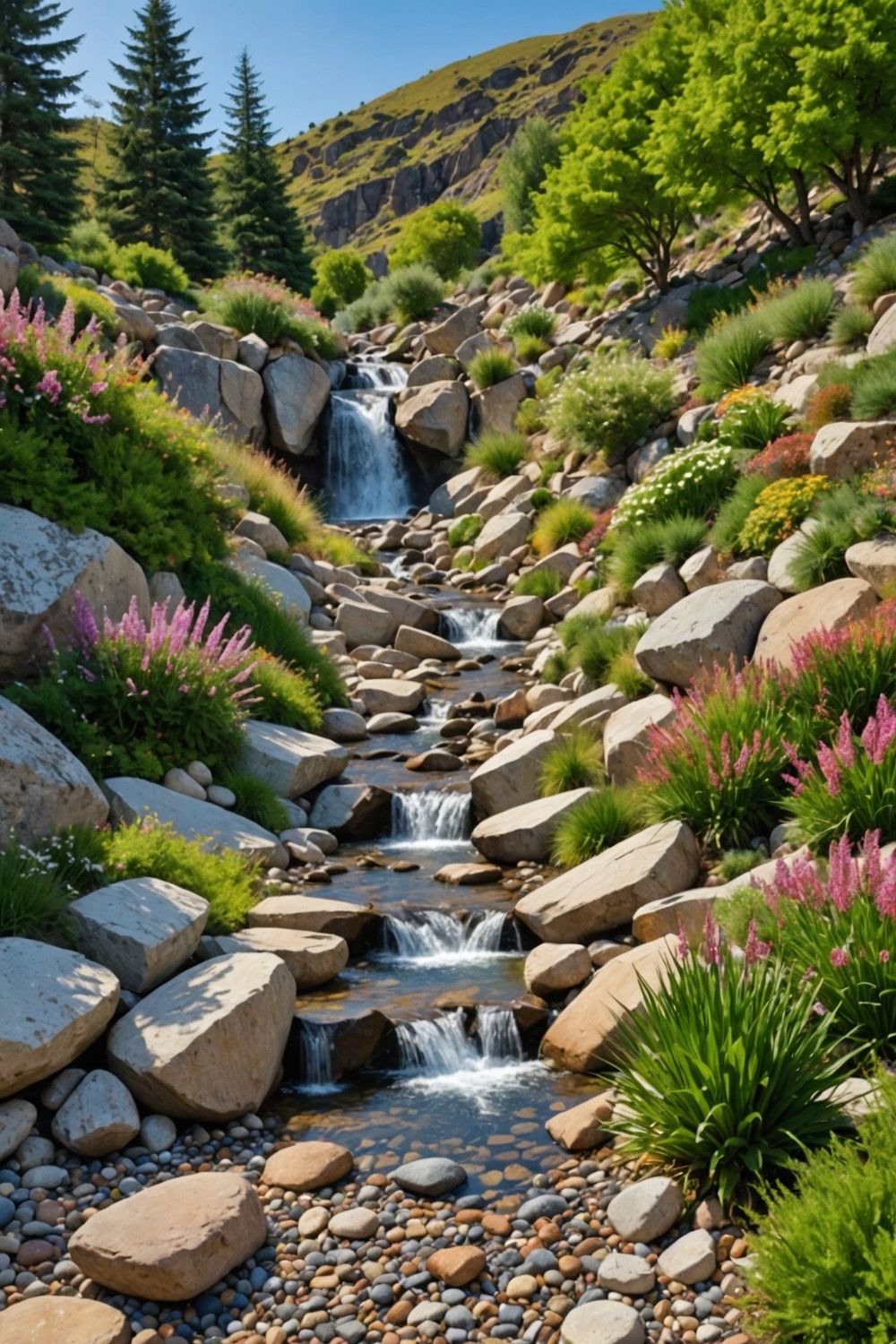
Rock and gravel work well on slopes because they resist erosion without demanding constant upkeep. Unlike grass, they never need mowing, watering, or fertilizing to look good year-round.
Loose stone also drains fast, which matters on a hill since standing water adds weight and raises the odds of a slide. Good drainage keeps the soil underneath from turning soft and unstable.
River rock, crushed granite, and lava rock each bring a different color and texture, so you can match the look to the rest of your landscape. Larger boulders mixed among smaller gravel also add visual variety and help break up flat, uniform stretches of ground.
Adding a Water Feature to a Sloped Yard
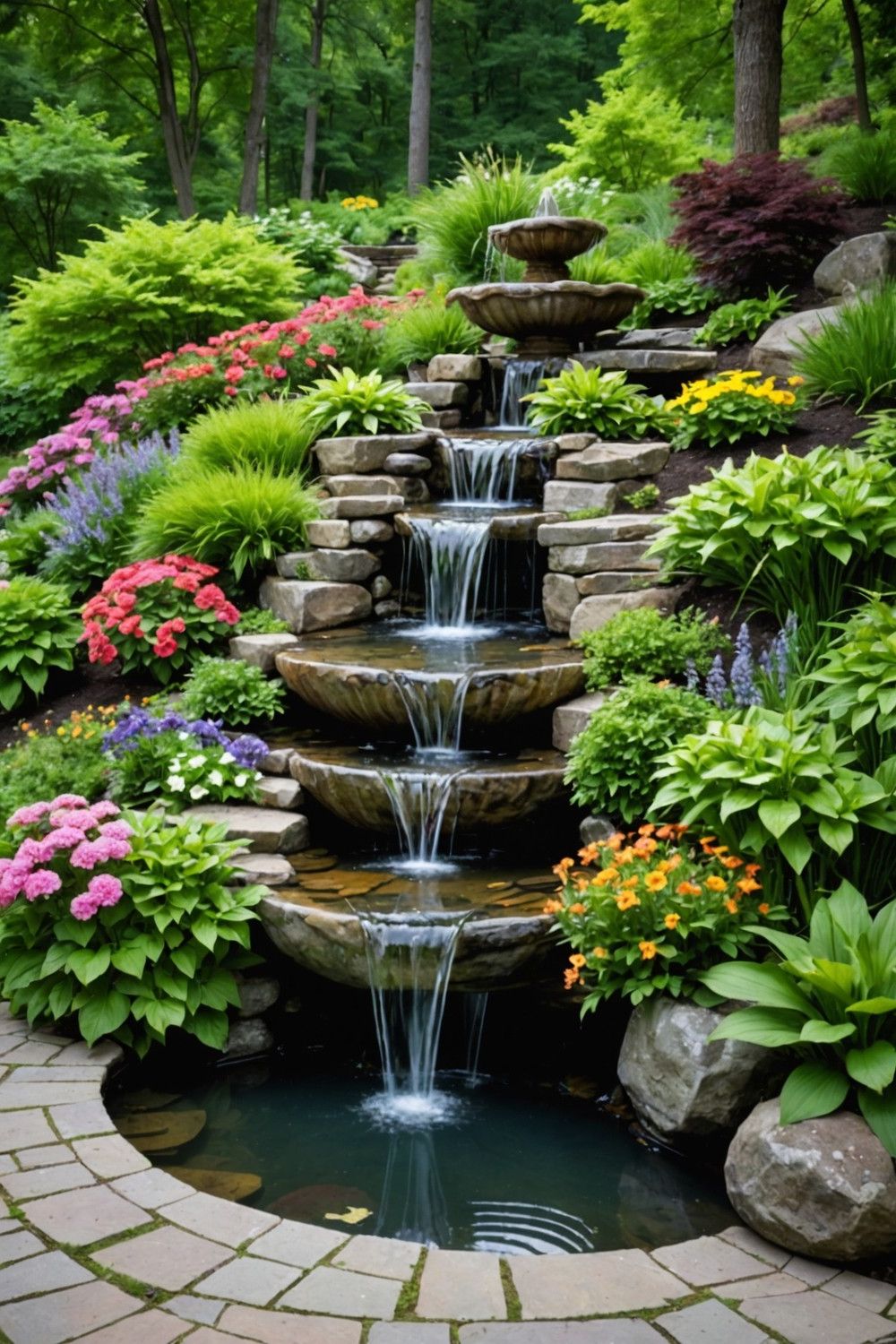
A hillside gives you a natural setup for a water feature that a flat yard simply can’t offer. Gravity does the work of moving water downhill for you.
Moving water carries a steady sound that masks street noise and gives the space a calmer feel. The way light catches ripples and small waterfalls also adds movement to an otherwise static planting bed.
A small pond or fountain near the top of the slope can feed a stream that cascades down through rock channels to a lower basin. That combination of sight and sound turns a plain hillside into a focal point.
The stream bed itself naturally divides the slope into separate planting pockets on either side. Those pockets add texture and give you spots to tuck in moisture-loving plants like ferns or hostas.
Native Plants for a Low-Maintenance Slope
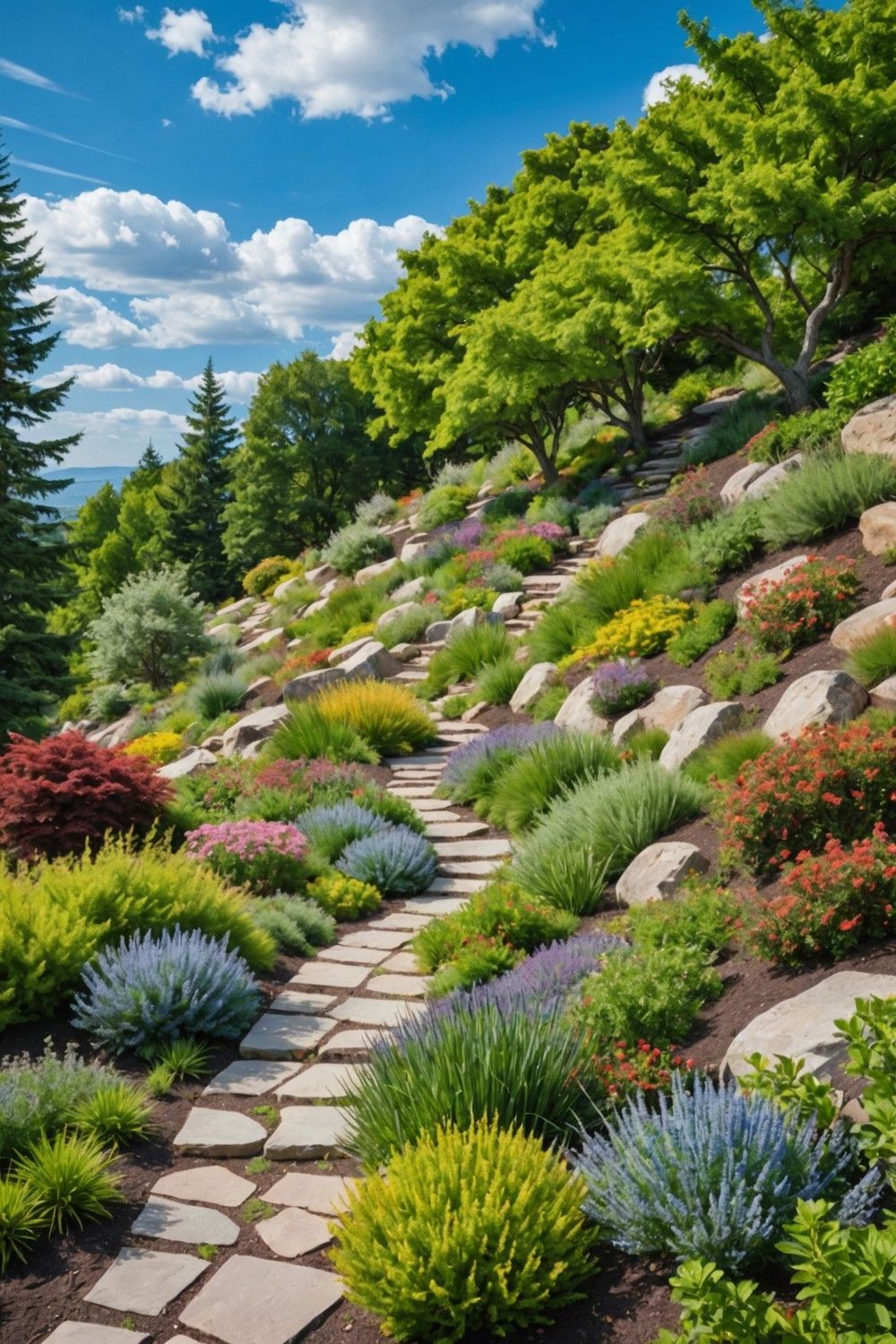
For a hillside that mostly takes care of itself, native plants are hard to beat. They’ve grown in the local soil and climate for generations, so they’re already suited to the conditions on your slope.
Because they’re adapted to local rainfall and soil type, native species typically need less watering, pruning, and fertilizer than imported ornamentals. That adaptation also means stronger root systems, which helps anchor loose hillside soil.
Native plants also tend to resist local pests and diseases on their own, cutting down on the need for pesticides or fungicides. That’s a real advantage on a slope, where chemical runoff can wash straight into a lower yard or storm drain.
Choosing native species over ornamentals cuts your maintenance time and water bill significantly. Popular native picks vary by region, so check with a local nursery for species suited to your specific climate.
1) Lawn Alternatives That Resist Erosion

Using native plants and succulents to terrace your hillside is a great idea if you’re looking for an erosion-resistant alternative to a traditional lawn.
These plants have deep roots that hold soil in place and require minimal maintenance.
Another option you could consider is planting groundcovers such as thyme or creeping juniper. They grow fast and do a great job at filling in space.
You can also consider using erosion-control blankets or mats, which help to stabilize the soil and prevent erosion.
2) L-Shaped Retaining Walls for Slopes

L-Shaped retaining walls are an excellent solution for hillside landscaping as they provide exceptional stability and support to the soil.
By creating a 90-degree angle, these walls can counteract the pressure of the soil and prevent erosion.
Another cool thing about retaining walls is that they can help you level out areas for gardens, patios, or walking paths. It’s a great way to maximize the space you have!
Additionally, L-Shaped walls can be designed to incorporate seating areas, planters, or other decorative elements, adding aesthetic value to the landscape.
3) Terracing Ideas to Level a Sloped Yard

Hillside terracing is an effective way to level your yard and create usable space on a sloping landscape.
By building a series of flat platforms, or terraces, you can create a functional outdoor area that’s perfect for gardening, entertaining, or simply enjoying the view.
This approach not only levels out the yard but also helps to control erosion and prevent soil runoff.
If you work on terracing with a lot of thought and planning, you can totally change a tricky hillside into a lovely outdoor area that goes perfectly with your house.
4) How to Build a Hillside Deck
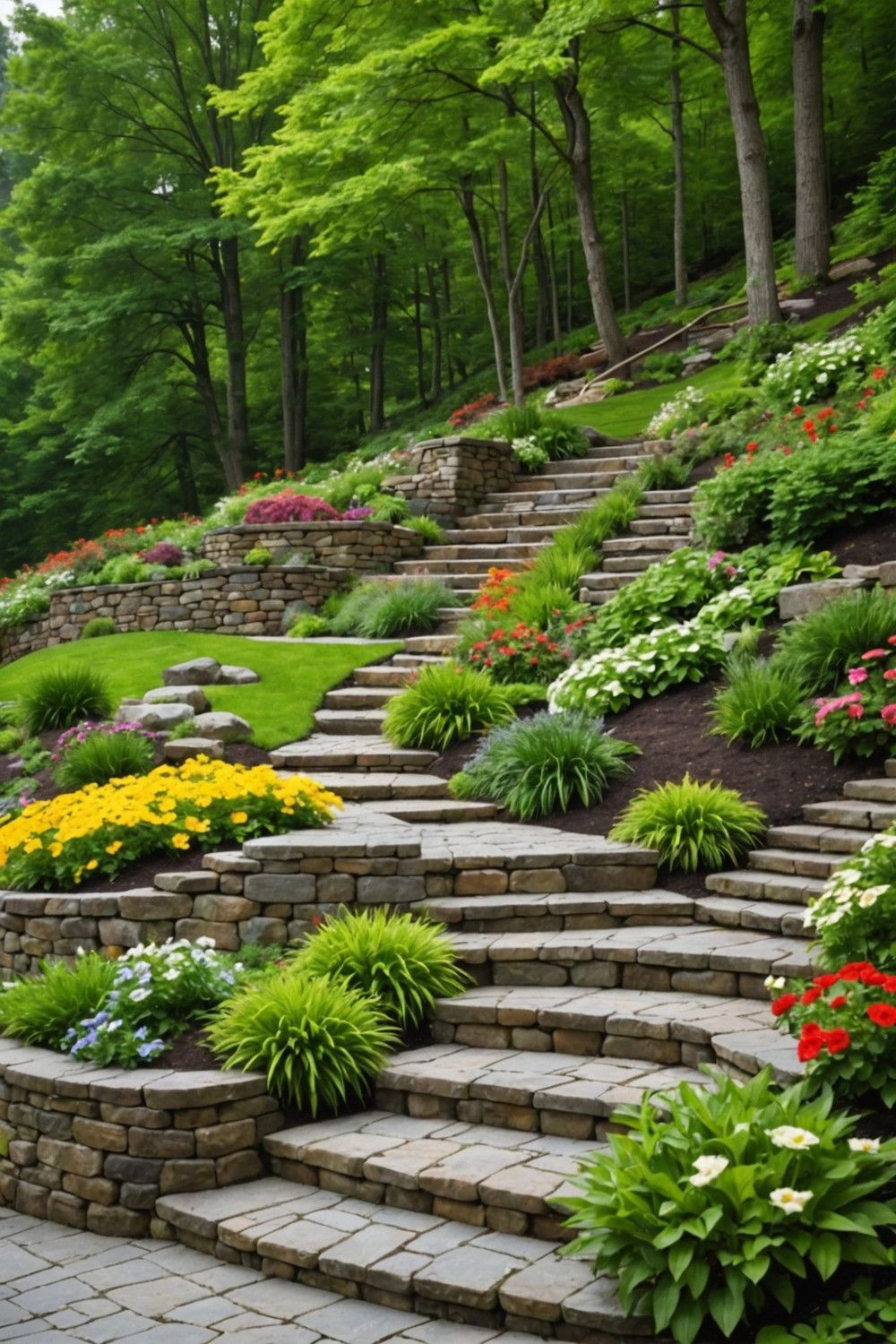
Building a hillside patio or deck requires careful planning and design to ensure stability and safety.
The key is to create a level surface by building up the lower side of the slope with retaining walls or terracing, and then constructing the patio or deck on top.
This will not only provide a flat surface but also help to prevent erosion and create a visually appealing outdoor space.
5) Natural Stone Accents for Hillside Yards
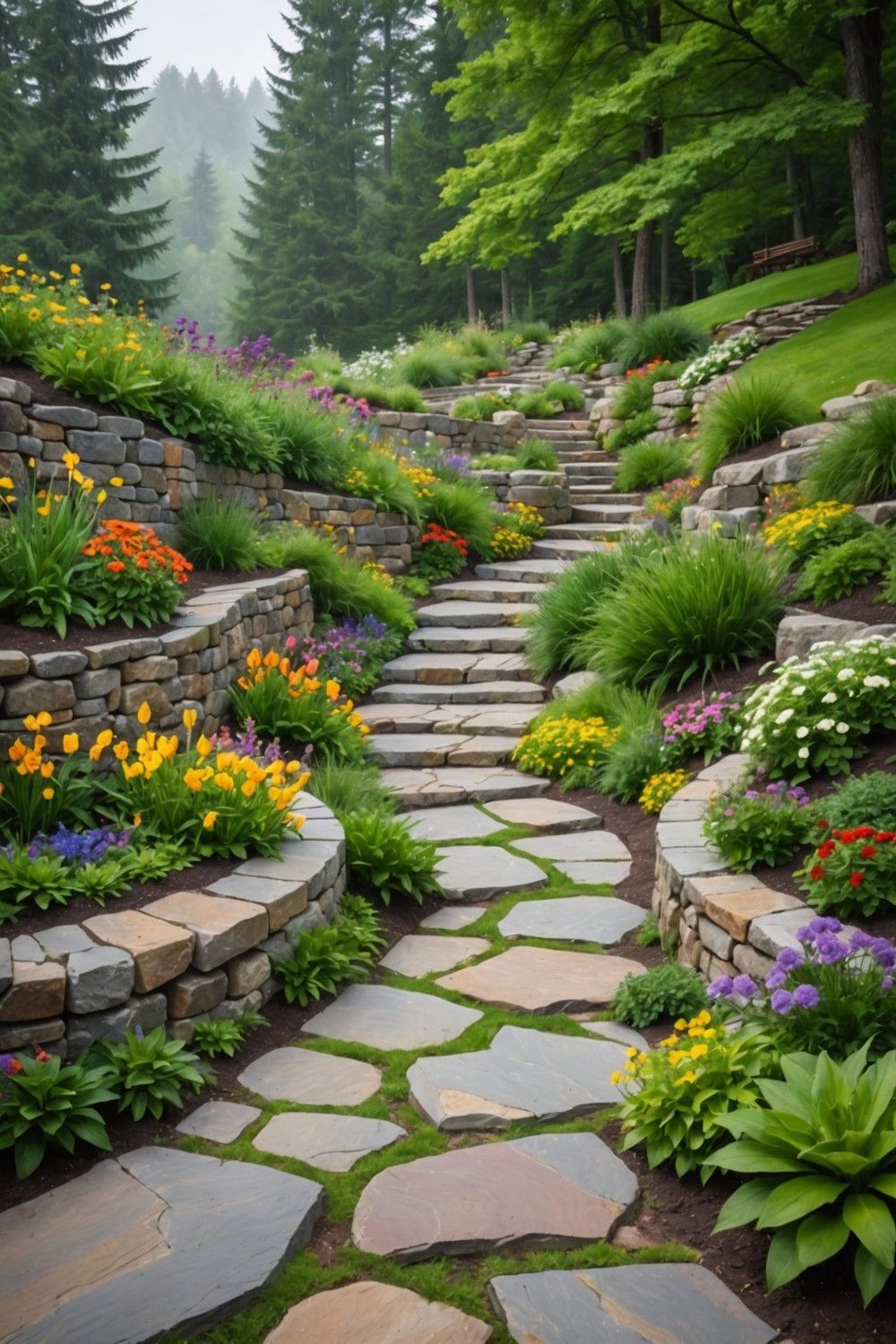
So, have you ever thought about using natural stone in your hillside landscape? It’s such a great choice because not only is it super versatile, but it’s also really durable.
Plus, it can really add to the overall look and feel of your outdoor space.
By incorporating natural stone into your design, you can create beautiful retaining walls, patios, and walkways that blend seamlessly with the surrounding environment.
Natural stone has this lovely, rustic feel to it, and the different textures really give your outdoor area some character. Plus, it’s super durable, so you don’t have to worry about it holding up on hilly terrain.
6) Wildlife-Friendly Hillside Meadow Ideas
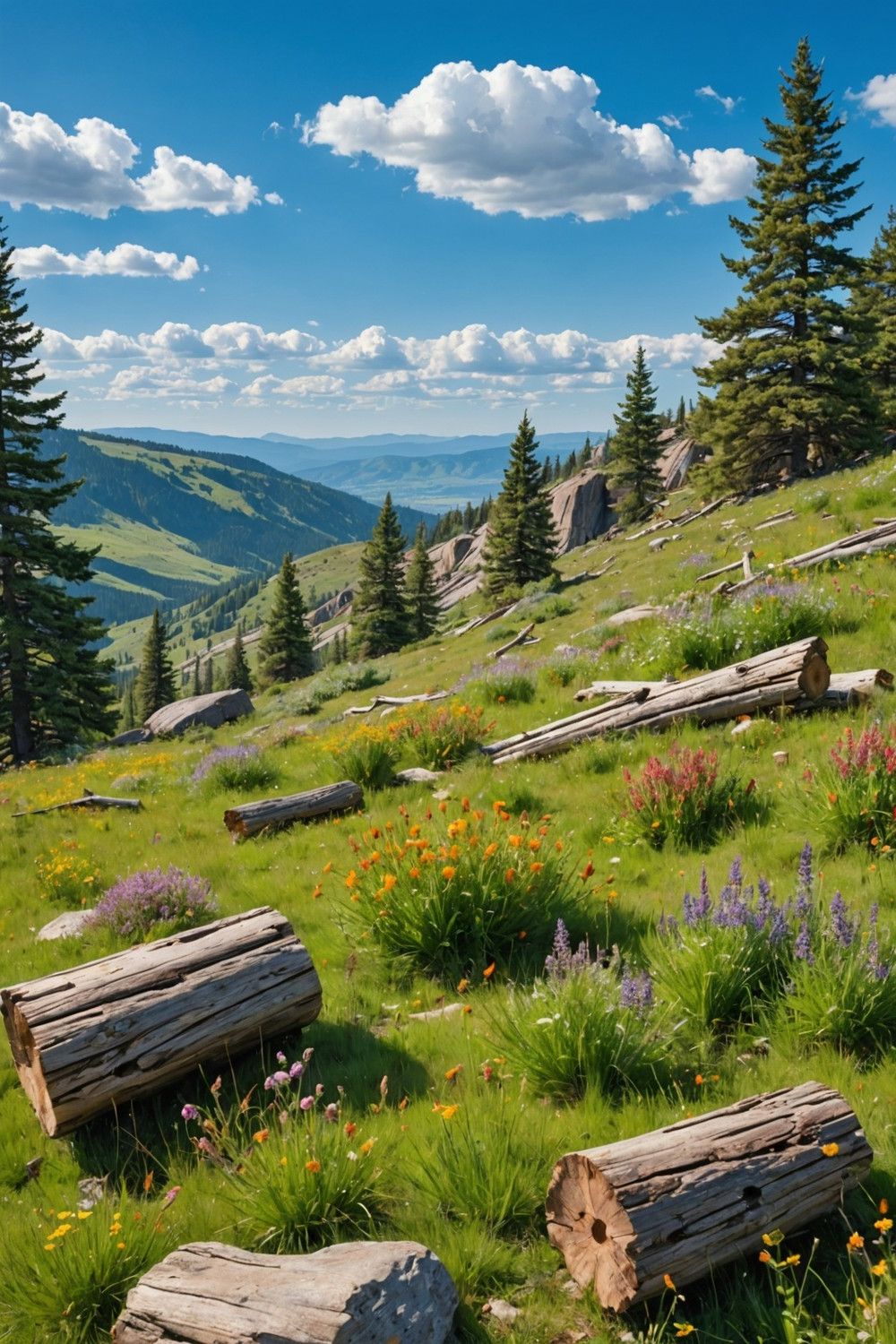
A hillside meadow is an attractive and beneficial addition to your landscape, providing a haven for local wildlife.
To create one, start by selecting native wildflowers, grasses, and shrubs that thrive in your region’s climate and soil conditions.
So, the first step is to get the site ready by clearing out any pesky weeds, debris, and plants that are already there.
Then, sow a mix of native seeds, and consider incorporating rocks, logs, or brush piles to create hiding spots and perches for wildlife.
7) Succulent and Cactus Hillside Gardens
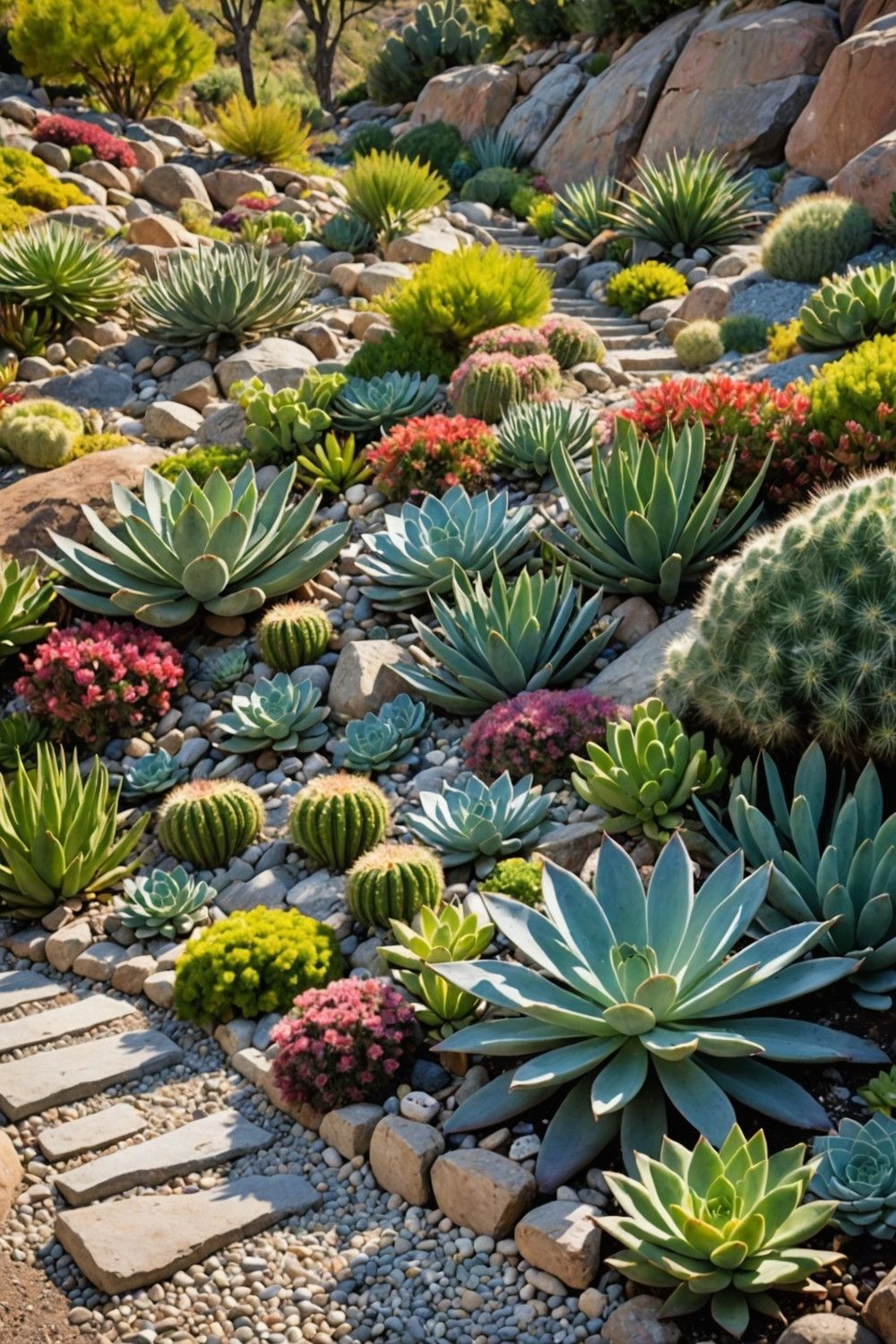
Hillside Landscaping with Succulents and Cacti Hillside landscaping with succulents and cacti is an excellent choice because these plants thrive in well-drained soil and full sun, making them perfect for slopes.
They also require minimal maintenance and watering, which is ideal for hard-to-reach areas.
If you play around with different textures, sizes, and colors, you can make a really cool and easy-to-care-for outdoor space that will look great even in tough weather!
8) Drainage Solutions for Sloped Yards
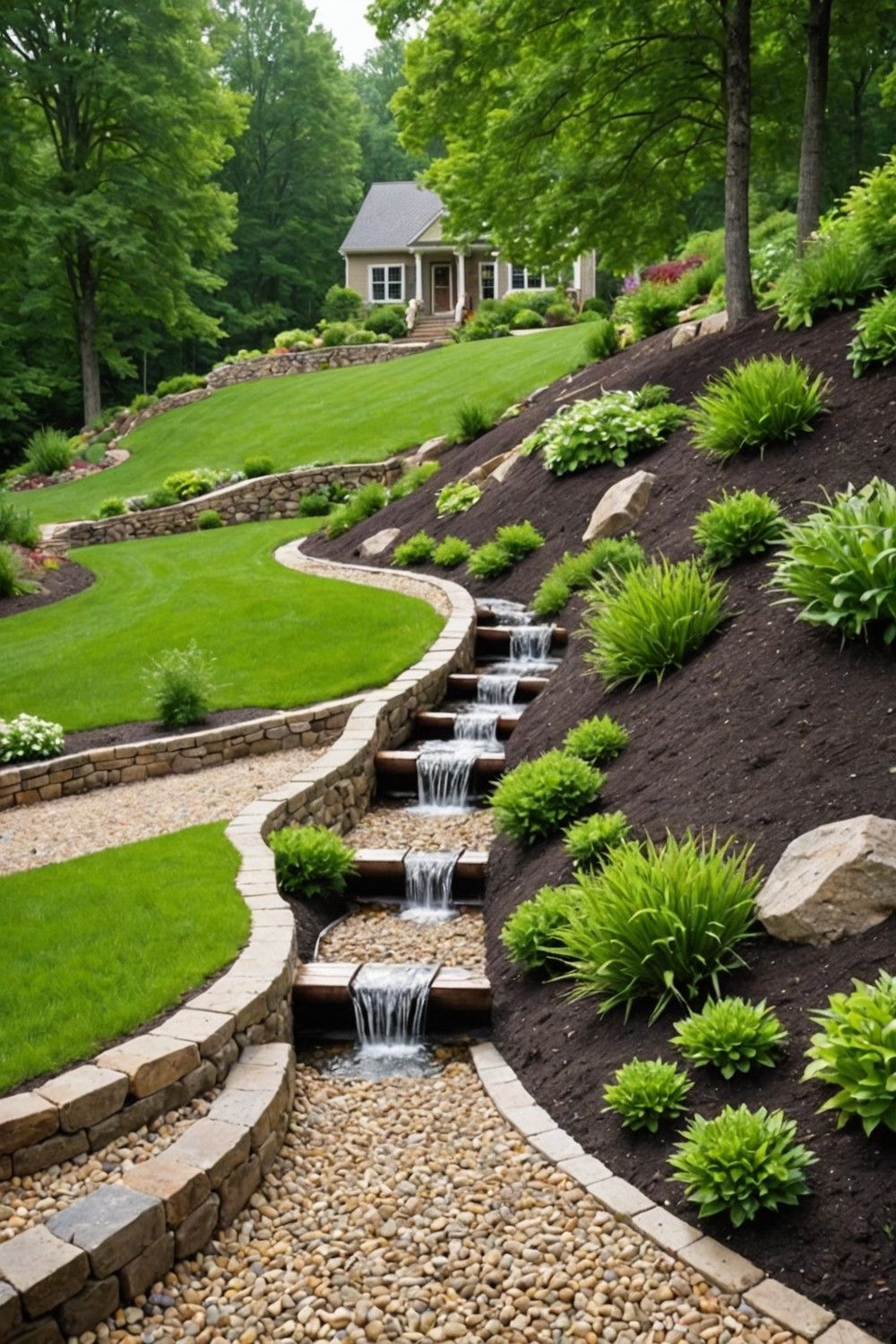
Having good drainage is super important when you’re landscaping on a hill. It helps stop water from building up, prevents erosion, and keeps your structures safe from damage.
A well-designed drainage system includes features like French drains, which involve a trench filled with gravel and a perforated pipe that redirects water away from the hillside.
Another option is a swale, a shallow ditch that captures and filters rainwater, allowing it to slowly infiltrate the soil.
By incorporating these systems, you can ensure a safe and stable landscape that thrives despite the challenges of gravity and water flow.
9) Outdoor Lighting Ideas for Hillside Safety
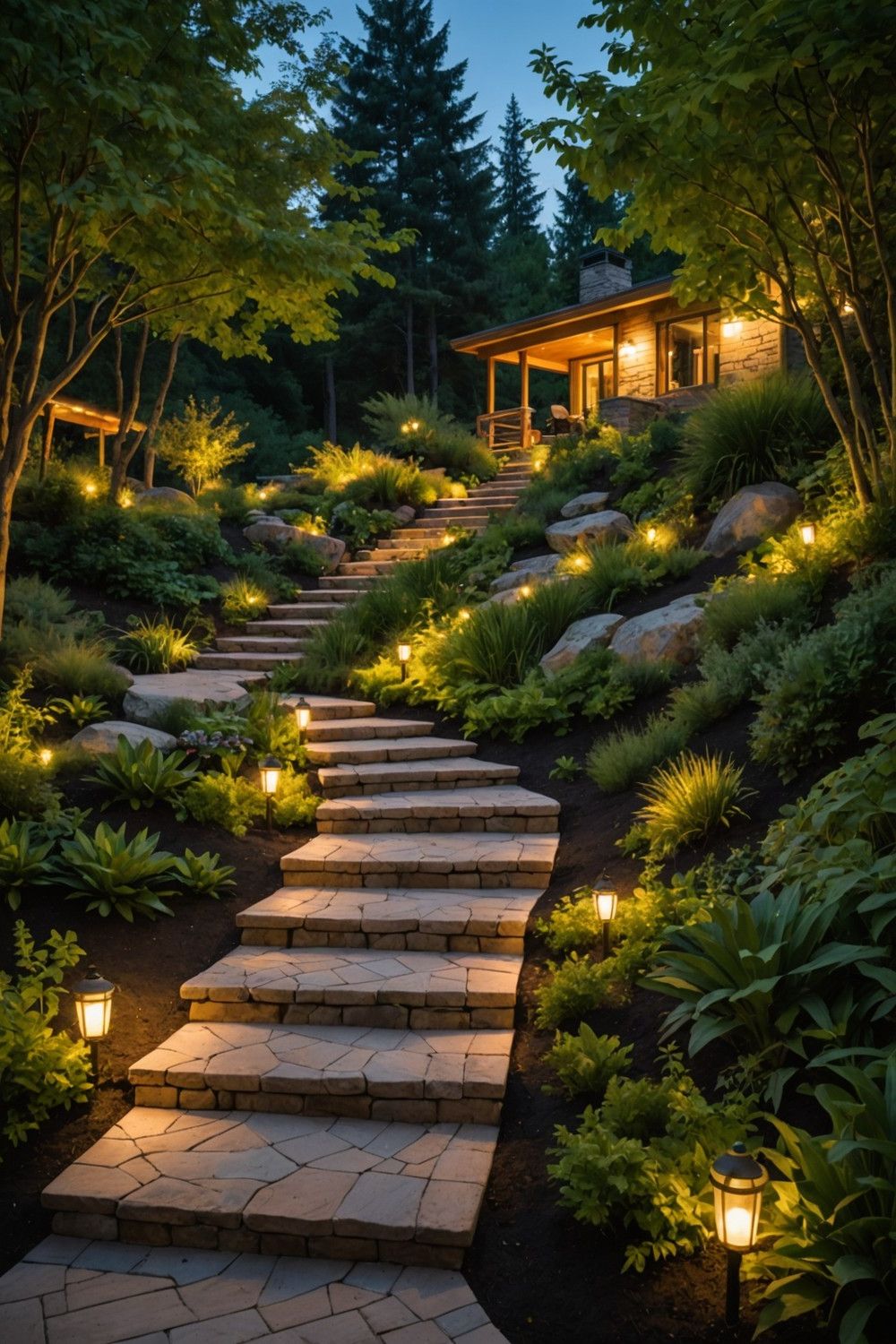
Hillside lighting serves a dual purpose – it not only enhances the aesthetic appeal of your outdoor space but also ensures safety and security.
Strategically placed lights can illuminate pathways, stairs, and other areas prone to tripping or falling, reducing the risk of accidents.
Additionally, soft ambient lighting can accentuate the natural beauty of your hillside landscape, creating a warm and inviting atmosphere perfect for evening gatherings or quiet relaxation.
10) Container Gardens for Hillside Yards

Adding some hillside planters and container gardens can really spruce up your sloping yard!
They’re an awesome way to add pops of color and create some depth in your outdoor space.
By using planters and containers, you can create a beautiful garden without having to deal with the challenges of planting directly into the hillside.
Plus, they’re portable, so you can easily move them around to find the perfect spot.
When you’re decorating with plants, try mixing it up with planters in all sorts of sizes and textures to make things more visually interesting.
And feel free to throw in a few eye-catching statement pieces, like a big planter or a cool statue, to really make your space pop!
11) Rainwater Harvesting on a Sloped Lot
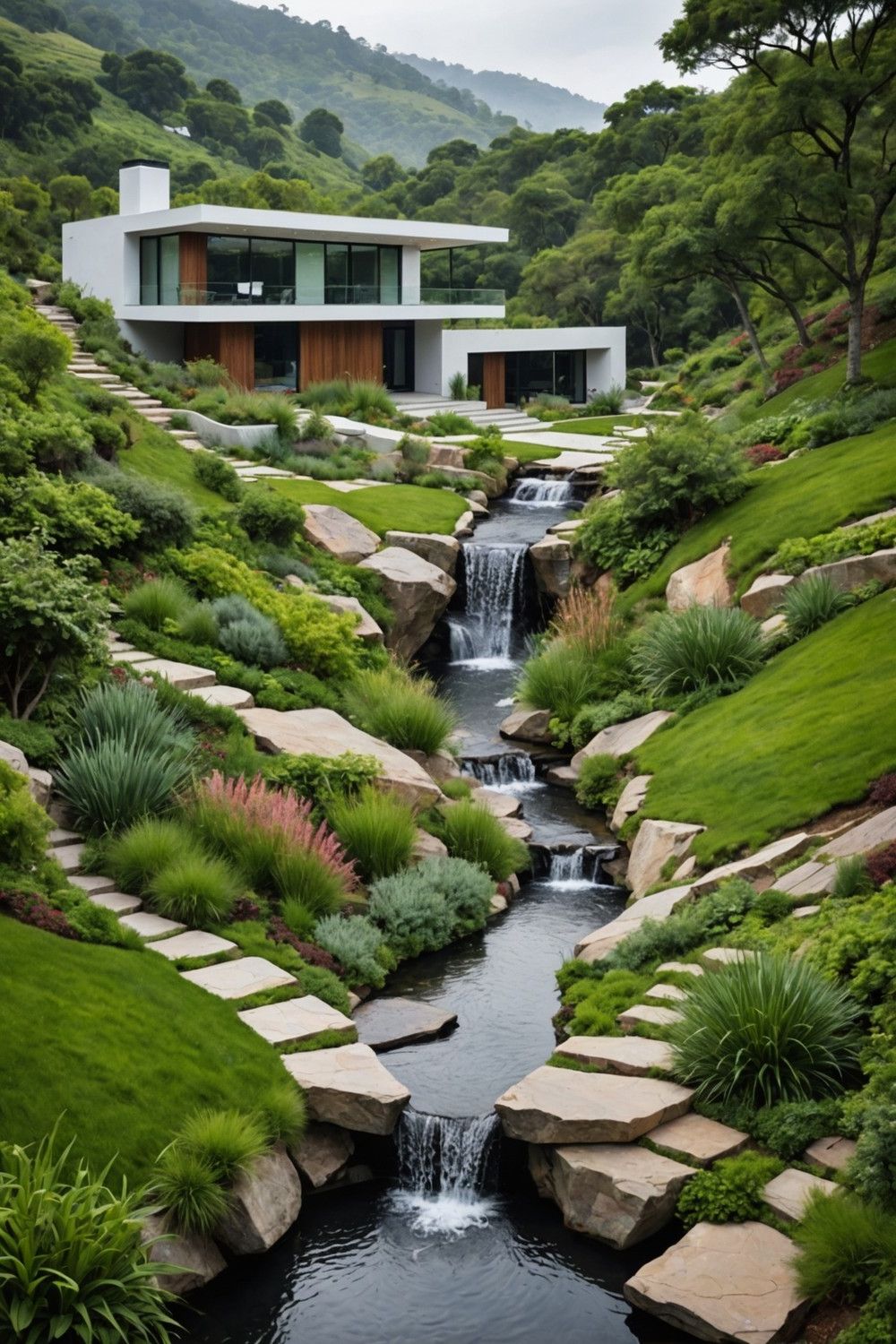
Rainwater harvesting systems are awesome for hillside landscaping! They gather up rainwater from roofs and driveways to help prevent erosion and landslides caused by stormwater runoff. Pretty cool, right?
By installing a rainwater harvesting system, you can conserve water, reduce your water bill, and create a sustainable landscape.
Plus, the collected rainwater can be used to irrigate plants, wash cars, and even flush toilets, making it a practical and environmentally friendly option for hillside homes.
12) Focal Point Ideas for Hillside Landscapes
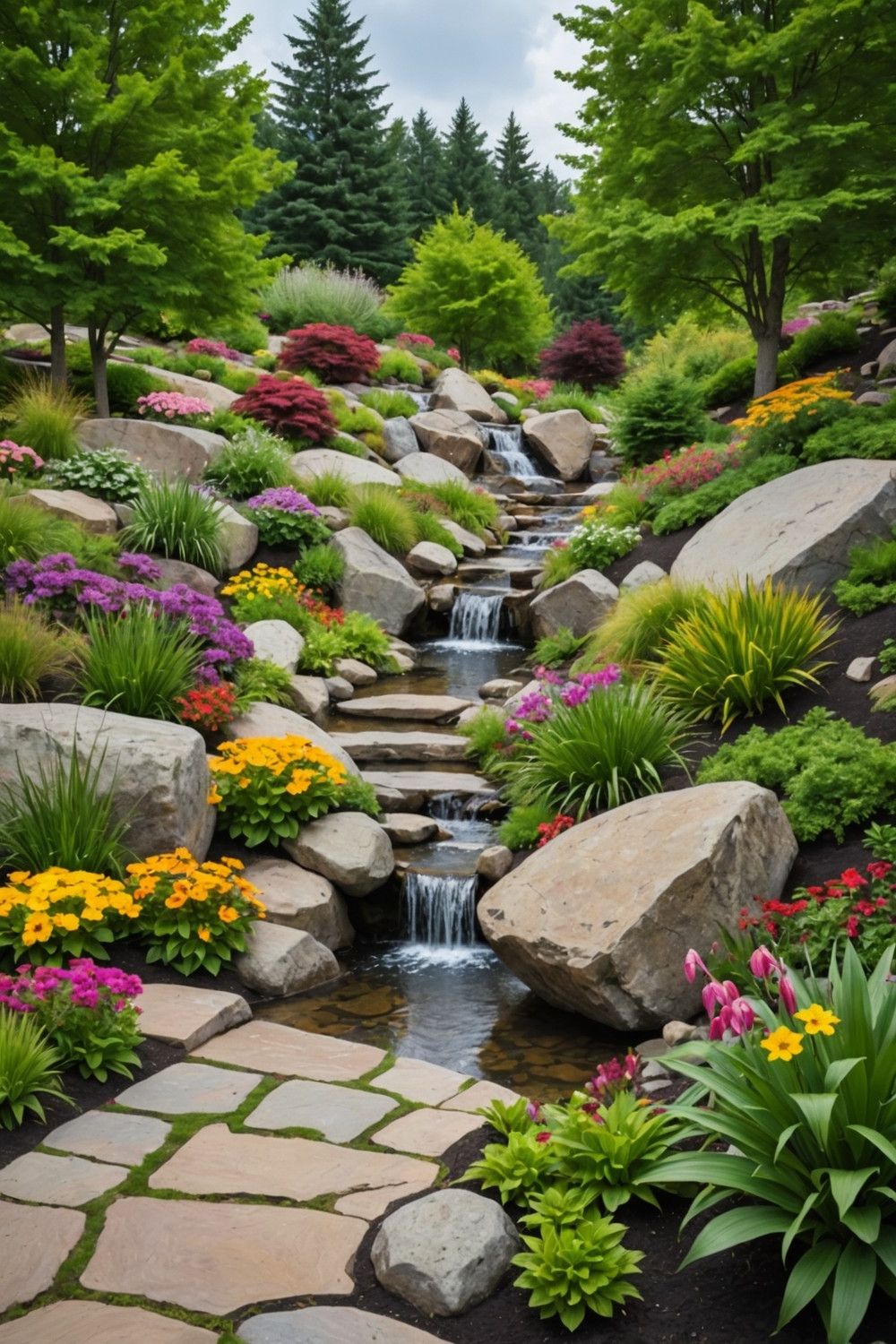
Hillside landscaping with focal points and accents is all about drawing the eye to specific areas of the yard to create visual interest.
This can be achieved by incorporating statement pieces like large boulders, sculptures, or water features that become the main attraction.
You can also add some plants with eye-catching foliage or colorful flowers to bring a fun pop of color and texture to your space!
By strategically placing these elements throughout the hillside, you can create a sense of journey and discovery, leading visitors through the landscape.