
With its dainty white bells and sweet perfume, lily of the valley brings quiet charm to garden beds and shady corners alike. It blooms in mid to late spring and pairs well with other shade-loving perennials.
Here are 20 creative ways to work this fragrant bloom into your yard, from woodland corners to container displays. Each idea below shows a different setting where the flower can shine.
Build a Whimsical Woodland Garden Feature
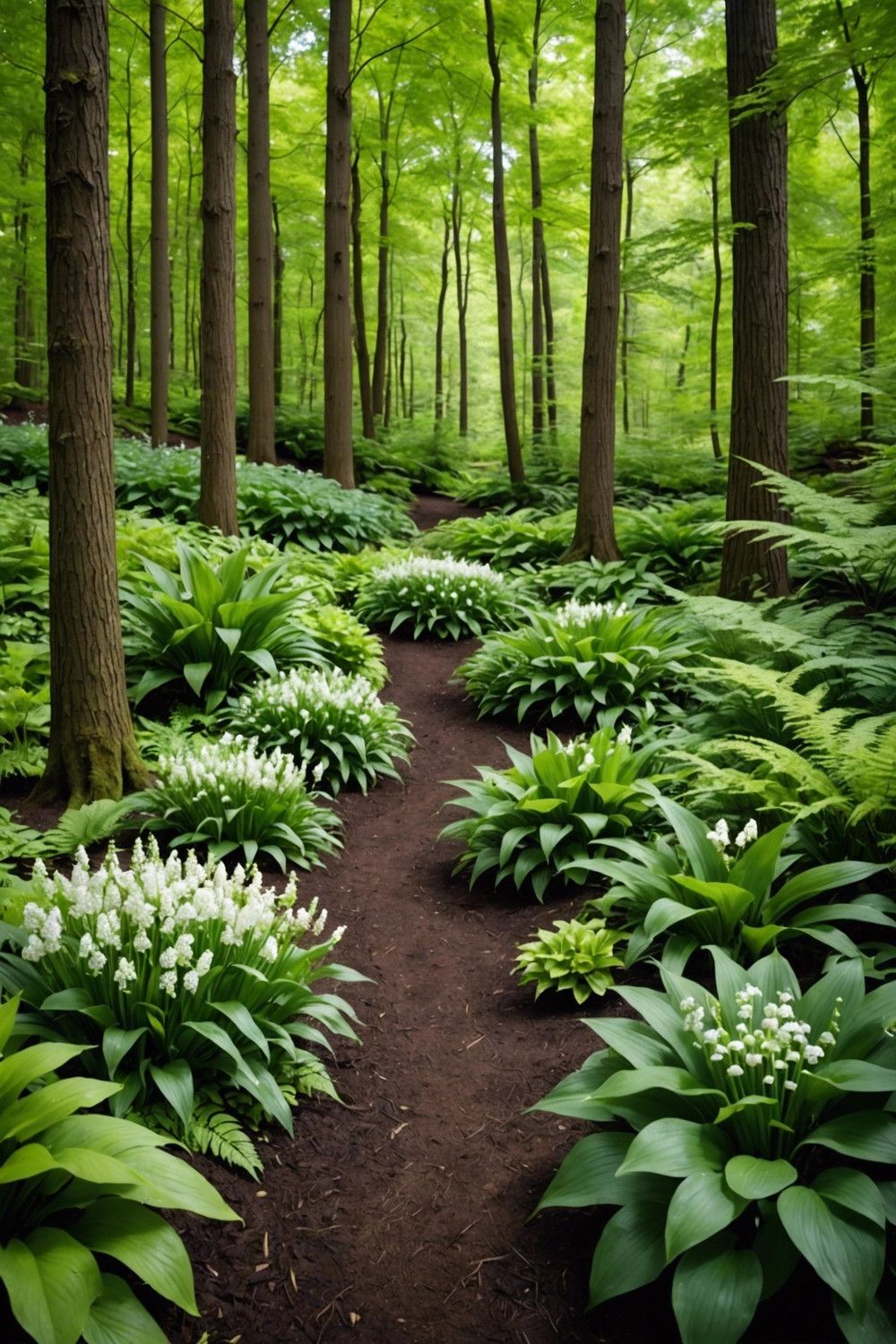
Pick a shaded spot with moist, rich soil to begin a woodland-style planting. Lily of the valley thrives in conditions that mimic a forest floor, so soil that stays cool and slightly damp works best.
Group the rhizomes in clusters or loose rings rather than straight rows. This planting style lets the white blooms spill naturally and gives the bed a sense of gentle motion.
Ferns, hostas, and native wildflowers make strong companions here. Mixing these textures alongside the flowers helps the whole bed read as a natural forest understory.
A layer of mulch made from wood chips or fallen leaves keeps these plants thriving season after season. Natural mulch is a simple way to support healthy growth without much extra work.
This mulch layer locks in soil moisture and blocks weeds from taking hold. Refresh it once or twice a year to keep the bed tidy and the soil protected.
Once established, the bed takes on the feel of a hidden glade tucked beneath the trees. The combination of shade, moisture, and layered plants gives the space real depth.
Combine Ferns With Lily of the Valley
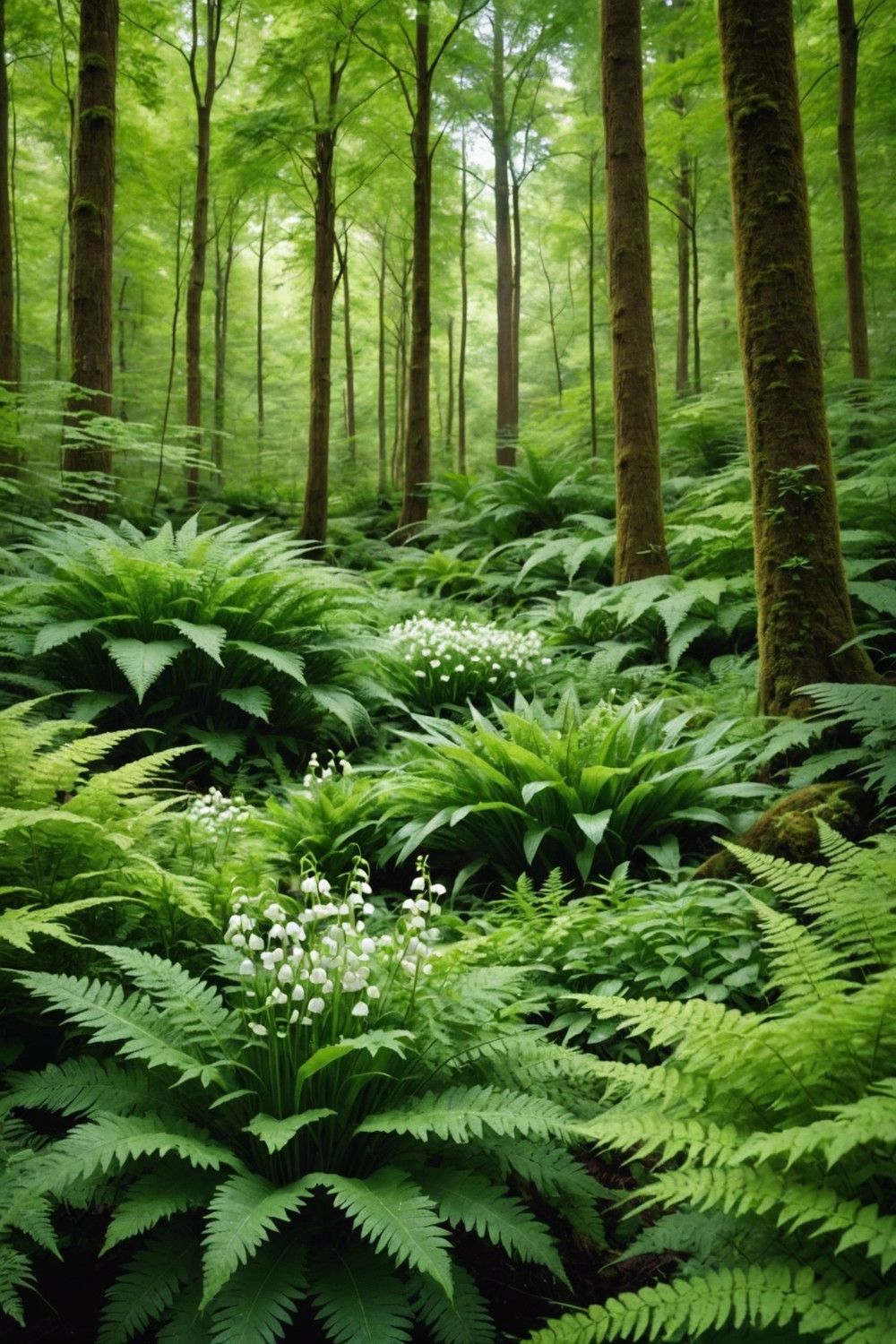
Ferns bring deep green, feathery foliage that makes the small white blooms of lily of the valley stand out even more. The contrast between soft fronds and tiny bell-shaped flowers gives a shaded bed real personality.
This pairing works especially well in spots that already feel like a quiet forest corner. Layering the two plants adds both depth and texture without requiring a lot of extra care.
Ferns of different heights create movement across the bed, while their fronds act as a natural screen behind the low-growing flowers. Mixing fern varieties, such as maidenhair and ostrich fern, adds even more textural variety.
Choose Lily of the Valley as a Ground Cover
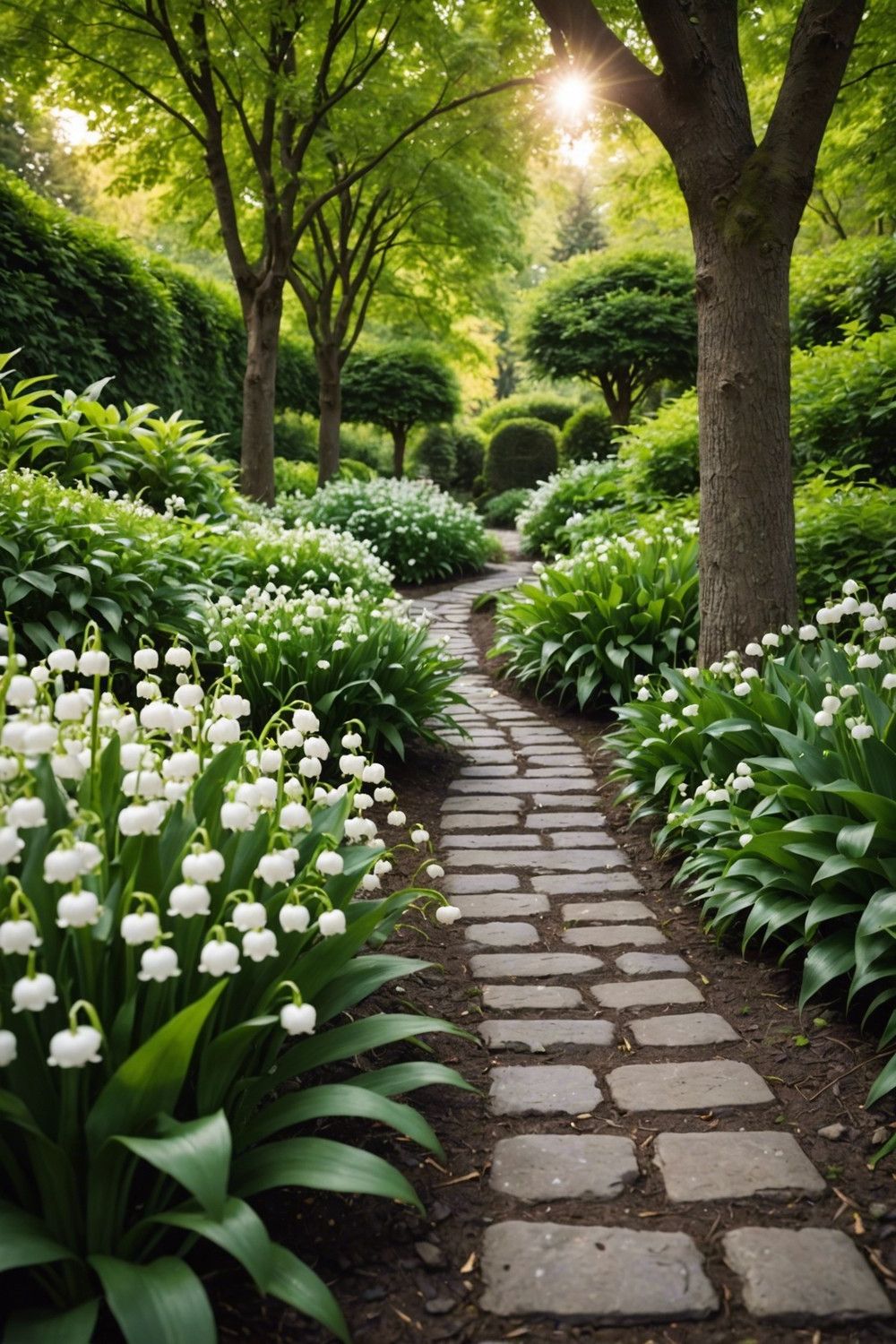
Few groundcovers offer the same payoff as lily of the valley, with its glossy leaves and strong, sweet scent. It handles shade well and asks for very little upkeep once it settles in.
The bell-shaped white flowers sit above dark green leaves that knit together into a dense mat. That mat crowds out weeds naturally while releasing a pleasant fragrance across the garden bed.
It also tolerates poor soil better than many groundcovers, which makes it a solid pick for tricky spots like slopes or bare patches under trees. Once planted, it spreads on its own with little intervention.
Bring Lily of the Valley Into a White Garden
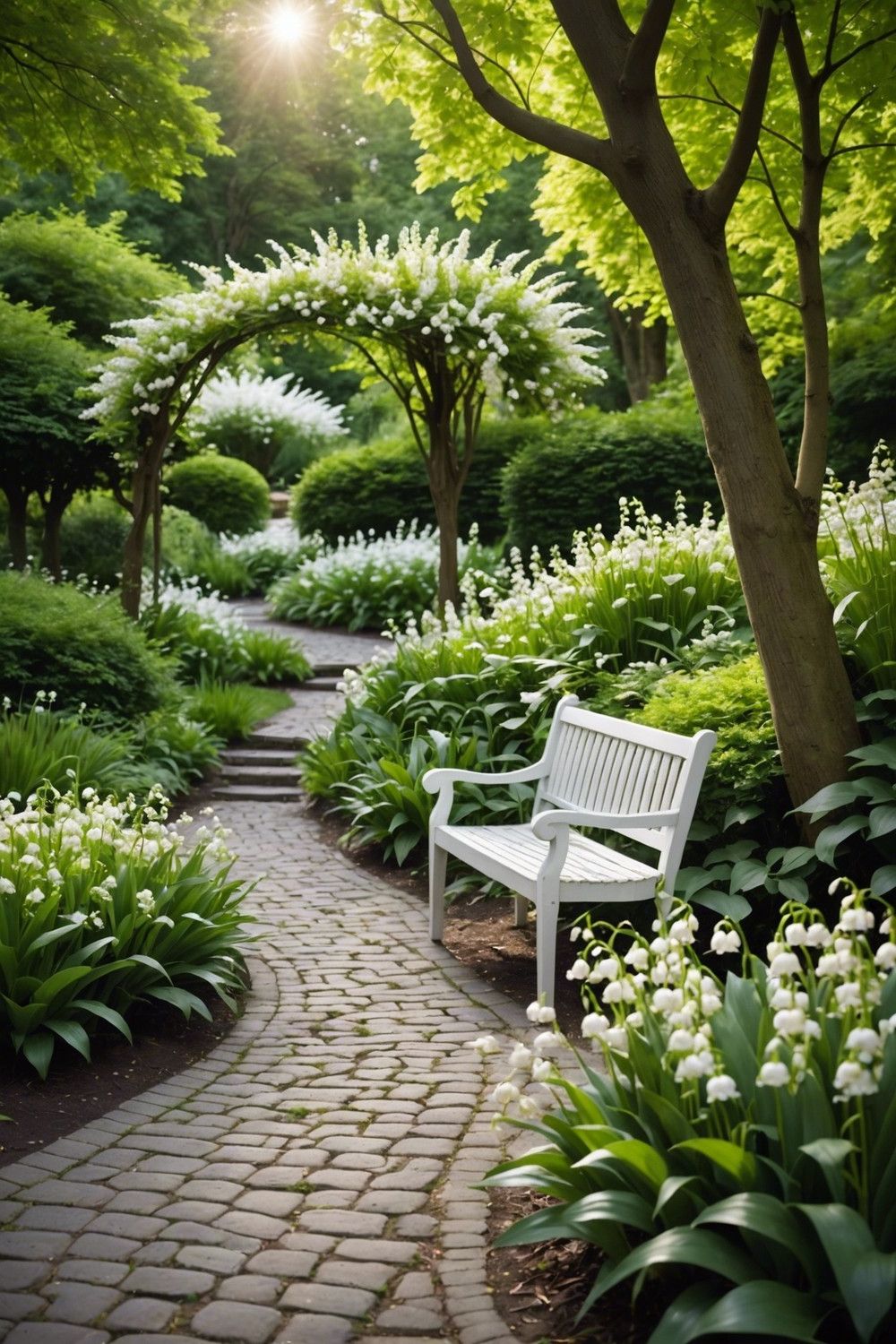
A white-themed garden gains a soft, romantic layer when lily of the valley is tucked among the other pale blooms. Its small scale makes it a good filler between larger white-flowering plants like peonies or roses.
The bell-shaped flowers and their sweet scent give the space an old-fashioned, nostalgic feel. That fragrance carries well in the evening air, which makes a white garden especially pleasant after sunset.
In late spring, the blooms open together in a dense wave of white across the bed. Many gardeners plant them near pathways or seating areas so the fragrance is easy to enjoy up close.
Design a Border Using Hostas and Lily of the Valley
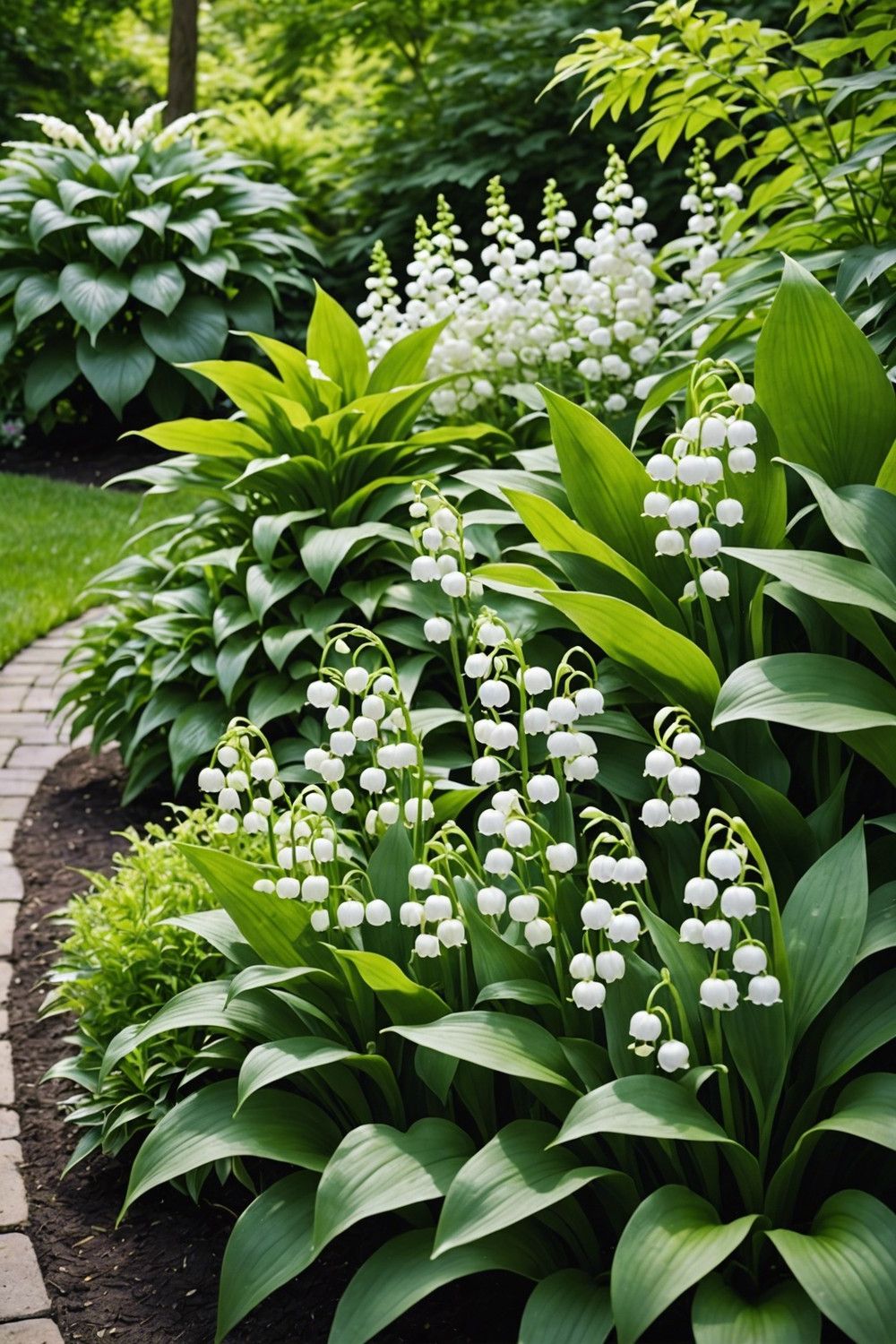
Pairing lily of the valley with hostas along a border adds layers of texture without demanding much upkeep. The two plants share similar light and moisture needs, which makes them easy to grow side by side.
Broad hosta leaves in shades of green and blue-green set off the smaller white blooms and dark foliage of lily of the valley. The size difference between the two plants creates a clear visual contrast along the edge of a bed.
Set the lily of the valley near the front so it can drape over the border’s edge, and place hostas behind to form a fuller backdrop. This layout gives the border height in back and softness up front.
Add Lily of the Valley to a Rock Garden

Rock gardens suit lily of the valley surprisingly well, since the plant favors well-draining soil and partial shade. Tucking it between stones adds a soft, blooming contrast to the harder textures around it.
Look for a spot near limestone or other alkaline rock, since the plant grows best in soil with a slightly alkaline pH. Testing the soil beforehand can help confirm it’s a good match.
Set the rhizomes into gaps between the rocks, spacing them out so each one has room to spread. Lily of the valley spreads through underground rhizomes, so a little extra space now prevents crowding later.
Over a season or two, the flowers will drift over the stones and soften the rock garden’s edges. The result is a planting that looks like it grew there naturally.
Grow Lily of the Valley Beneath Shade Trees

The area under a leafy tree canopy makes a natural home for lily of the valley, since the plant prefers shade over direct sun. Oaks and maples, in particular, cast the kind of dappled light this flower needs.
Filtered sunlight lets the white bell-shaped blooms spread into a thick carpet across the tree’s base. Over time, the planting can cover bare soil that struggles to grow much else.
Seeing these flowers spill out from beneath a tree naturally draws the eye toward that quiet corner of the yard. It’s a planting spot that rewards a second look.
The dense cluster of blooms works almost like a visual invitation, pulling visitors closer to walk the shaded path beneath the branches. That kind of natural framing is hard to get from open, sunny beds.
Craft a Lily of the Valley Wreath for the Gate
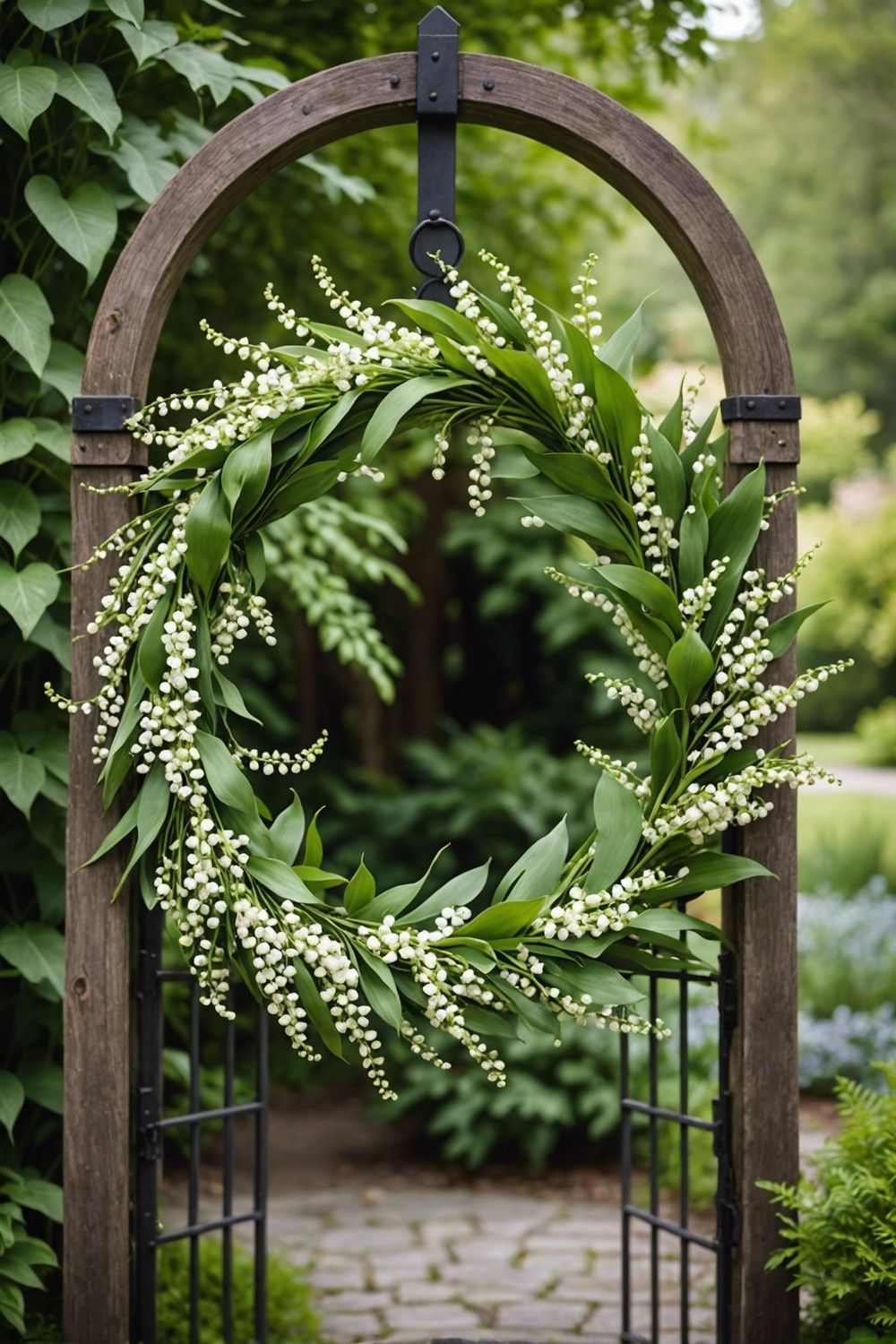
Fresh flowers and greenery are the starting point for a lily of the valley wreath at your garden gate. Gather your materials first so the stems stay fresh while you work.
Plan on roughly 20 to 25 stems of lily of the valley, plus eucalyptus or fern fronds for extra texture and fullness. Working with fresh-cut stems makes the wreath easier to shape and keeps the fragrance strong for longer.
Simply wire the stems together in a circular shape, overlapping them to create a lush, full appearance.
Once you’ve achieved the desired shape, add some decorative elements like ribbons or bows to complete the look.
Grow Lily of the Valley in a Container Garden
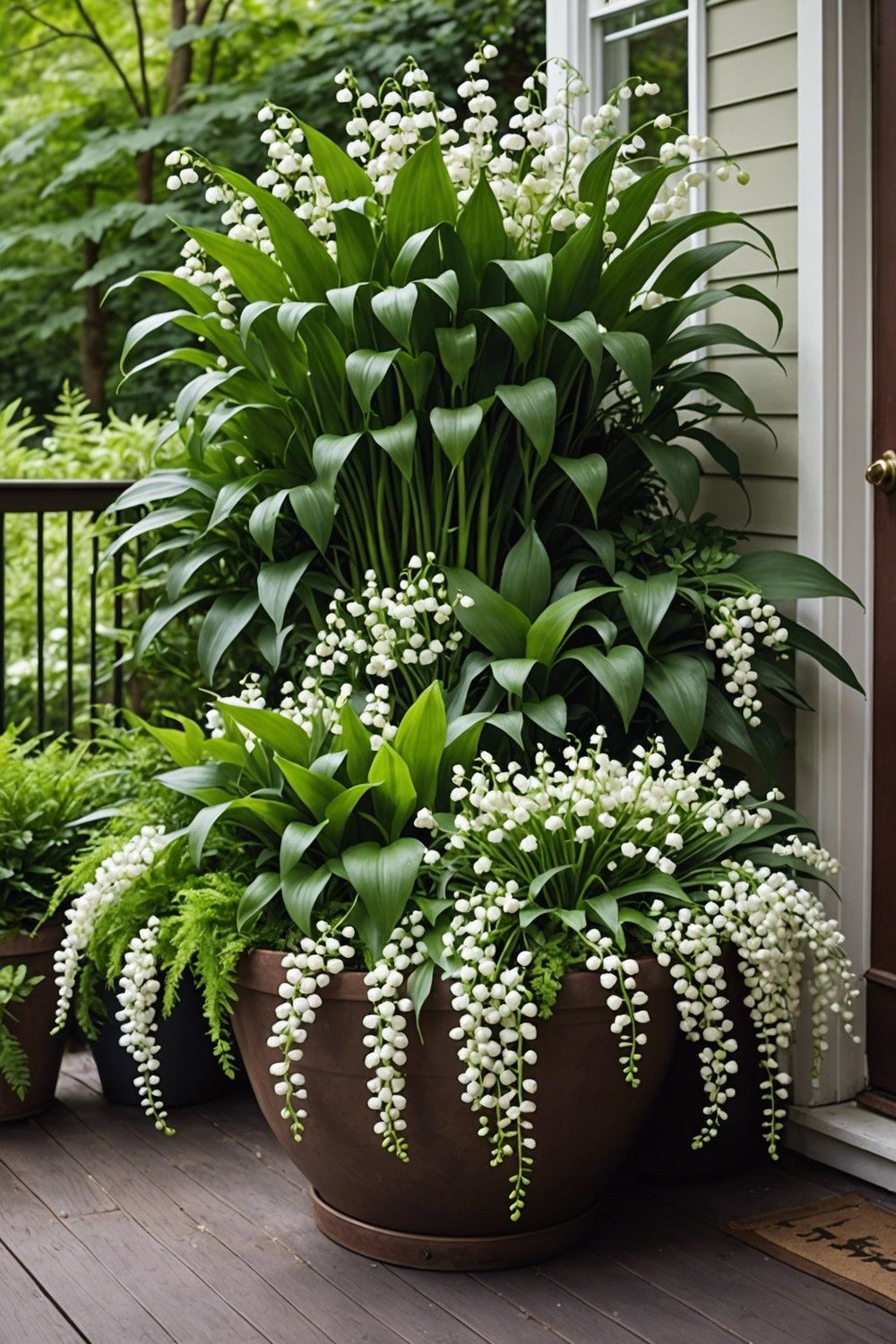
Lily of the Valley’s dainty white blooms and dark green leaves add a charming touch to any container garden.
This versatile plant thrives in shaded areas, making it perfect for balconies, patios, or indoor spaces.
You could mix it with some ferns or creeping thyme to create a beautiful and dreamy arrangement.
As the flower’s sweet fragrance wafts through the air, you’ll be transported to a serene, idyllic setting.
Even better, Lily of the Valley is low-maintenance, requiring only moderate watering and pruning to keep it looking its best.
Pair Lily of the Valley With Creeping Thyme
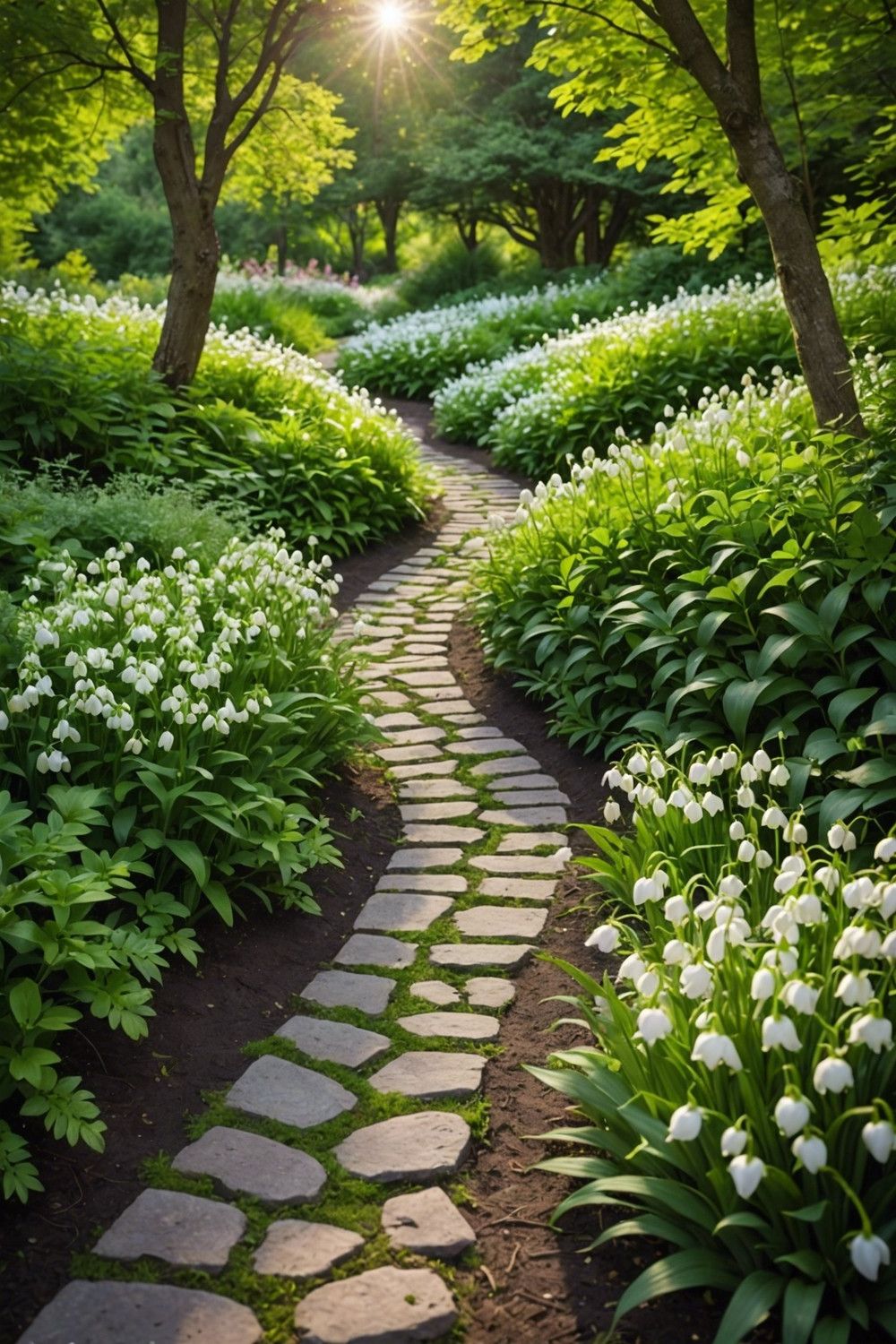
For a truly unforgettable walkway, pair Lily of the Valley with Creeping Thyme. This dynamic duo will create a fragrant path that will delight your senses and tantalize your toes.
Imagine a beautiful sight in your garden – the charming white flowers of Lily of the Valley gracefully swaying above the low Creeping Thyme. The lovely fragrance they release is so inviting and intoxicating, it will surely captivate you.
As you walk along the path, the tiny leaves of the Thyme will release their own subtle minty scent, mingling with the Lily of the Valley’s perfume to create an intoxicating blend.
Choose Lily of the Valley for a Shade Garden
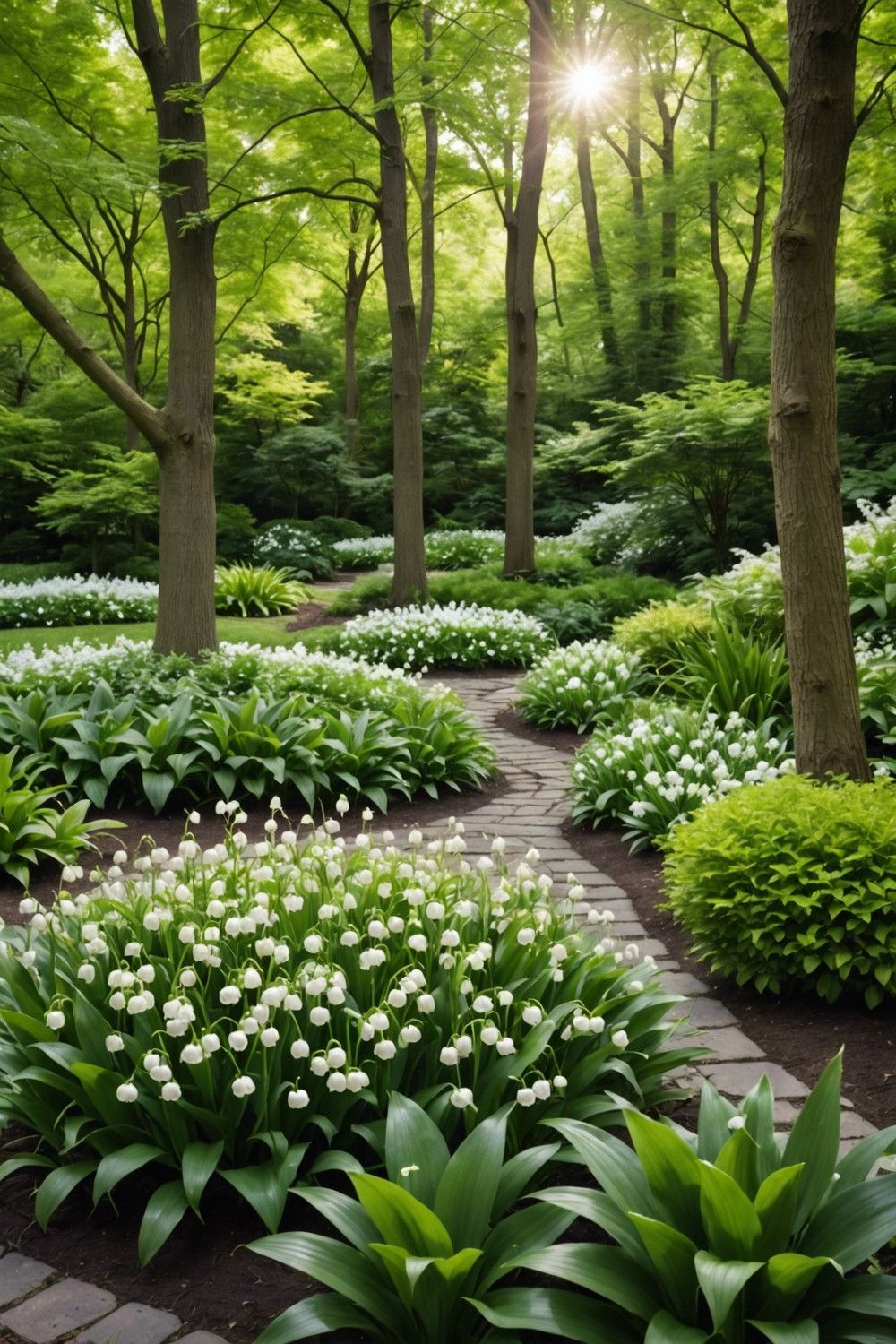
Planting Lily of the Valley in a shade garden is an excellent choice for those who want a low-maintenance option.
This beautiful flowering plant loves hanging out in spots with just a little bit of shade or even full shade. It’s great for places that don’t get a ton of sunlight.
This plant is pretty cool because it can spread super fast and fill in empty spots between other plants, giving off a nice, carpet-like vibe.
Plus, it requires minimal care, only needing occasional watering and fertilization, making it ideal for busy gardeners.
Shape a Lily of the Valley Hedge Border

For a beautifully distinctive border, create a Lily of the Valley hedge by planting individual stems close together, about 6-8 inches apart.
This will encourage them to grow together, forming a lush, verdant barrier.
To add an extra layer of visual interest, consider incorporating curves or irregular shapes into your hedge’s design.
Fit Lily of the Valley Into a Cottage Garden
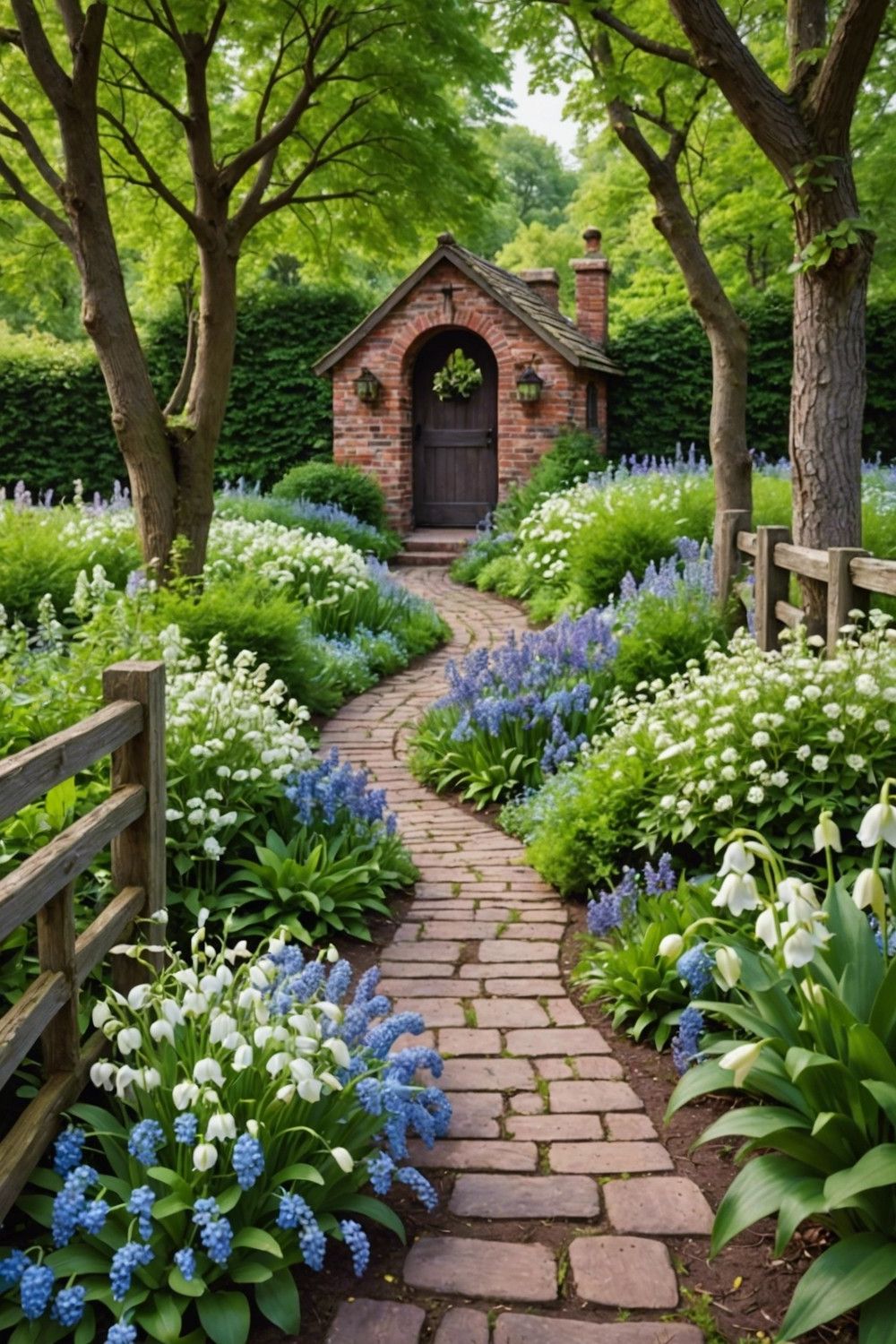
If you’re thinking about adding some lily of the valley to your lovely little cottage garden, you could try putting it along the pathways, borders, or even under the trees. It’ll definitely give your garden a charming touch!
Its low-growing habit and delicate white blooms create a charming, romantic atmosphere perfect for a whimsical cottage garden.
Why not try mixing it with some easy-to-care-for flowers like forget-me-nots, violets, or creeping thyme? It’ll give your garden a beautiful, relaxed vibe without too much effort.
Shape a Lily of the Valley Topiary Display
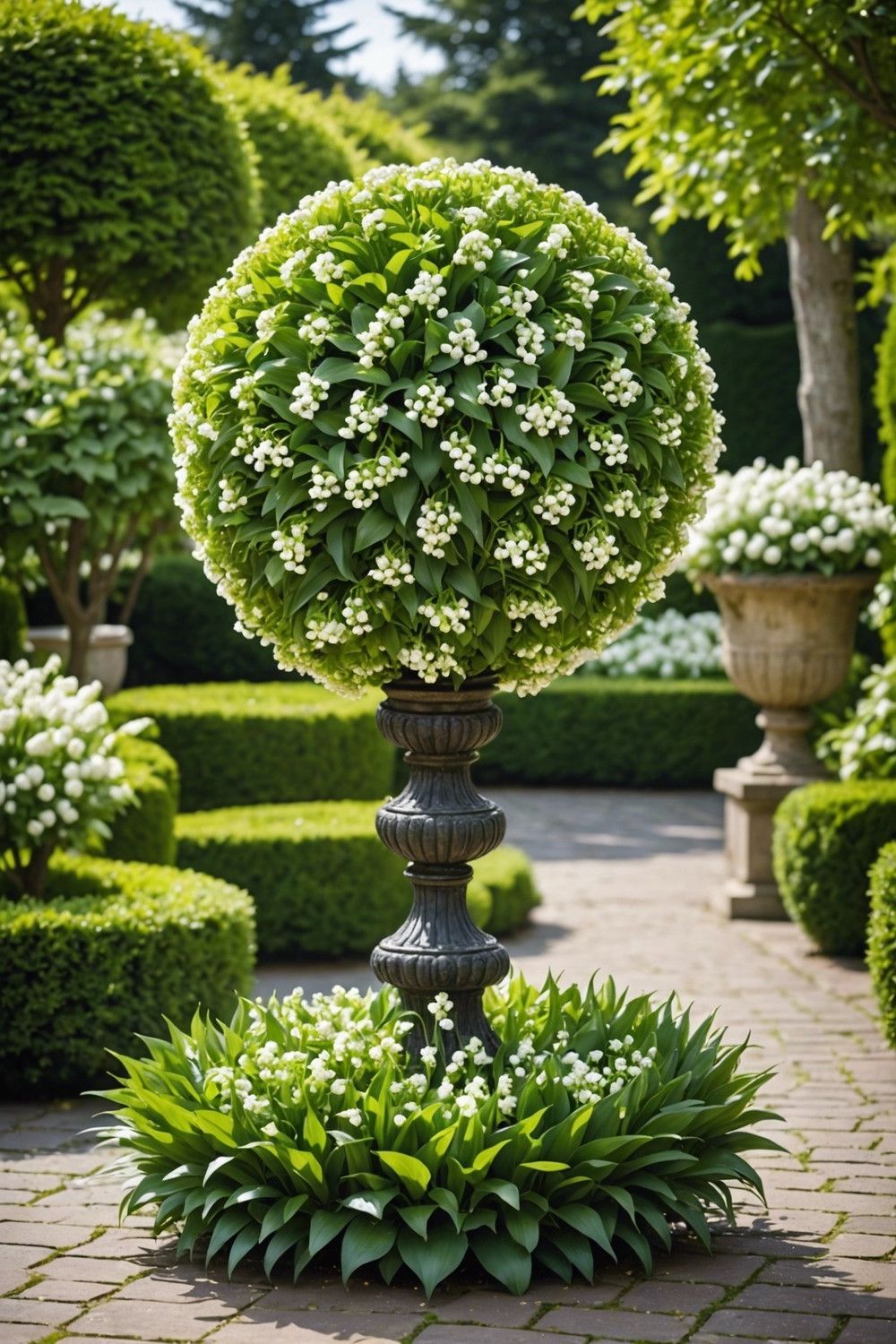
If you want to make a really pretty Lily of the Valley topiary, just grab a small potted plant and gently mold the stems into any shape you like – maybe a cone or a sphere. It’s super easy and fun to do!
Secure the stems with soft twine or wire, taking care not to damage the delicate foliage.
As your plant grows, just keep trimming and shaping it to get that perfect topiary shape you want. It’s all about giving it some love and attention as it grows!
This special ornament brings a lovely, playful vibe to your garden or patio.
Grow Lily of the Valley in a Hanging Basket

Planting Lily of the Valley in a hanging basket is a stunning way to showcase this delicate flower. The cascading white blooms will spill over the edges of the basket, creating a beautiful display that’s perfect for porches, patios, or decks.
Make sure to choose a basket with good drainage and use a well-draining potting mix to prevent waterlogged soil.
This will keep your Lily of the Valley happy and healthy, allowing it to thrive in its new hanging home.
Swap Your Lawn for Fragrant Lily of the Valley
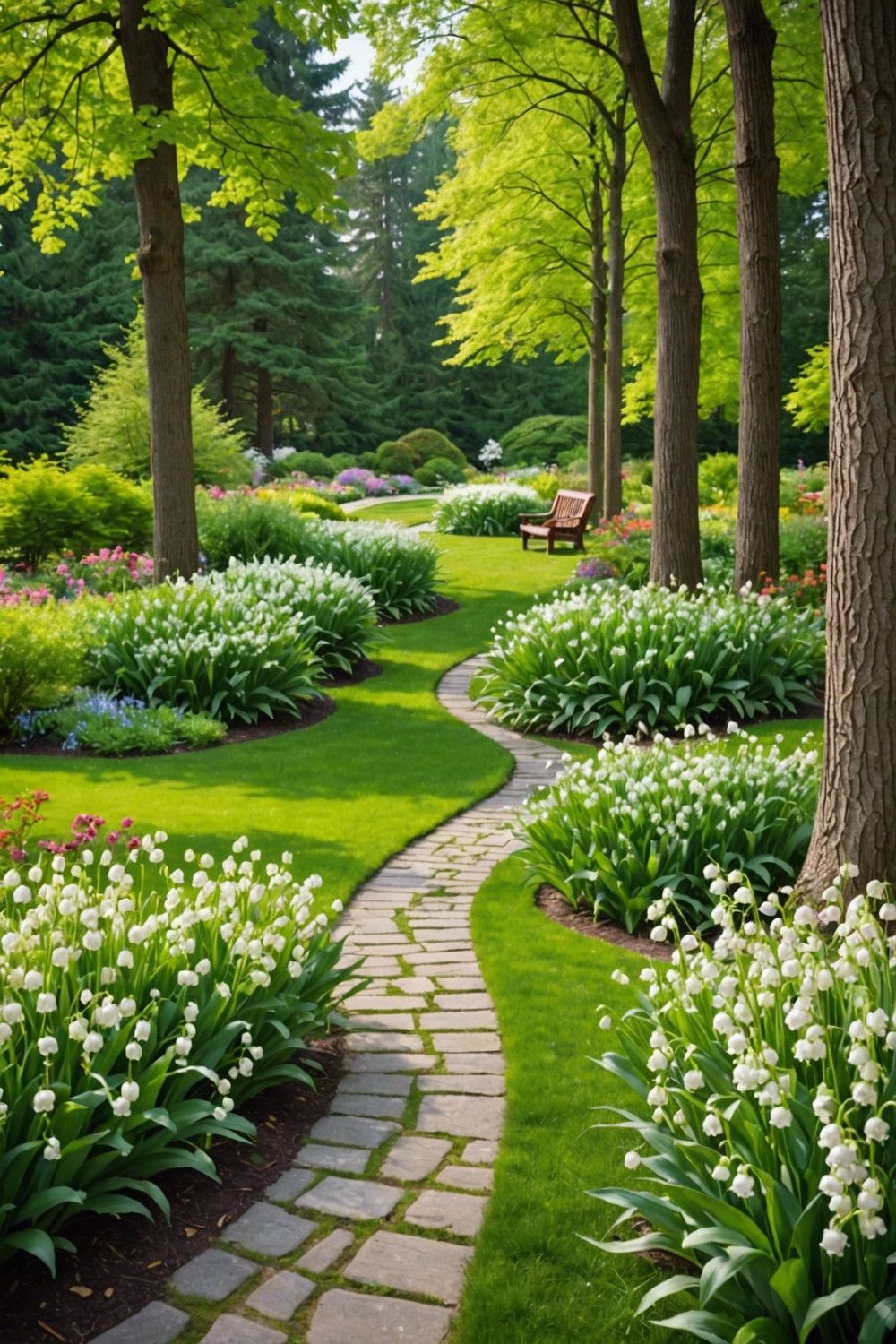
Have you heard about Lily of the Valley? It’s like a fancy version of regular grass lawns but way easier to take care of and better for the environment. Plus, it smells amazing!
The little white flowers and cute bell-shaped blooms make it look so pretty in the springtime. Give it a try if you want a beautiful and low-maintenance lawn alternative!
Plus, its deep green foliage remains attractive throughout the growing season, requiring less mowing, watering, and fertilizing than traditional lawns.
Pair Foxgloves With Lily of the Valley for Drama
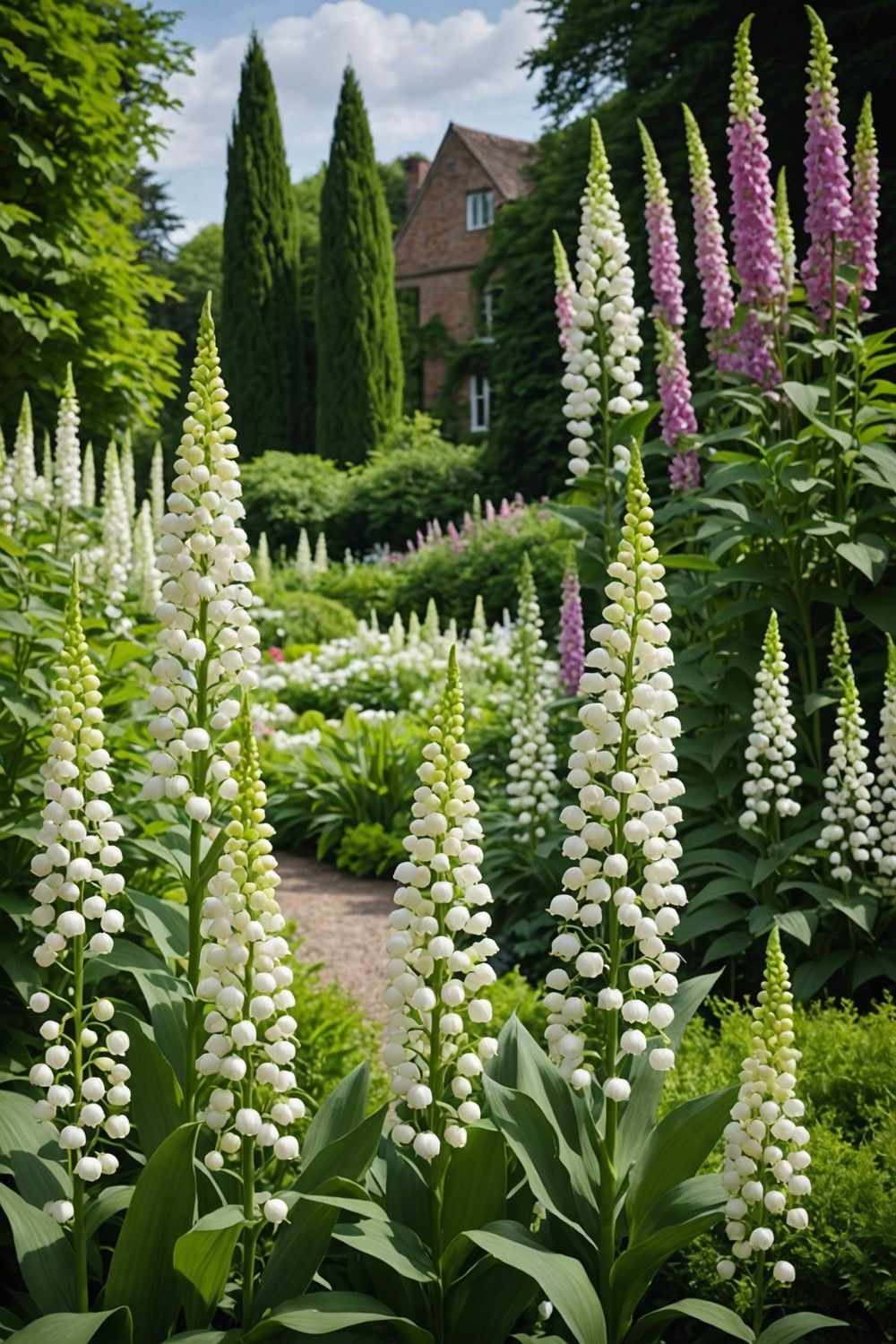
For a dramatic garden statement, combine Lily of the Valley with Foxgloves. The delicate, white, bell-shaped flowers of Lily of the Valley provide a beautiful contrast to the tall, stately spikes of Foxgloves.
The bold, vertical lines of the Foxgloves create a striking backdrop for the lush, green foliage and dainty flowers of Lily of the Valley.
This stunning combination adds depth and visual interest to your garden, creating a truly show-stopping display.
Add Lily of the Valley to a Perennial Bed
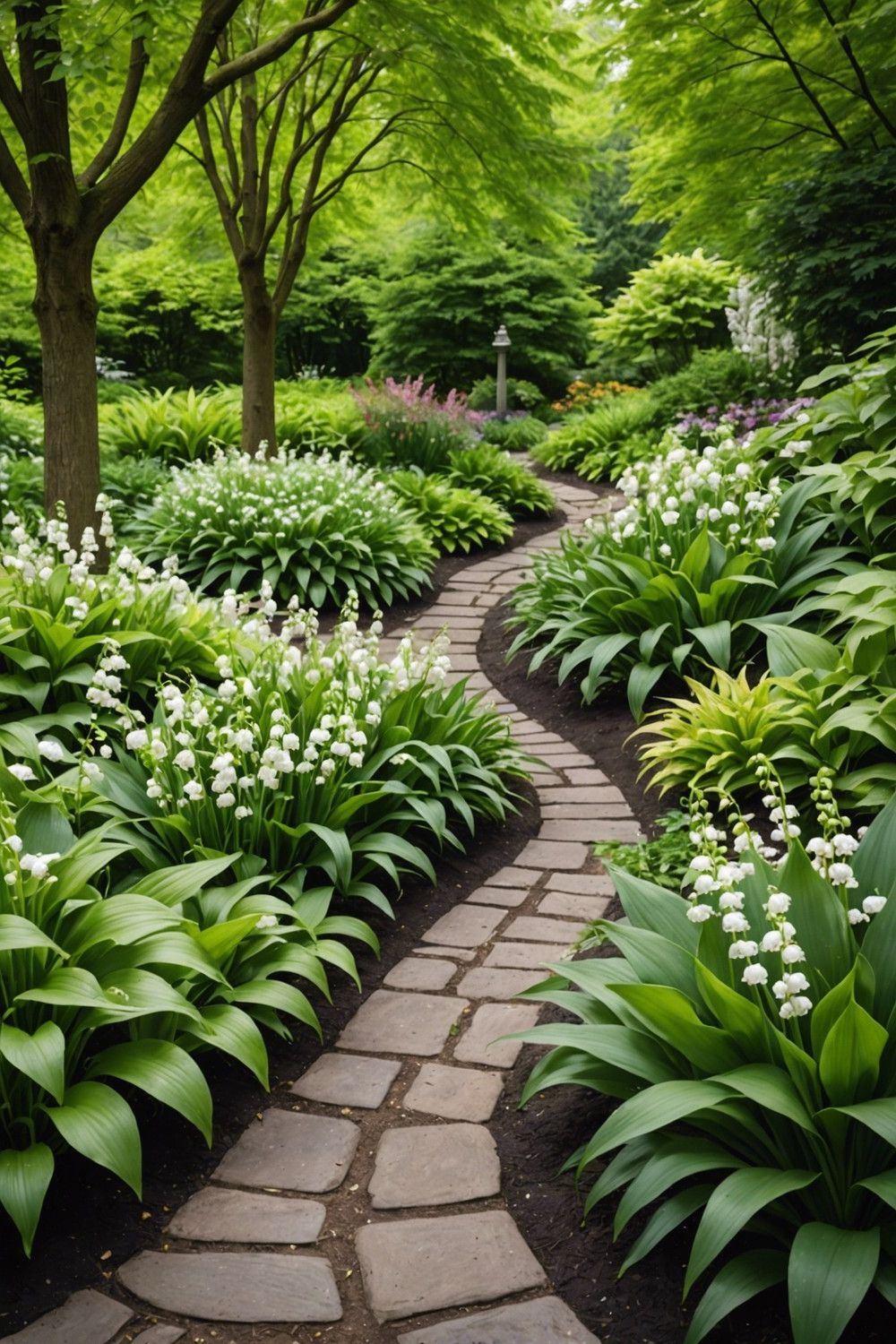
Have you ever considered adding Lily of the Valley to your garden? It’s a perfect choice for any perennial garden because it’s so easy to care for and it spreads beautifully.
You can plant it along pathways, around trees, or in shady spots, and before you know it, you’ll have a lovely carpet of white flowers. Sounds like a dream, right?
Its sweetly scented blooms will attract pollinators and add a romantic touch to your garden.
To incorporate lily of the valley into your design, consider pairing it with complementary perennials like hostas, ferns, or astilbe for a serene, woodland-inspired look.
Craft a Lily of the Valley Garland for Parties
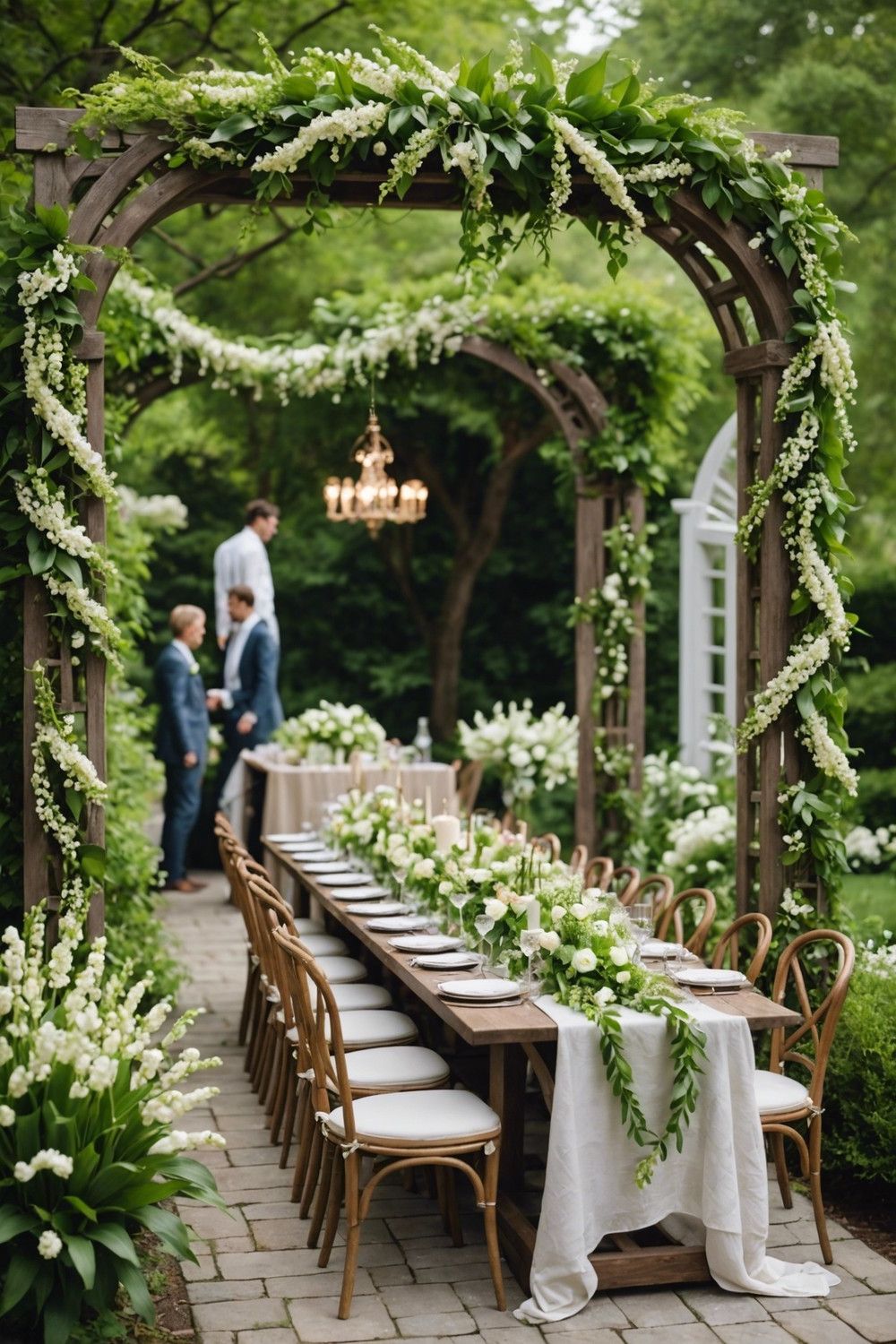
Want to make a super cute Lily of the Valley garland for your garden party? It’s easy! Just grab some fresh flowers and floral wire.
All you have to do is thread the little blooms onto the wire, making sure to leave a bit of space between each stem for that delicate, whimsical look. Have fun with it!
You know what would look really nice? Adding some greenery like eucalyptus or ferns to your garland.
It will give it more dimension and make it feel more full and textured. Just a little touch of nature can really bring your garland to life!
This lovely decoration is just perfect for adding a little touch of elegance and romance to your outdoor party or celebration.
Grow Lily of the Valley in a Nighttime Moon Garden
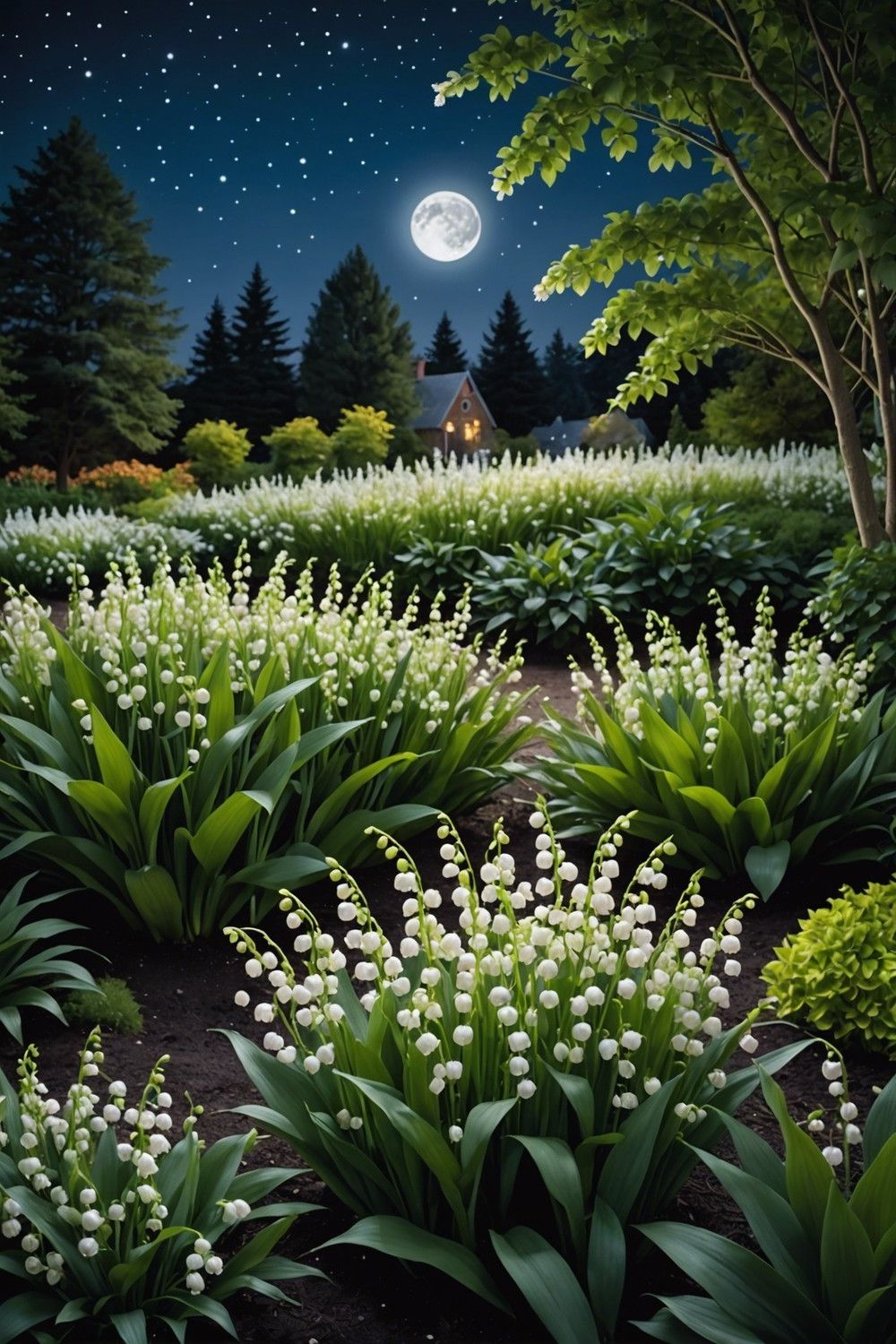
Planting Lily of the Valley in a moon garden is a brilliant idea, as its sweetly scented, bell-shaped flowers will bloom in late spring, just when the moon is full and bright.
As the sun goes down, those pretty white flowers are gonna light up like little moonlights, turning the whole place into something straight out of a fairy tale. So dreamy and magical!
Plus, the plant’s low-growing, spreading habit makes it perfect for a moon garden, where the focus is on subtle, soft beauty under the light of the night sky.