Do you want a lush backyard garden without spending a fortune or losing a weekend to the project?
I’m going to share exactly how I build attractive raised garden beds on a tight budget. The process is quick and low-cost, so stick around for my best tricks.
From repurposed pallets to straw bales and several clever options in between, here are 21 DIY ideas that turn a tight budget into a thriving backyard garden.
Grab your tools and let’s get your garden project started.
Pallet Planter Basics
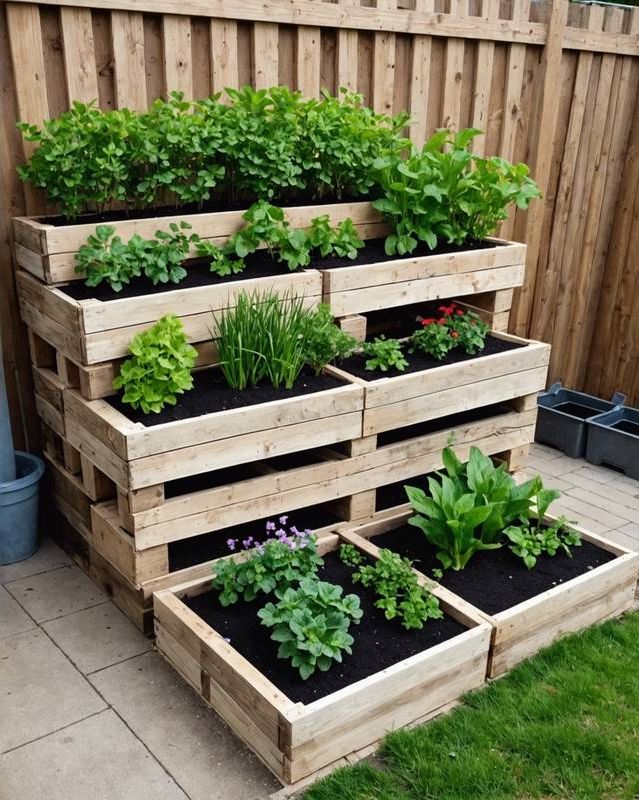
Pallet planters make a smart choice for anyone building a raised garden bed on a budget. They cost little to nothing if you source used pallets locally.
Their sturdy wood frame holds up well outdoors, and the slatted design makes it simple to adjust the bed’s size for whatever plants you’re growing.
Because they’re built from reclaimed wood, pallet planters give old shipping materials a second life instead of sending them to a landfill.
Assembly takes basic tools like a hammer and a saw, so beginners can put one together in an afternoon.
Gaps between the slats let air move freely around the roots, which helps stop water from pooling after a heavy rain.
Building with an existing pallet frame cuts both cost and labor compared to cutting and assembling raised beds from fresh lumber.
Cinder Block Garden Beds
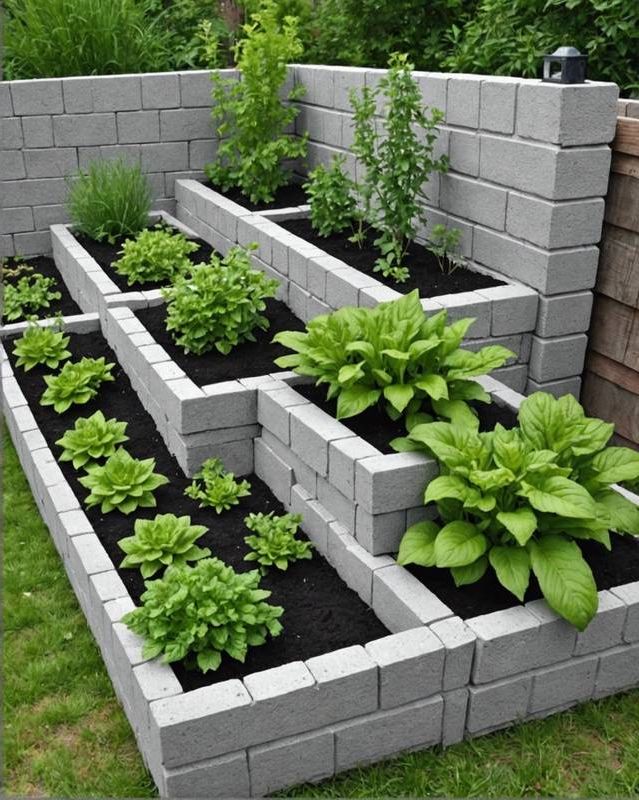
Cinder blocks make a sturdy, low-cost base for growing vegetables and flowers. The blocks lock together for a stable frame, and their hollow centers improve drainage so roots don’t sit in soggy soil.
Most home improvement stores stock cinder blocks, and stacking them takes no special skill, so you can shape a bed into nearly any size you need.
Compared to lumber or stone, cinder blocks cost less per bed, which makes them a practical pick for gardeners watching their spending.
Wine Barrel Garden Planter
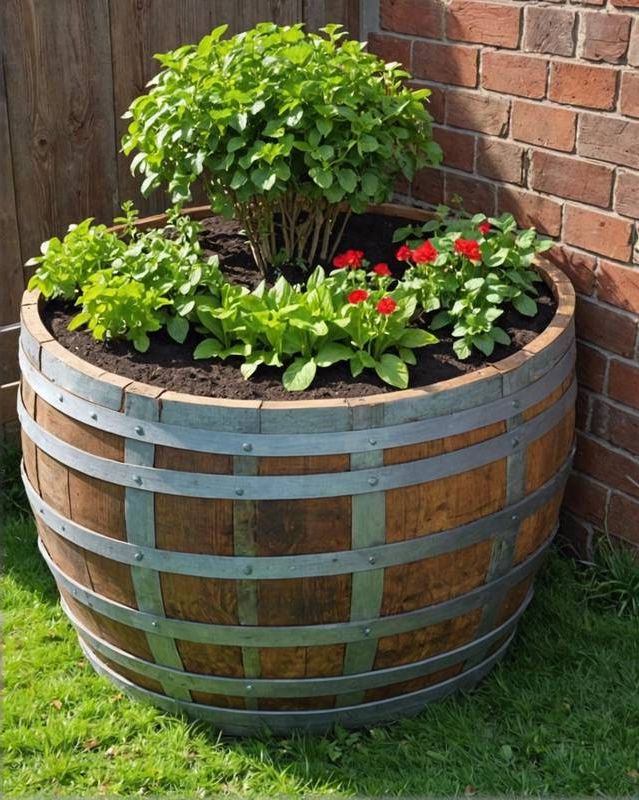
Give an old wine barrel new purpose by slicing it in half lengthwise, which gives you two rustic raised beds from a single barrel.
Line the inside with plastic sheeting or landscaping fabric to hold the soil in place and slow down moisture damage to the wood.
Pack the halves with rich soil and your favorite plants, then paint the exterior in a bold color or leave the wood natural for a weathered look.
Secure each barrel half to the ground with stakes, or build a simple wood frame underneath so it doesn’t tip when full of wet soil.
A repurposed wine barrel planter works well for growing herbs like basil and rosemary, along with vegetables or flowers.
Building With Concrete Blocks
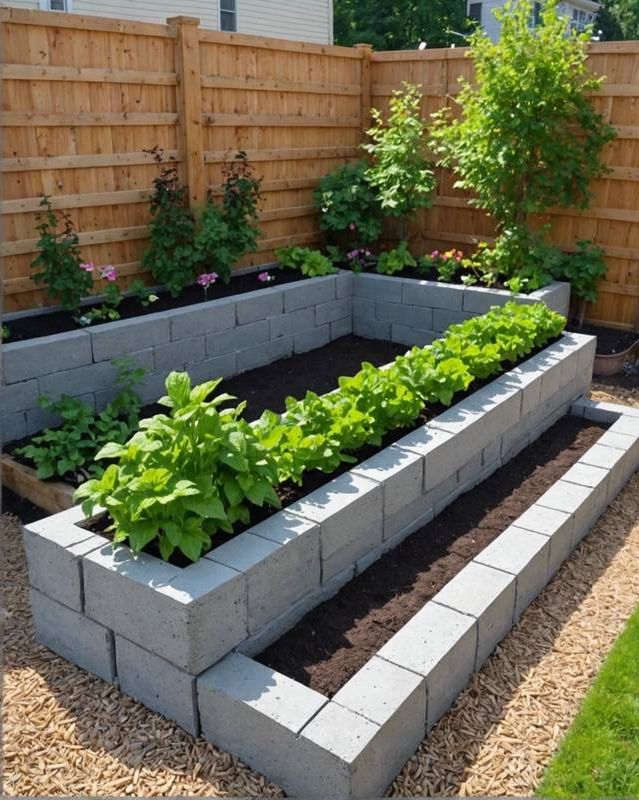
Concrete blocks hold up to weather and cost little, which makes them a solid pick for a raised garden bed. Stack them in rows or columns to match whatever footprint your yard allows.
Their weight and flat surfaces make them simple to stack, so new gardeners can build a bed without prior experience.
Stack the blocks to your desired height and width, then fill the enclosed space with soil and your chosen plants.
Since concrete blocks weigh a lot, set them on level ground first so the stack doesn’t lean or shift over time.
Rebar or wooden stakes driven through the block cavities add extra stability and keep the walls from sliding apart.
Reusing Old Tires or Tubes
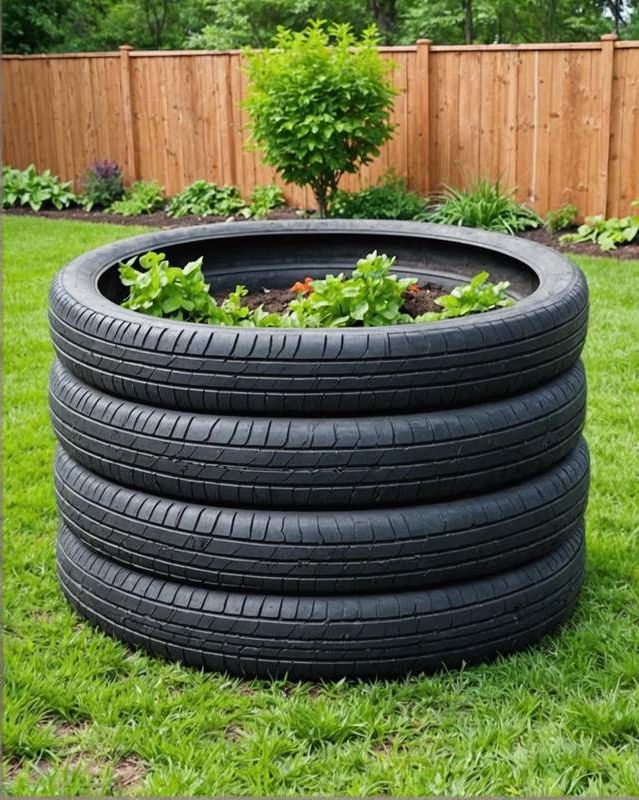
Old bike or car tires and tubes turn into cheap raised garden beds with a little creativity. Stack several to build height for deep-rooted plants, or lay them flat side by side for a wider growing area.
Rubber tires naturally drain well, which makes them a good fit for low spots in the yard where water tends to collect.
A coat of outdoor paint lets you match the tires to your garden’s color scheme and hide the rubber’s original look.
Building With Recycled Wood
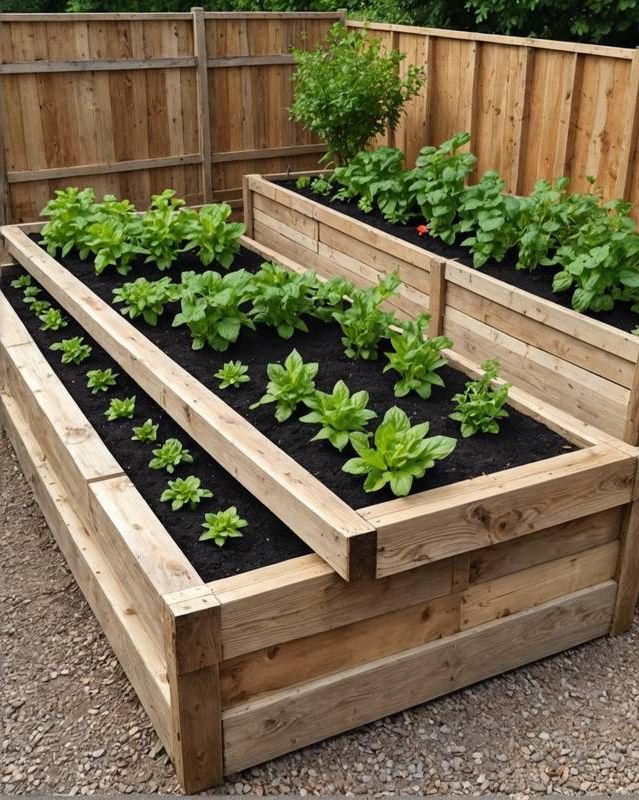
Old wood planks pulled from a demolition or renovation project can become a rustic, eco-friendly raised bed with minimal cutting.
Salvaged lumber carries visible grain, nail holes, and weathering that give the bed real character while keeping usable wood out of the waste stream.
These reclaimed boards hold up as a sturdy frame once assembled, and the aged wood grain adds a warm, lived-in look to the space.
With a saw, some screws, and a little patience, scrap wood becomes a raised bed that grows healthy vegetables while adding rustic detail to the yard.
Growing in Straw Bales
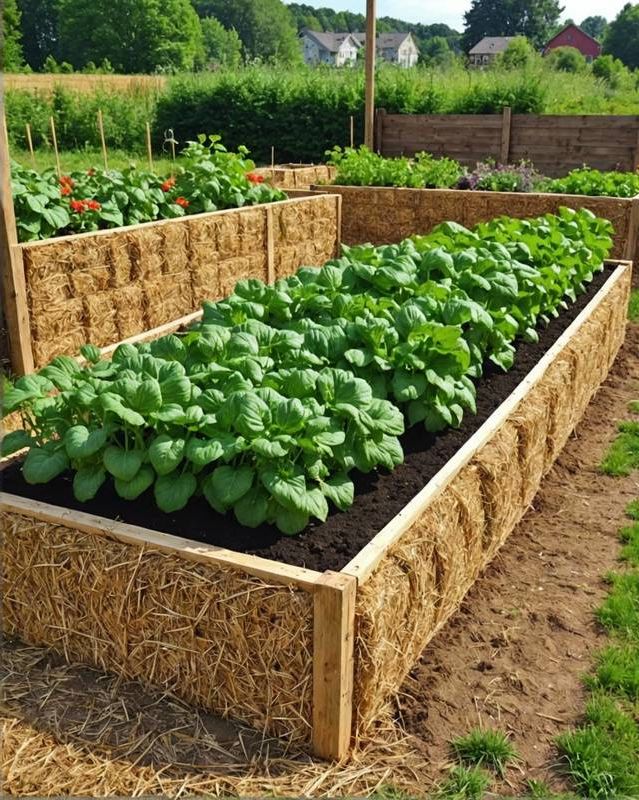
A straw bale garden is an innovative and budget-friendly solution for space-conscious gardeners. By utilizing stacked straw bales as raised beds, you can create instant growing spaces without the need for expensive materials or heavy construction.
Straw bale gardens are surprisingly durable, providing a sturdy foundation for various plants.
When straw breaks down, it releases nutrients into the soil which is really good for helping plants grow strong and healthy. Plus, it’s great at holding onto moisture so you don’t have to water your plants as often!
Building With Chicken Wire and Stakes
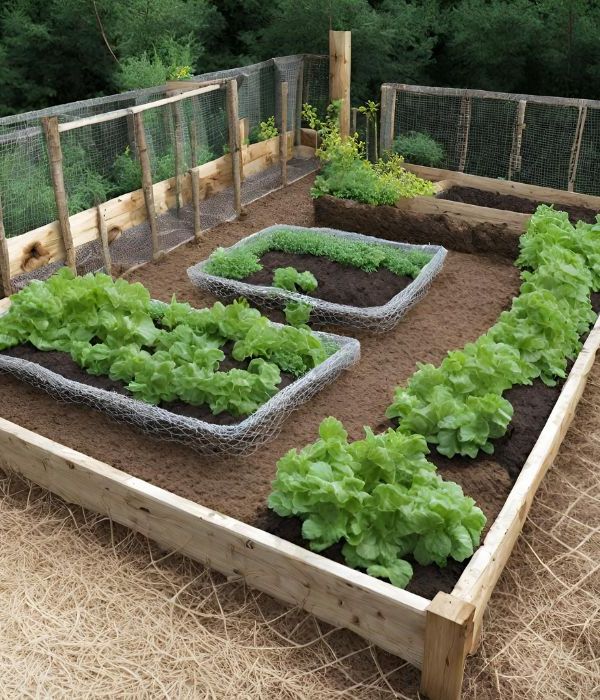
Chicken wire and stakes are a quick, cheap, and easy way to build a raised garden bed. This method is particularly useful for small gardens or irregularly shaped areas.
Chicken wire is a flexible material that can be easily shaped to fit any space.
Stakes are like little helpers that keep the wire in place so your garden bed stays put. This kind of raised bed isn’t the most forever thing in the world, but it’s perfect for folks looking for a fast and simple fix.
Gardening in Fabric Grow Bags
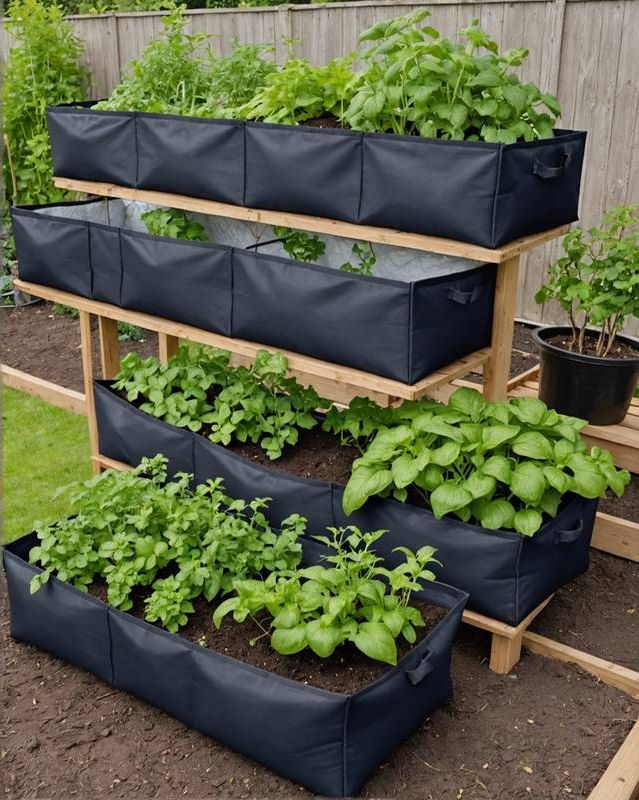
Fabric grow bags offer a budget-friendly alternative to traditional raised beds.
Unlike wooden or metal raised beds, fabric grow bags are typically made from breathable materials like felt or canvas, providing excellent drainage and aeration for plant roots.
These awesome grow bags are perfect for folks living in the city or with limited outdoor space! You can easily set them up on your patio, balcony, or even on your rooftop. They’re so versatile and great for urban gardening.
These are really handy and simple to move around, so you can easily change up your garden layout.
Additionally, fabric grow bags are generally less expensive than traditional raised beds, contributing to their cost-effectiveness.
Building a Pallet Pyramid Planter
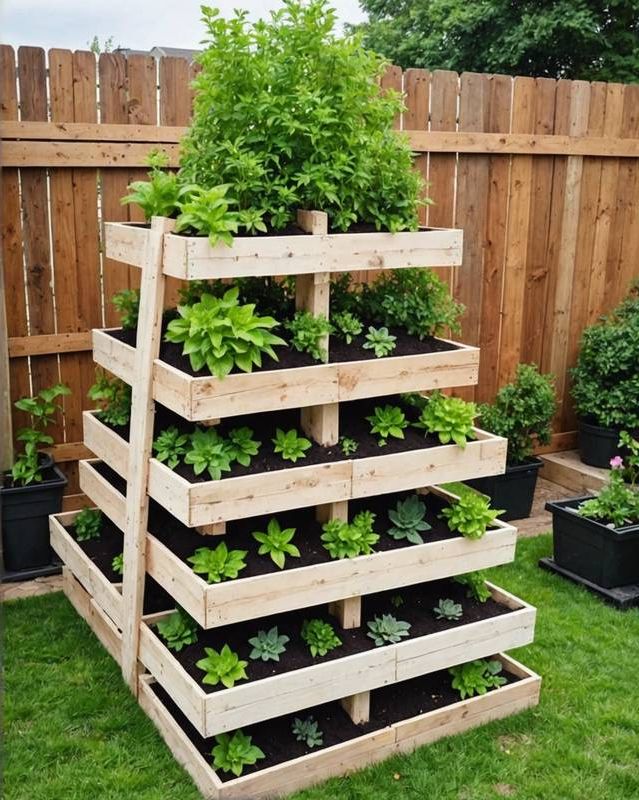
Ingenious and sustainable, the Pallet Pyramid Planter is an exceptional way to maximize growing space and elevate your gardening experience.
This cool planter is made from old wooden pallets that have been recycled! It’s designed with several tiers, kind of like a pyramid.
Each tier offers ample space for plants, vegetables, or herbs, allowing you to grow a diverse range of produce in a compact vertical space.
The design ensures optimal sunlight exposure for all plants, promoting thriving growth and bountiful harvests.
Not only is the Pallet Pyramid Planter a practical addition to your garden, but it also adds a touch of rustic charm to your outdoor space.
Setting Up a Keyhole Garden
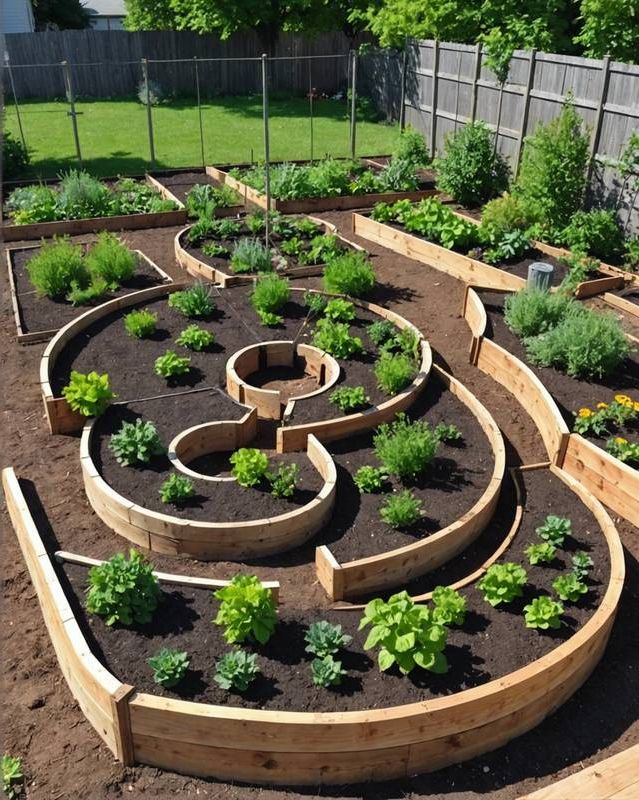
Have you heard of keyhole gardens? They’re pretty neat – they’re all about being practical, getting stuff done, and not having to put in too much work. It’s like having your own little oasis right in your backyard.
The raised circular design of these planters makes it super easy for us gardeners to reach all parts of our plants without straining our backs. Just what we need to make gardening a breeze!
This design also facilitates efficient watering and composting, as organic matter placed in the central core composts quickly, providing nutrient-rich water to surrounding plants.
Another key benefit of keyhole gardens is their space-saving design.
By spiraling plants around the center, you can grow more in less space.
This makes them an ideal option for smaller yards or urban gardens.
Additionally, their raised nature aids in drainage and aeration, improving plant health and yields.
Building a Hugelkultur Raised Bed
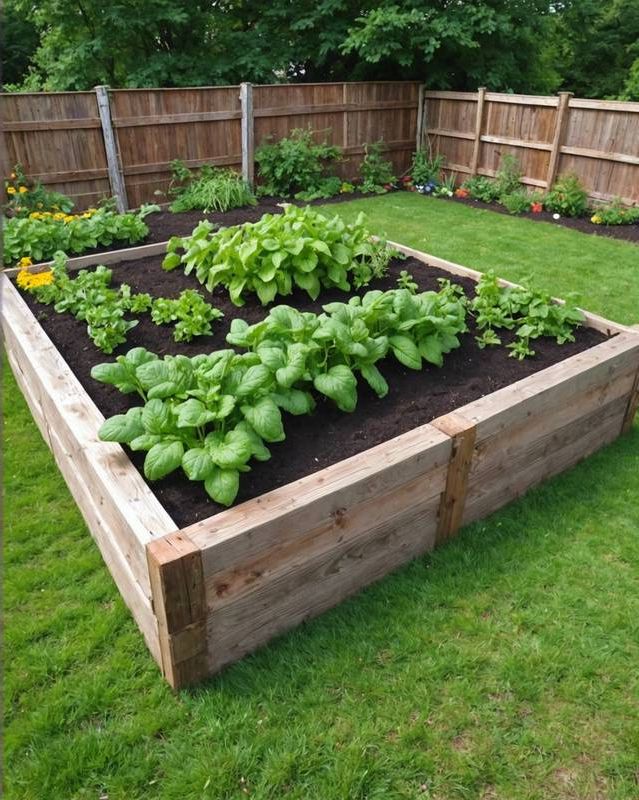
Create a sustainable and fertile raised bed with a Hugelkultur system.
How about we dig a little trench and toss in some logs, branches, and compost along with some other natural goodies? Let’s give those plants something to thrive on!
This organic matter decomposes gradually, releasing nutrients into the soil, improving water retention, and aerating the bed.
When you pile on all that good organic stuff, you basically make a super cool environment for plants to thrive in without needing a ton of upkeep. So yeah, it’s like your own little plant paradise that takes care of itself.
Have you heard of hugelkultur raised beds? They’re a really cool way to grow a bountiful garden while also helping out the environment. Plus, they’re awesome for keeping your soil healthy and diverse!
Using Stacked Sod Rows
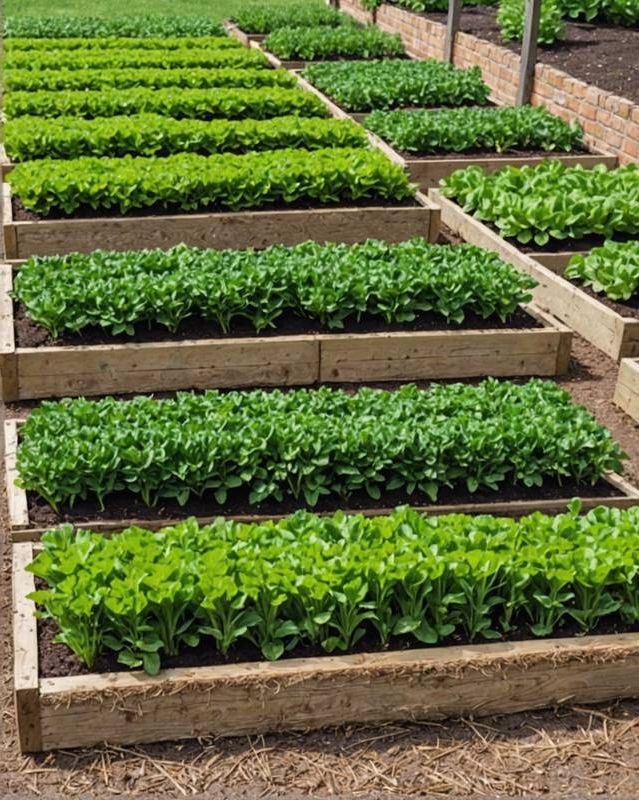
Hey there! Want an easy way to make a cheap raised bed that looks super natural? Just stack up rows of sod! Cut some long, thin strips of sod and layer them on top of each other vertically, making sure to overlap the edges a bit. Easy peasy!
Use a wooden stake or rebar to anchor each row in place.
Water the sod regularly to keep it moist and encourage rooting. As the sod decomposes, it will provide nutrients for your plants.
This method works really well for areas with slopes or uneven ground.
Planting in Cardboard Boxes
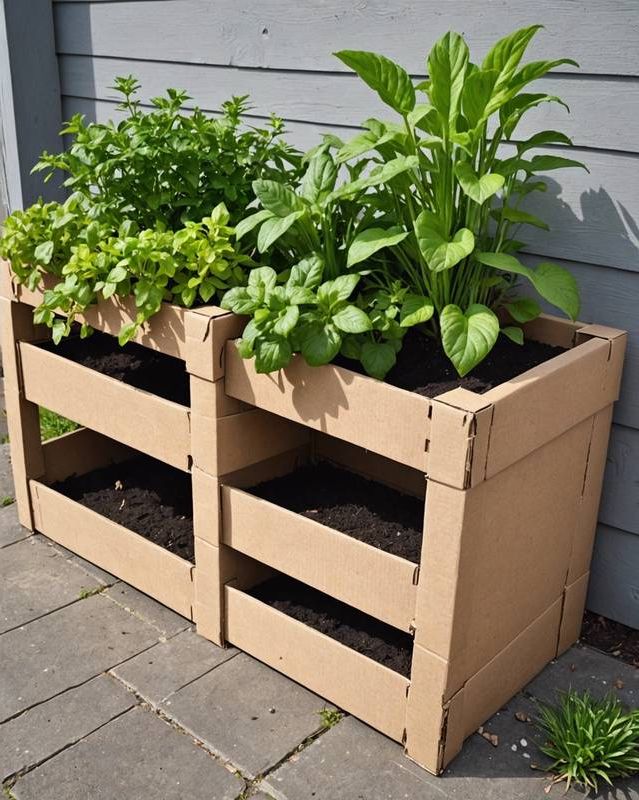
Have you ever thought about using cardboard boxes to create a raised garden bed? It’s a really easy and inexpensive way to get started. The cardboard actually helps to keep weeds out and holds in moisture for your plants. It’s a simple but effective trick for gardening!
Plus, it’s biodegradable, so it won’t harm the environment.
Simply line the bottom of a cardboard box with cardboard and fill it with soil. You can add plants directly to the box or line it with plastic before planting to prevent the soil from leaking out from the cardboard.
Don’t forget to take off the tops of the boxes so the plants can get some water!
Growing in Milk Jug Planters
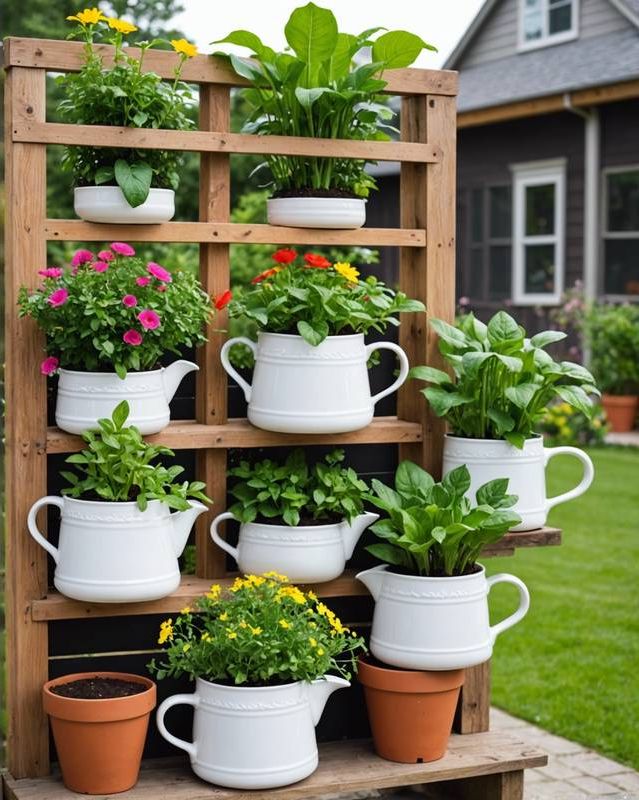
Milk Jug Planter Among the inexpensive options for small raised garden beds is a repurposed milk jug.
Hey there! This fun little project involves using a big ol’ plastic milk jug as a planter.
To get ready, all you have to do is cut the jug in half to make two separate halves.
Fill the bottom half with potting soil, leaving about an inch of space at the top.
Make drainage holes in the bottom of the jug.
Plant seeds or seedlings in the soil and water thoroughly.
You can use the top half of the jug like a little greenhouse to help your plants get situated and keep pesky bugs away.
When the plants are mature enough, remove the top half of the jug.
Building a Fabric Raised Bed
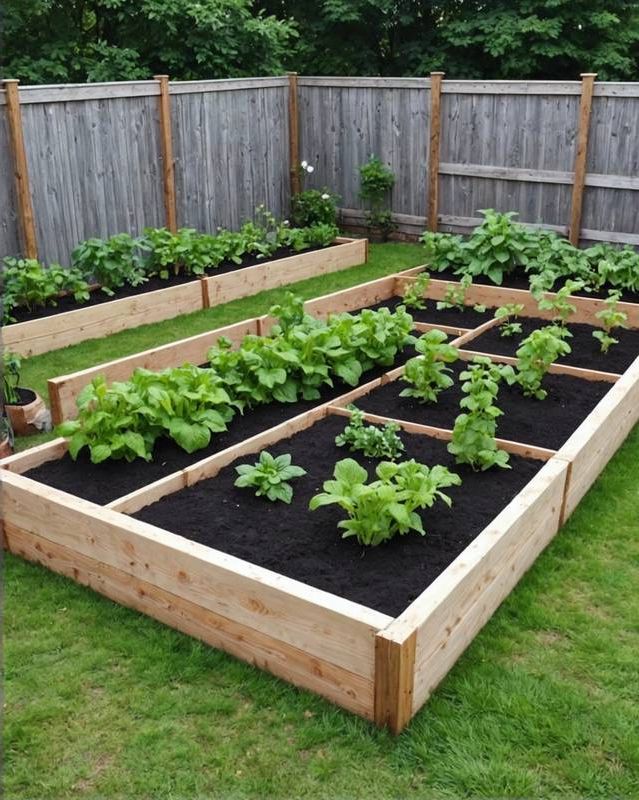
Fabric raised garden beds are a unique and inexpensive way to grow your own food. These beds can be made from any type of sturdy fabric, such as canvas, burlap, or even old bed sheets.
If you want to make a fabric raised garden bed, you can just sew or staple the fabric together to form a box shape.
The size and shape of the bed can be customized to fit your needs. Once the bed is built, fill it with soil and compost.
Have you heard about fabric raised garden beds? They’re super convenient because you can easily move them around. Plus, they’re perfect for gardening both indoors and outdoors!
These containers are awesome for people like us who don’t have a lot of room but still want to grow some plants.
Planting in a Repurposed Suitcase
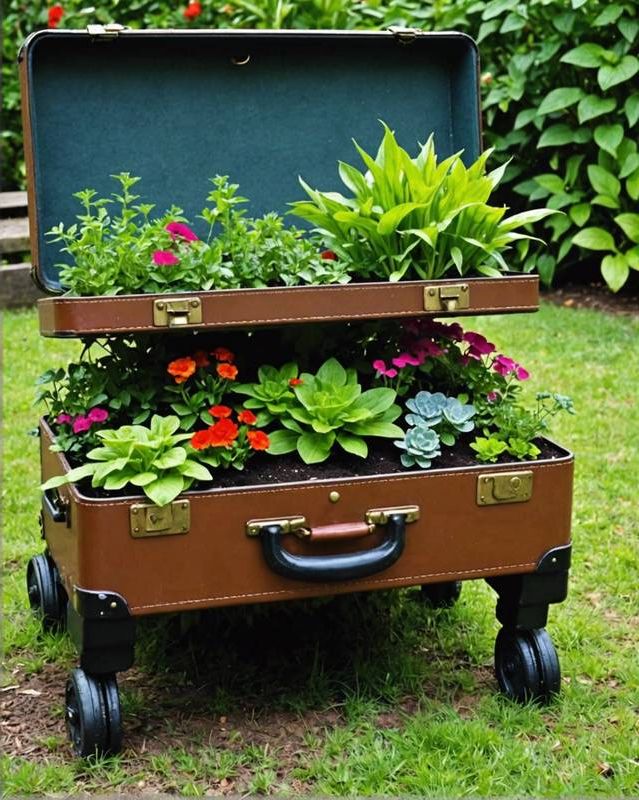
Bring a touch of vintage charm to your garden with repurposed suitcases transformed into unique planters.
With their sturdy construction and weathered patina, suitcases provide excellent drainage and add character to any outdoor space.
Just grab a drill and add some holes at the bottom of the pot, fill it with soil, and then you can start planting your favorite flowers, herbs, or veggies. It’s super easy and fun!
How about adding a personal touch to your suitcases by painting or decorating them to match your unique style? It’s a fun way to make your yard or patio look even more charming and whimsical!
Building With Bamboo Garden Beds
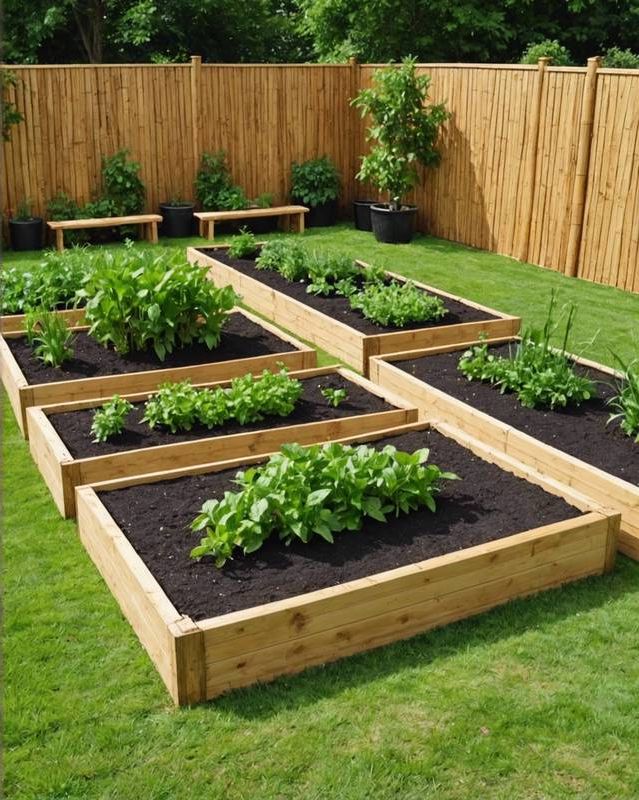
Bamboo Raised Garden Bed is a sustainable and cost-effective way to elevate your gardening experience and grow healthy plants. Bamboo is a highly renewable resource that offers natural resistance to rot and insects.
Its pliable nature allows for easy shaping, creating raised garden beds in various sizes and configurations.
Bamboo raised garden beds provide excellent drainage, preventing waterlogging that can harm roots. Their elevated design improves soil temperatures, promoting vigorous plant growth.
Additionally, bamboo’s natural aesthetic blends seamlessly with any outdoor décor, adding an elegant touch to your garden.
Making a Burlap and Twine Planter
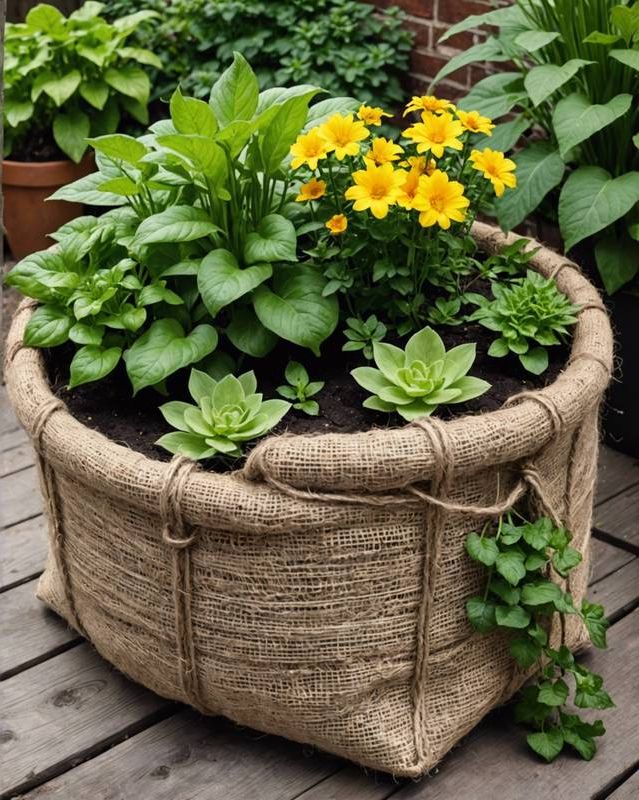
Create a rustic planter using burlap and twine. Line a wooden or plastic container with burlap, securing it with twine.
Fill the container with soil and add your plants.
This planter is perfect for small spaces and adds a touch of natural charm to your home.
Building With Wire Mesh and Stakes
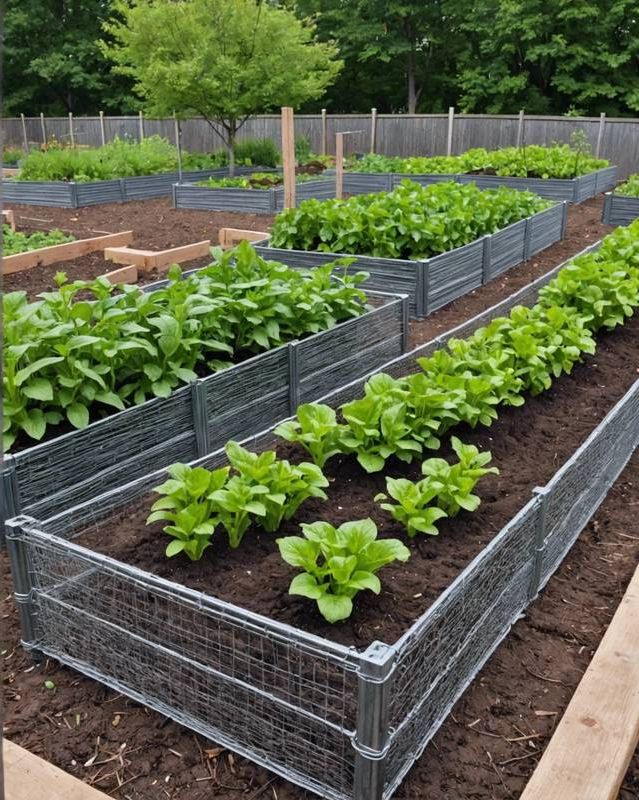
You can use wire mesh and stakes to keep critters out of your raised garden bed. It helps stop them from digging around and causing a mess.
To do this, cut the wire mesh to the desired size and shape, and then secure it to the ground using stakes.
We need to make sure we bury the wire mesh deep enough in the ground so it doesn’t get knocked loose easily.
Alternatively, wire mesh could be used as stakes.
Use wire mesh that is sturdy enough to hold the weight of the raised garden bed and cut it into the desired length.
Push the wire mesh stakes into the ground until they are secure, and then attach the raised garden bed to the stakes.
Building a Sheet Metal Raised Bed
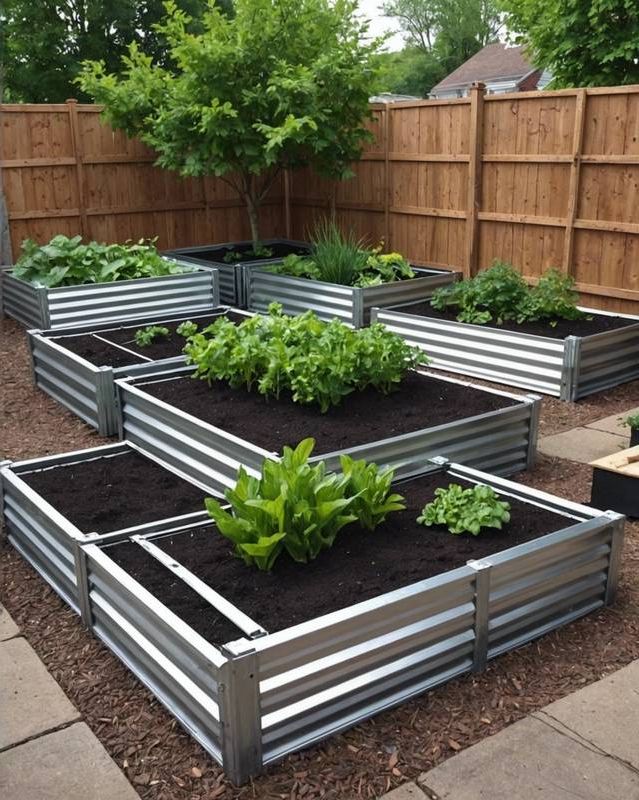
One robust and practical option is a sheet metal raised bed.
These beds are durable and can withstand the elements, making them an excellent choice for areas with harsh winters or strong winds.
Furthermore, sheet metal raised beds provide excellent drainage to prevent waterlogging and discourage diseases in the soil.
To construct a sheet metal raised bed, you will need to cut the sheets to the desired height and length.
Make sure you really tighten those corners with bolts or rivets to make sure the structure is nice and strong.
You can customize the size and shape to fit your space and gardening needs, making it a versatile option for various garden layouts.